
Introduction: Buying Leads Is Only the Beginning
Purchasing a lead list can give your sales team something it cannot create overnight: access to a defined group of potential customers that matches a particular market, industry, geography, job title, demographic profile, or other targeting criteria. That can save weeks or months of prospect research, especially when a company is trying to enter a new territory, expand into a specific industry, launch an outbound campaign, or increase the number of prospects available to its sales team.
But a purchased lead list is not a sales pipeline by itself.
A spreadsheet full of names, phone numbers, email addresses, and company information does not generate revenue simply because the records exist. The value of the data comes from what happens after you receive it. You need a clear definition of who you are trying to reach, a practical way to prioritize the records, an outreach process that fits the audience, a system for following up, and a way to measure which prospects are turning into conversations and eventually into customers.
This distinction is important because businesses sometimes judge a purchased list too quickly. They buy the data, send one email, make a handful of calls, receive limited responses, and conclude that the leads did not work. In reality, the problem may have been the targeting, the messaging, the timing, the follow-up process, or the lack of qualification rather than the existence of the list itself.
The better approach is to treat purchased leads as the starting inventory for a sales process. Jared’s Leads’ current marketing data solutions follow this broader idea by connecting audience data with campaign activation, data hygiene, and follow-up automation rather than treating a list as an isolated product.
The objective is simple: turn raw prospect data into a structured sequence of conversations, opportunities, and measurable sales outcomes.
Start With a Clear Definition of the Customer You Want

The first step in turning purchased leads into a pipeline actually happens before you purchase the list. You need to know exactly who belongs in the pipeline and why. A vague audience such as “small businesses in the United States” is rarely specific enough to build an effective outbound campaign. The more clearly you can define your ideal customer, the easier it becomes to select the right data and create relevant messaging.
Start with the characteristics that genuinely distinguish a good prospect from a poor one. Depending on your business model, that could include industry, company size, revenue range, geographic market, job title, location, homeowner status, demographic characteristics, or another meaningful qualification. The point is not to collect as many filters as possible. It is to identify the filters that actually affect the likelihood of becoming a customer.
For example, a company selling software to dental practices may not simply want a list of healthcare businesses. It may want dental practices with a certain number of locations, operating in selected states, with specific decision-makers such as owners or practice managers. A commercial insurance company may care about industry, employee count, geography, and the type of decision-maker responsible for purchasing coverage. A home services company may care more about homeowners within selected ZIP codes and specific property characteristics.
The more closely the data matches the sales strategy, the less time the sales team spends sorting through records that were never a realistic fit.
Jared’s Leads’ lead lists are designed around specific campaign criteria rather than simply delivering a large volume of generic records. The company’s current solutions describe targeting options such as industry, location, company size, job title, demographics, and specialty audience characteristics depending on the type of data being requested.
This is why the sales pipeline should begin with the customer profile rather than the spreadsheet. When the audience definition is clear, the data has a job to perform.
Organise the List Before You Start Selling
Once the leads arrive, resist the temptation to immediately send the same message to everyone. One of the easiest ways to waste a purchased lead list is to treat every record as though the prospect has the same needs, challenges, and buying situation.
Before outreach begins, divide the list into meaningful segments.

A B2B list could be segmented by industry, geography, company size, job title, or the type of service the prospect is likely to need. A consumer list could be divided by location, life event, homeowner status, demographic factors, or another relevant attribute. Email lists may also be organised by campaign objective and audience type so that the message matches the reason the person belongs in the campaign.
Segmentation does more than make your database look organised. It allows your sales team to have a more relevant conversation. A decision-maker at a 500-person company may respond differently from the owner of a five-person business. A prospect in California may have different requirements from one in New York. A new homeowner may have a very different need from someone who has lived in the same property for twenty years.
Jared’s Leads’ current email list offering similarly emphasizes targeting by industry, geography, demographics, and list type. The company also describes segmentation and customized audience criteria as part of its list-building process.
This is where a purchased list starts becoming a pipeline asset rather than simply a data file. Instead of asking your salespeople to work through hundreds or thousands of identical records, you are creating smaller, more understandable groups with specific reasons for contact.
Prioritise Leads Instead of Treating Every Record Equally

Not every lead deserves the same amount of attention on day one. Even a well-targeted purchased list can contain prospects with different levels of relevance, potential value, and accessibility. Your sales team needs a prioritization system so that its best time is spent on the prospects most likely to produce a meaningful conversation.
One practical approach is to create tiers.
Your highest-priority group might include prospects that closely match your ideal customer profile and have the right decision-maker information. A second group might meet most of the criteria but require additional qualification. A third group might remain useful for broader marketing or lower-touch outreach.
The exact scoring system will depend on your business, but the basic principle remains the same: do not make your salespeople spend the same amount of time on every record.
You can also prioritise based on potential customer value. A company with a large contract opportunity may deserve more personalised outreach than a smaller account with limited revenue potential. A local salesperson may prioritise prospects inside a particular territory. A new market expansion campaign may prioritise companies in the first geographic area you are testing before expanding further.
This approach also helps when a list is larger than the sales team’s immediate capacity. Instead of attempting to contact 10,000 prospects in the same way, you can create an initial working segment of the most relevant accounts, test the campaign, review the results, and then expand.
That makes the purchased list part of an iterative sales process rather than a one-time blast.
Clean and Prepare the Data before Outreach
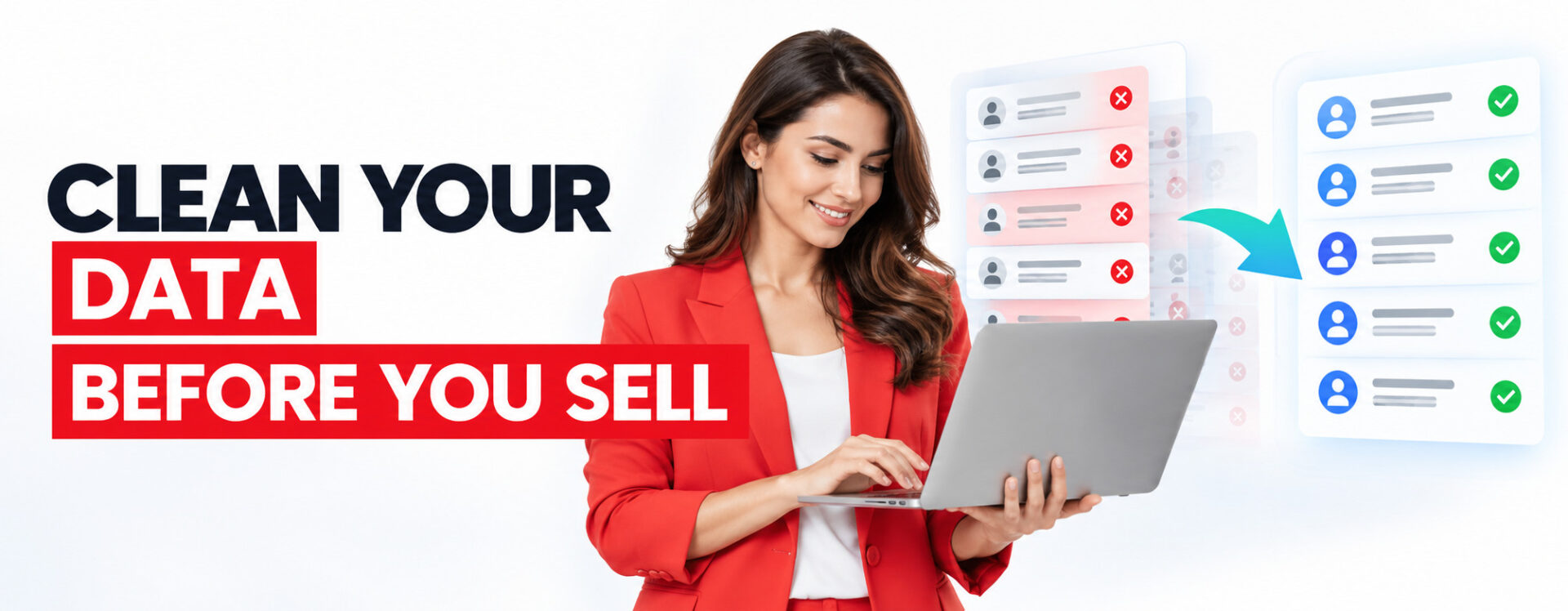
Poor data preparation can still undermine good targeting. Before a sales team starts calling or emailing, review the file for duplicates, missing fields, outdated information, invalid email addresses, and other obvious data-quality problems.
This step becomes particularly important when purchased leads are being combined with an existing CRM database. The same person or company may already exist in your system under a slightly different name, creating duplicate records and making it difficult to know whether a prospect has previously been contacted.
You also need to consider how the records will be used. A list designed for email outreach needs to be reviewed for email-related data quality. A calling campaign requires attention to phone information and applicable suppression requirements. A direct mail campaign may require address processing and additional postal preparation.
Data hygiene should not be treated as a technical task that happens only after something goes wrong. It is part of preparing the pipeline before the sales team invests time into it.
Jared’s Leads currently offers data services such as data append, verification, deduplication, scoring, modelling, reactivation, and other data-quality processes. Its marketing data solutions also describe suppression and compliance-related services as part of campaign preparation.
The underlying principle is simple. Salespeople should spend their time talking to prospects, not manually repairing a database.
Build an Outreach Process, Not a Single Message
Once the list is organised and prepared, the next step is outreach. This is where many purchased lead campaigns fail because the business treats the first email, first phone call, or first direct-mail piece as the entire campaign.
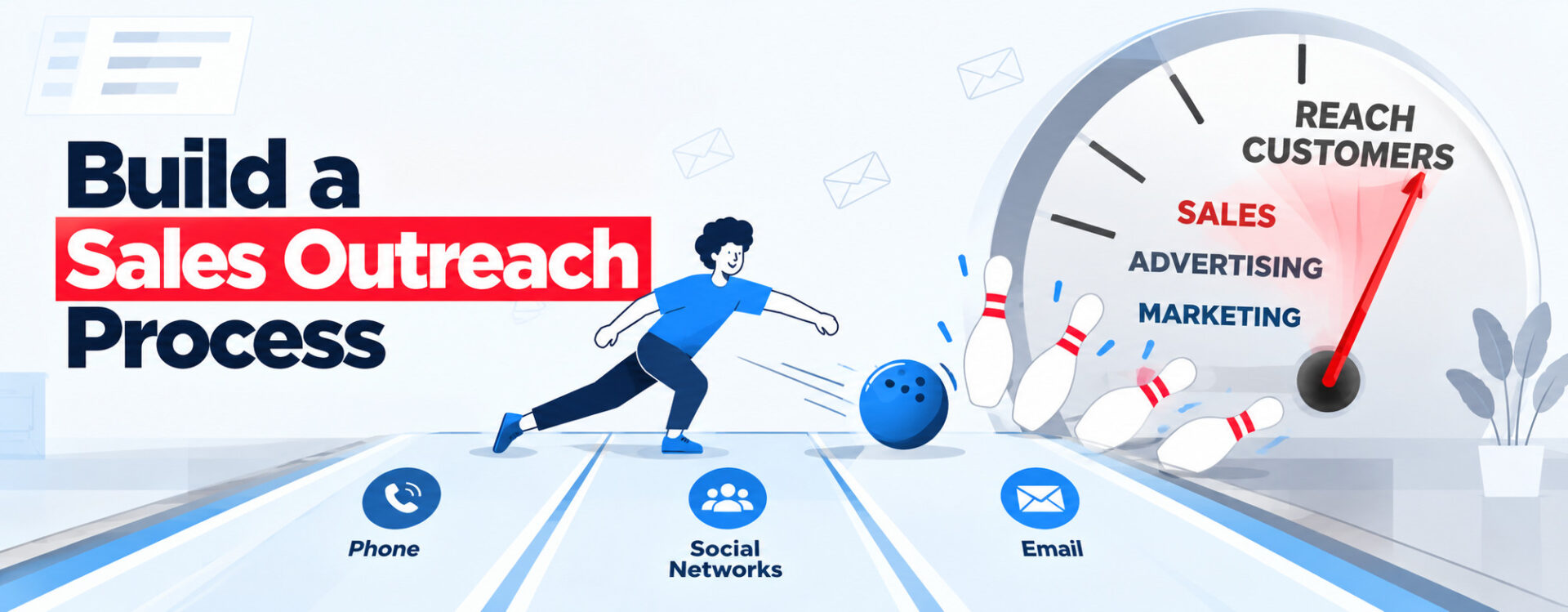
Most prospects will not become customers from one interaction.
A sales pipeline requires a sequence. The sequence might begin with an email, followed by a phone call, followed by another relevant email, followed by a personal message or another appropriate touchpoint. The exact number and timing will vary depending on your audience, industry, offer, and compliance requirements, but the important point is that the first contact should be viewed as the beginning of the conversation rather than the final test of whether the lead is good.
Messaging should also reflect the segment you are contacting. A general message sent to every person on the list may save time when it is created, but it often creates more work later because the response rate is poor. A more focused message can speak directly to the problem the prospect is likely to recognize.
For example, a message to an independent roofing contractor should not sound like a message written for a national franchise. An email to a financial services executive should not read like a message intended for a local homeowner.
Personalization does not necessarily mean manually writing a unique message for every prospect. It can simply mean creating relevant versions for different segments.
Jared’s Leads supports campaign activation through direct mail and email deployment, alongside its audience-data services. The company’s current solutions describe campaign preparation, suppression, deduplication, and deployment as connected parts of the process.
The goal is to create a repeatable outreach system that your sales team can execute consistently.
Follow-Up Is Where the Pipeline Actually Develops
The most important difference between a contact list and a sales pipeline is what happens after the initial outreach.

Someone who does not answer your first call is still a prospect. Someone who opens an email but does not respond may still be interested. Someone who replies with a question may be moving closer to a conversation. Someone who says “not right now” may become relevant several months later.
Without follow-up, these opportunities disappear into the database.
A practical follow-up system should tell salespeople when to contact the prospect again, what stage the prospect is in, what was discussed previously, and what the next action should be. That could mean another phone call, an email with additional information, a meeting request, or a longer-term nurture sequence.
This is also where a CRM becomes particularly important. The pipeline should record not just the prospect’s contact details but the prospect’s position in the sales process.
Jared’s Leads currently positions LeadWave as a follow-up and automation option that can support AI response, multichannel nurturing, CRM automation, and lead handoff. The company’s solutions page specifically connects follow-up automation with the broader objective of keeping leads active instead of allowing them to become stale.
The principle is worth emphasizing: purchased leads should create a follow-up obligation, not simply an initial outreach task.
Move Prospects through Clear Pipeline Stages
Your sales team also needs a shared definition of what happens after a prospect responds.

Without clear pipeline stages, one salesperson may consider a lead “qualified” simply because the person answered the phone, while another may require a completed discovery call before moving the record forward. That creates unreliable reporting and makes it difficult for management to understand how the purchased lead source is actually performing.
A simple sales pipeline might move through stages such as New Lead, Contacted, Engaged, Qualified, Appointment Set, Proposal, Closed Won, or Closed Lost. The exact stages should match your sales process, but they should be consistent enough for everyone on the team to use them in the same way.
Qualification is especially important. A prospect responding to an email does not necessarily mean they are ready to buy. Your sales team should establish what makes someone a legitimate opportunity. That might involve budget, need, authority, timing, geographic fit, company size, service requirements, or another factor that determines whether the prospect can realistically become a customer.
This process protects the sales team from spending too much time on prospects that cannot become customers while ensuring that genuinely qualified opportunities receive appropriate attention.
It also gives management a clearer way to evaluate the purchased data. If 1,000 leads produce 150 conversations but only three qualified opportunities, the problem is different from a campaign that produces 50 qualified opportunities but struggles to close them.
The pipeline makes those differences visible.
Measure the Purchased Lead Campaign like a Sales Investment

A purchased lead campaign should ultimately be evaluated through business results, not simply the number of records delivered.
Start with the basic numbers. How many leads were purchased? How many were successfully contacted? How many conversations took place? How many were qualified? How many appointments were created? How many proposals were issued? How many deals closed? How much revenue came from those deals?
These numbers allow you to identify where the pipeline is working and where it is breaking down.
Suppose you purchase 2,000 leads. The contact rate is strong, but very few prospects become qualified opportunities. That may indicate an audience-definition or targeting problem. If the number of qualified opportunities is strong but appointments are low, the problem may be related to sales messaging or qualification. If appointments are strong but close rates are weak, the issue could involve the offer, sales process, pricing, or another part of the conversion process.
This is why simply asking whether a lead list “worked” can be misleading.
Jared’s Leads’ current solutions messaging emphasizes measurable campaign outcomes and connecting targeted data with campaign execution, data hygiene, and follow-up. The company’s email-list guidance also recommends tracking metrics such as bounce rate, conversion rate, cost per acquisition, and campaign performance rather than simply counting records.
The best lead campaign is therefore not necessarily the one with the lowest cost per record. It is the one that produces economics that work for the sales process.
Common Mistakes That Prevent Purchased Leads From Becoming Sales

The first common mistake is buying too much data before testing the audience. A company may purchase a huge list because the price per record appears attractive, only to discover that the audience does not convert well. Testing a smaller, clearly defined segment can provide useful information before the campaign expands.
Another mistake is failing to segment the records. When everyone receives the same message regardless of industry, geography, role, or customer profile, relevance usually suffers. Even basic segmentation can make a campaign easier for a salesperson to manage and easier for a prospect to understand.
A third mistake is stopping after one or two touches. Sales cycles vary, and many prospects will not respond immediately. A structured follow-up process gives legitimate prospects more opportunities to engage.
Poor data preparation is another problem. Duplicate records, invalid contact details, outdated information, and incomplete fields can create unnecessary work and distort campaign performance. Data quality needs to be addressed before the sales team starts investing heavily in outreach.
Finally, businesses sometimes fail to connect their lead source to their sales results. If the CRM does not preserve the original lead source, management may have no reliable way to determine whether a particular list, segment, geography, or campaign generated actual revenue.
The solution to all of these problems is to treat purchased leads as part of a system.
The data is the input. The sales process is what turns that input into conversations and opportunities.
How Jared’s Leads Can Help You Build a Sales Pipeline From Purchased Leads
Jared’s Leads can support more than the initial purchase of a lead list. Its current service structure connects audience data with campaign activation, data hygiene, and follow-up automation, which gives businesses the ability to address several stages of the pipeline through one provider.
The process can begin with audience definition. Jared’s Leads offers business leads and decision-maker data that can be targeted around factors such as industry, location, company size, and job title. This gives a sales team a more structured starting point than simply purchasing a broad database and attempting to figure out later who might be relevant.
For consumer campaigns, the company also offers targeted consumer mailing lists built around different audience and life-event characteristics. Depending on the campaign, businesses can build a prospect audience that is much closer to the customer profile they actually want to reach.
Once the audience has been defined, the next question is how the campaign will be executed. Jared’s Leads’ broader marketing data solutions connect audience selection with email and direct-mail deployment, data hygiene, and follow-up. That model is useful because the lead itself is only one component of the pipeline. The campaign still needs a way to reach the audience, maintain data quality, and manage what happens after the first interaction.
For businesses that already have a purchased or internally generated database, the data services offering can also help address problems such as verification, deduplication, enrichment, and list maintenance. That can be particularly useful when older records need to be cleaned before they are reintroduced into an outbound campaign.
The final piece is follow-up. A sales pipeline cannot function effectively if prospects disappear after the first email or call. Jared’s Leads positions LeadWave as an option for AI response, multichannel nurturing, CRM automation, and lead follow-up, helping businesses continue working prospects after the initial contact.
The practical takeaway is that buying the data does not have to be the end of the vendor relationship. A business can use the data, deployment, hygiene, and follow-up capabilities together to build a more complete process around its purchased leads.
To discuss the audience you are trying to reach and the type of campaign you want to build, you can contact Jared’s Leads and request guidance on the appropriate data and campaign structure.
Frequently Asked Questions
Q.1. Can purchased leads really become a sales pipeline?
Yes, but the list itself is only the starting point. A sales pipeline requires targeting, segmentation, outreach, follow-up, qualification, CRM management, and measurement. The quality of the pipeline depends on what happens after the records are delivered.
Q.2. How many times should I contact a purchased lead?
There is no universal number because the appropriate cadence depends on the industry, audience, offer, channel, and sales cycle. What matters is having a structured follow-up process rather than treating the first outreach attempt as the only opportunity.
Q.3. Should I email every lead at the same time?
Not necessarily. Segmenting your audience first usually gives you more control over messaging and campaign performance. Prospects in different industries, roles, locations, or customer segments may need different messaging and offers.
Q.4. Should purchased leads go directly into the CRM?
They can, but the records should first be reviewed and prepared for the CRM. Duplicates, invalid records, missing information, and existing contacts should be handled before the sales team begins working the list.
Q.5. How do I know whether my purchased leads are good?
Look beyond the number of records. Track contact rates, conversations, qualified opportunities, appointments, proposals, closed deals, acquisition cost, and revenue. These numbers help show whether the lead source is producing commercially useful opportunities.
Q.6. What should I do when a purchased lead does not respond?
A non-response does not necessarily mean the prospect is worthless. Continue with an appropriate follow-up sequence, provided your outreach method and frequency comply with applicable requirements. Leads can also be moved into a longer-term nurture process where appropriate.
Q.7. Can Jared’s Leads help after I purchase the leads?
Yes. Jared’s Leads currently offers services that extend beyond data delivery, including campaign deployment, data hygiene, and follow-up automation through LeadWave.
Final Takeaway
Purchased leads can give a sales team something valuable: a defined group of potential customers to work with. But the purchase is only the beginning of the process.
The real value is created when those records are turned into an organized sales system. That starts with clearly defining the ideal customer, choosing the right targeting criteria, segmenting the audience, preparing the data, creating relevant outreach, and establishing a follow-up process that gives legitimate prospects more than one opportunity to respond.
From there, the leads need to move through a consistent pipeline. Salespeople should know which prospects are new, which have been contacted, which are engaged, which are qualified, and which are ready for an appointment or proposal. Management should be able to see where prospects are dropping out and which parts of the campaign are producing revenue.
That is the difference between buying leads and building a pipeline.
The first gives you data.
The second gives your sales team a repeatable process for turning that data into conversations, opportunities, and customers.
For businesses that want to get more value from purchased leads, the most important question is therefore not simply, “Where can I buy more leads?” It is, “What process will turn the leads I buy into revenue?”
That is where targeting, data quality, outreach, follow-up, and measurement all come together. And when those pieces work together, a purchased lead list stops being just a spreadsheet and starts becoming a genuine sales asset.