

Introduction: Your Lead List Is a Living Sales Asset
A lead list may look complete when you first receive it, but that does not mean the information will remain accurate forever. People change jobs, companies relocate, phone numbers are reassigned, email addresses stop working, and customer circumstances change. A list that was a strong fit for one campaign can become less useful later even when the original data was accurate when it was collected.
Lead data sits underneath almost every sales and marketing activity that follows. Sales teams use it to decide who to call, marketing teams use it to build audiences, and campaign managers depend on it to reach valid contacts. When the information becomes outdated, the effects can show up as wasted calls, bounced emails, duplicate outreach, poor targeting, and unreliable reporting.
The answer is not to throw away the database every few months and start again. A better approach is to treat lead data as a working business asset that needs to be reviewed, cleaned, verified, and refreshed as circumstances change. Businesses that build this into their normal sales and marketing process are in a much better position to get value from the data they have already invested in.
This is also where a broader data strategy becomes important. Jared’s Leads connects audience data with data hygiene, campaign activation, and follow-up through its marketing data services. The underlying principle is simple: the usefulness of a lead list depends not only on how it was built, but also on how well it is maintained after it enters the business.
Why Lead Data Becomes Outdated
Lead data becomes outdated because the people and businesses represented in a database continue to change. In B2B markets, a contact may change jobs, receive a promotion, move into another department, or leave the company completely. The company itself may relocate, merge, acquire another business, change ownership, or open new offices. A record that once represented the right decision-maker can therefore become irrelevant without anything being technically wrong with the original entry.

Consumer information changes in similar ways. People move homes, change phone numbers, stop using old email addresses, and move into or out of audience categories that matter to particular campaigns. A list may still contain a valid address, but that address may no longer belong to someone who fits the campaign.
Data decay should therefore be treated as normal rather than proof that a list was badly built. The real problem is having no process for dealing with change. A few outdated records may not matter much, but the same problem repeated across thousands of contacts can become expensive very quickly.
Businesses using targeted contact lists should therefore think about quality as an ongoing responsibility. The list needs to remain relevant to the industry, geography, customer profile, and campaign objective for which it was selected. A database that was right six months ago is not automatically right today.
What Does a Clean Lead List Actually Look Like?
A clean lead list is more than a spreadsheet without duplicate rows. It is a database where the information is accurate enough, complete enough, and organized enough for the campaign it is supporting. The exact definition of clean data depends on how the records will be used.
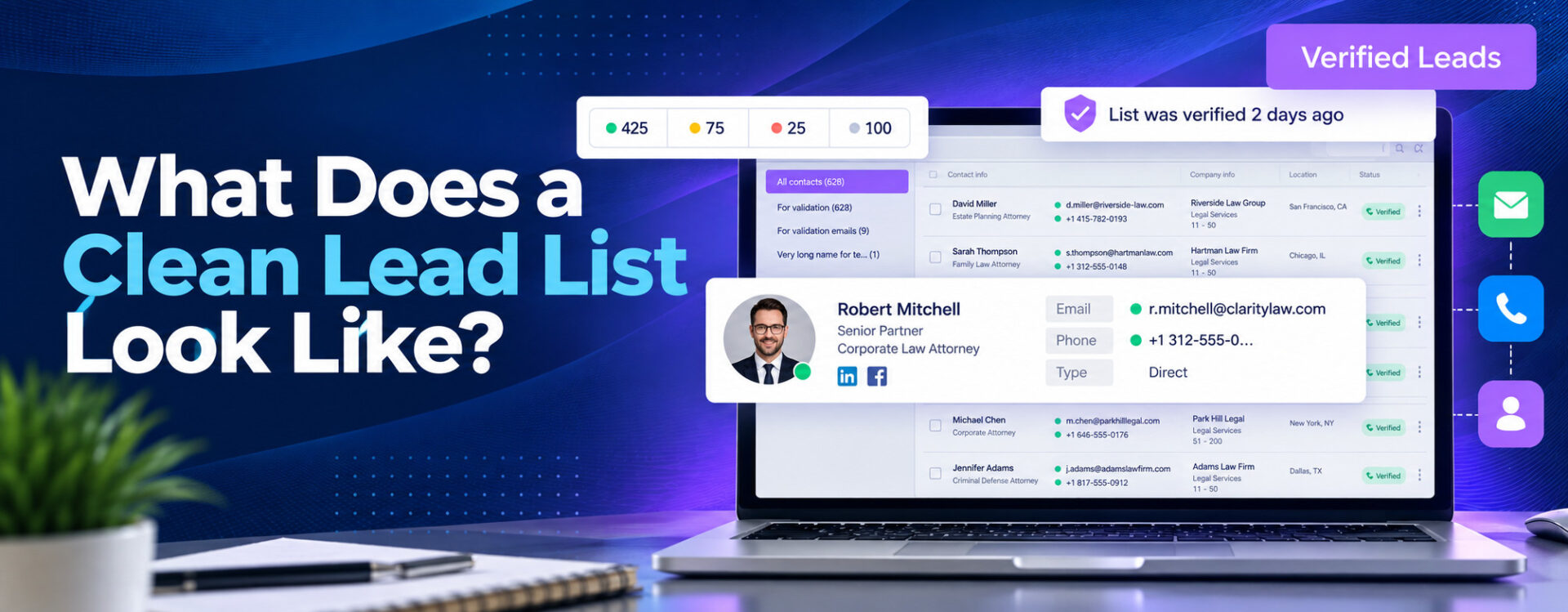
For a B2B campaign, a useful record may include a current company name, contact name, job title, business email, phone number, location, industry, and company size. A consumer campaign may depend more heavily on address, geography, demographics, homeownership, life events, or other audience characteristics. In both cases, the key question is whether the information is still correct and whether the record still belongs in the target audience.
That means a clean record should pass more than one test. Is this still the right person or household? Is the contact information current? Does the record still match the qualification criteria? If the answer to any of those questions is no, the record needs to be reviewed before more sales or marketing effort is spent on it.
Jared’s Leads offers business leads based on factors such as industry, location, company size, and job title. Those fields help define the audience, but they also need to stay current after the list is delivered. If the decision-maker or company profile changes, the value of the record changes with it.
Start With Deduplication and Standardisation
Duplicate records are one of the easiest ways for a growing database to become unreliable. Businesses often add contacts from several sources over time, including purchased lists, website forms, referrals, trade shows, outbound research, customer records, and manual CRM entries. Without a process for matching those records, the same person or company can appear more than once.
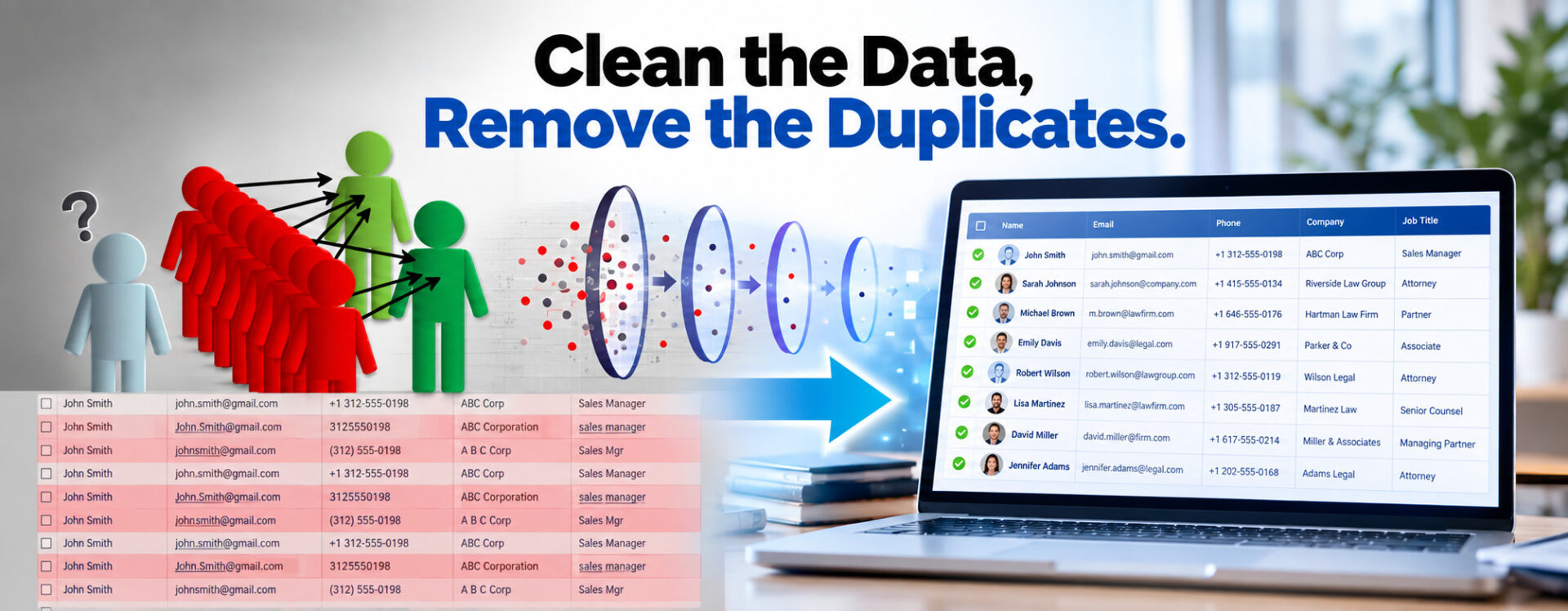
The consequences go beyond an untidy database. Two salespeople may contact the same prospect, a marketing campaign may send the same message twice, and management may overestimate the size of the audience. Reporting can also become misleading when the same account is counted repeatedly.
Standardization helps solve this problem because records must be comparable before they can be matched. Company names, addresses, phone numbers, states, job titles, and other fields should use consistent formatting. Small variations can otherwise make the same company look like two different organizations.
This becomes especially important when a new purchased list is added to an existing CRM. The new records should be compared against existing contacts, customers, previous prospects, and relevant suppression files before the sales team starts working them. The purpose is to add new reach, not another layer of duplicate information.
For businesses that already have a database, Jared’s Leads provides data services that can support processes such as deduplication, verification, enrichment, and list maintenance. Cleaning the database before launching a campaign is much easier than repairing the same problems after outreach has already started.
Verify Email Addresses and Phone Numbers
Contact information is one of the clearest indicators of list quality because problems often become visible as soon as a campaign begins. A bad email address may bounce. A phone number may be disconnected or reassigned. A contact may still be reachable but no longer be the person your sales team needs to speak with.

Email verification becomes particularly important when a list will be used for outbound campaigns. A large number of invalid or outdated addresses can create unnecessary waste and make campaign results harder to interpret. Verification, suppression, and regular list hygiene can help businesses identify obvious problems before a campaign is scaled.
Jared’s Leads’ email lists are built around audience targeting and data-quality processes such as verification, deduplication, suppression, and address checks. Those practices matter because email performance depends on the quality of the audience as much as it depends on the quality of the message.
Phone data deserves the same attention. A sales representative can spend valuable time calling numbers that no longer reach the intended prospect. For a large calling campaign, that lost time adds up quickly. Verification helps the team focus more of its effort on records that are still usable.
The verification process should match the channel. Email campaigns, calling campaigns, and direct mail each depend on different fields, so maintenance should focus on the information most important to the campaign.
Keep Addresses and Geographic Data Current
Geographic data often looks permanent because an address is already stored in the database, but addresses and territories change. A household can move. A business can relocate. A company can expand into a new market. A sales team can take responsibility for a different territory.
The issue becomes particularly important when geography is part of the qualification process. A local company may target certain ZIP codes, while a national B2B business may divide prospects by state or sales territory. A direct-mail campaign may be built around specific neighborhoods or communities.
Address maintenance can involve standardization, validation, and appropriate change-of-address processing. It can also mean reviewing whether the geographic criteria still match the campaign. A list created for one region should not automatically be reused for another market without checking the location fields again.
For mailing lists, an outdated address becomes a direct campaign cost because the message cannot reach the intended audience. Geographic accuracy also helps sales teams manage ownership more effectively when territories change, ensuring prospects are assigned to the correct representative.
Update Job Titles, Company Information, and Other Attributes
A lead can have a working email address and a valid phone number and still be outdated from a sales perspective. In B2B markets, job titles change constantly. People move into new roles, leave organizations, or take on different responsibilities. A person who was once the correct decision-maker may no longer have anything to do with the purchase you are trying to influence.

Company information changes as well. Businesses grow, reduce staff, merge, change ownership, open new locations, or shift the markets they serve. Those changes can affect whether the company still matches the ideal customer profile.
This is why database maintenance needs to go beyond contact information. If your campaign depends on industry, company size, location, or job title, those fields are part of the qualification process. A contact should not be considered a strong prospect simply because an email address happens to work.
Jared’s Leads combines targeted business data with data-quality services, making it possible to build campaigns around specific audience attributes and improve existing records when those attributes need attention. The goal is not to update every field constantly. The goal is to keep the information that determines whether a prospect belongs in the campaign dependable.
Refresh Old Lists Instead of Automatically Replacing Them
When an older database starts performing poorly, the easiest response is sometimes to buy a completely new list. That can make sense when the target market has changed, but replacing the database automatically can also mean throwing away valuable information.
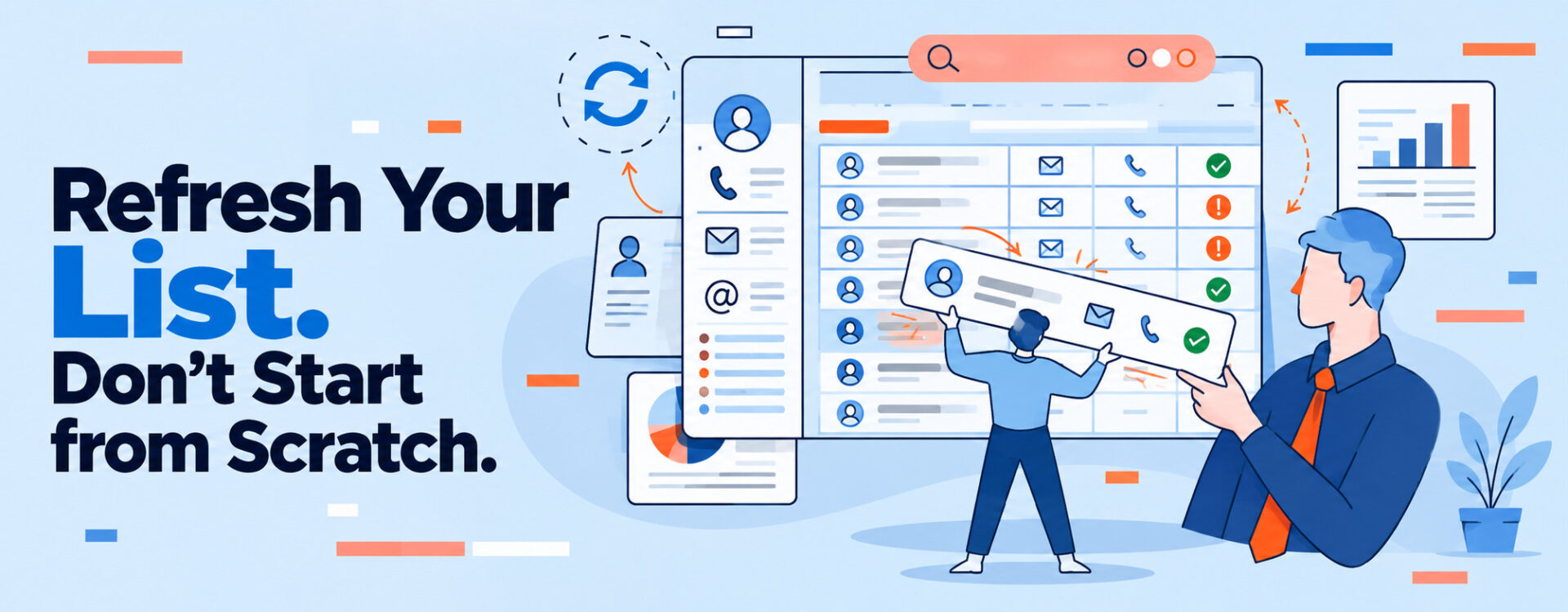
An established CRM may contain previous conversations, account history, campaign activity, customer relationships, and other information that took years to build. The fact that some contact fields are outdated does not mean the entire record has lost its value.
Some records may need updated contact details, job titles, company information, or reactivation. Others may no longer fit the audience and should be suppressed or removed. The objective is to preserve useful information while improving the quality of the working database.
Jared’s Leads offers data services that can support verification, deduplication, enrichment, reactivation, and related maintenance work. That type of process is useful when a business still trusts the underlying audience but no longer trusts every field in the database.
Refreshing also creates an opportunity to review the list strategically. Some segments may have performed well and deserve more attention, while others may have stopped producing useful opportunities.
How Often Should You Clean Your Lead Database?
There is no single schedule that works for every business because different markets and data types change at different speeds. A high-volume B2B prospecting database may require frequent attention. A smaller customer database may need less frequent maintenance. An organization running email campaigns every week may need continual suppression and bounce management, while a company using direct mail a few times a year may concentrate its checks before each campaign.
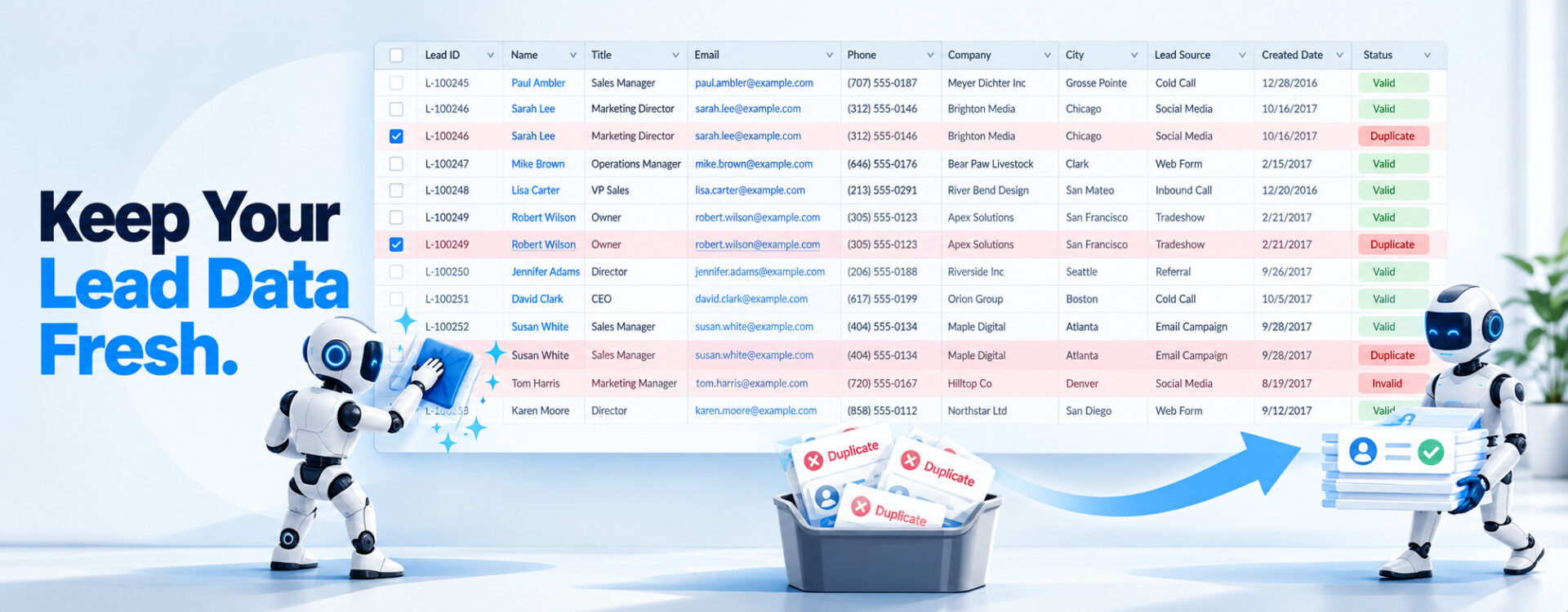
A practical approach is to connect maintenance to real business activity. Review records before important campaigns, refresh older segments on a recurring basis, and establish a process for updating the database whenever salespeople discover that a contact has changed jobs or a company has changed.
Campaign performance can also provide clues. Rising bounce rates, disconnected numbers, returned mail, duplicate records, or declining response rates are all reasons to investigate the database.
The goal is not to create administrative work for the sake of it. The goal is to catch problems early, while they are still manageable and before they have been multiplied across a larger campaign.
How Clean Data Improves Sales and Marketing Performance
Clean data matters because sales teams need accurate contacts, marketing teams need reliable audience fields, operations teams need consistent records, and management needs trustworthy campaign information.

Poor data introduces friction at every stage. A salesperson calls someone who left the company, a message goes to an invalid address, direct mail goes to an old location, or a duplicate record creates another outreach attempt.
Clean data does not guarantee that a campaign will succeed, but it removes avoidable problems that can interfere with the campaign. It gives sales and marketing teams a more reliable foundation for doing their actual jobs.
It also improves reporting. When duplicate, invalid, and outdated records are reduced, managers get a clearer view of audience size, response rates, conversions, acquisition costs, and revenue. That makes future decisions easier because the numbers are based on a more realistic picture of the market.
Jared’s Leads connects marketing data solutions with audience building, data hygiene, campaign activation, and follow-up. That broader structure reflects an important point: data quality is not separate from campaign performance. It is one of the inputs that helps determine whether the campaign can work efficiently.
How Jared’s Leads Can Help Keep Your Lead Lists Accurate
Maintaining a large database internally can be difficult when sales and marketing teams are already focused on customers, campaigns, and revenue. Jared’s Leads can help at several points in that process, whether a business needs new data, wants to improve an existing database, or needs to prepare its records for another campaign.

For businesses starting with fresh prospect data, Jared’s Leads offers targeted contact and lead solutions. For companies that already have a database, its data services can address duplicates, verification, enrichment, reactivation, and other list-quality issues. The right approach depends on the condition of the data and the objective of the campaign.
The company also supports specific list types, including email lists and targeted mailing audiences, which can be useful when a campaign has a clear channel and customer profile. The goal should always be to match the audience and the data preparation process to the way the records will actually be used.
If your database has become difficult to trust, first determine whether the problem is outdated contact information, poor targeting, duplicates, missing fields, or a combination of those issues. Businesses can contact Jared’s Leads to discuss the database and campaign requirements.
Frequently Asked Questions
Q.1. How often should a lead list be cleaned?
The right schedule depends on how quickly your market changes and how frequently the list is used. Active prospecting databases generally need more attention than stable customer files.
Q.2. What is the difference between data cleaning and data enrichment?
Data cleaning focuses on correcting problems such as duplicate, invalid, inconsistent, or outdated records. Data enrichment improves the information available on a record by adding or updating useful fields such as job titles, phone numbers, company details, or other relevant attributes.
Q.3. Why do purchased lead lists become outdated?
People change jobs, companies move or reorganize, contact details change, and customers move into or out of different audience categories. Even good data naturally loses some accuracy over time.
Q.4. Should I replace an old database or clean it?
It depends on the condition of the audience. If the market is still relevant and the problem is mainly data quality, refreshing the database may be more useful than starting over. If the target customer has changed significantly, a new list may be the better option.
Q.5. Does deduplication really matter?
Yes. Duplicate records can cause repeated outreach, inflate audience counts, waste campaign budget, and make reporting less reliable.
Q.6. Why is email verification important?
Email verification helps identify addresses that may no longer be valid or deliverable. Keeping email data current can reduce wasted sends and provide a clearer view of campaign performance.
Q.7. Can old leads be refreshed instead of deleted?
In many cases, yes. Some records can be corrected, enriched, or reactivated, while others may need to be removed or suppressed. The goal is to preserve useful information while improving the quality of the working database.
Q.8. Can Jared’s Leads help clean an existing database?
Yes. Jared’s Leads offers data-quality services that can support verification, deduplication, enrichment, reactivation, and other list-maintenance requirements.
Final Takeaway

A lead list is not finished when it is purchased or added to a CRM. It is a working business asset that changes in value as people change jobs, businesses change, addresses change, and campaign requirements evolve.
The most effective approach is to maintain the database rather than waiting for quality problems to become obvious. Verify contact information, remove duplicates, update important company and job-title fields, review geographic data, and refresh older records before they begin creating unnecessary cost.
This is about more than keeping a database tidy. Clean data gives sales teams better information, gives marketing teams a more reliable audience, and gives managers more confidence in the numbers they use to evaluate campaigns.
The important question is not simply how many records you have. It is whether those records are accurate, current, relevant, and useful for the customers your business wants to reach today.
A well-maintained list gives your team a stronger foundation for every call, email, campaign, and sales conversation that follows.