Introduction
Finding companies that fit your target market is an important first step in B2B lead generation, but it does not automatically connect your sales team with the people involved in a purchase. A company may match your industry, location, and size criteria, yet outreach can miss the mark if it reaches someone with no role in evaluating or buying your product. The task is to identify relevant organisations and the people inside them whose responsibilities connect to the need you solve.
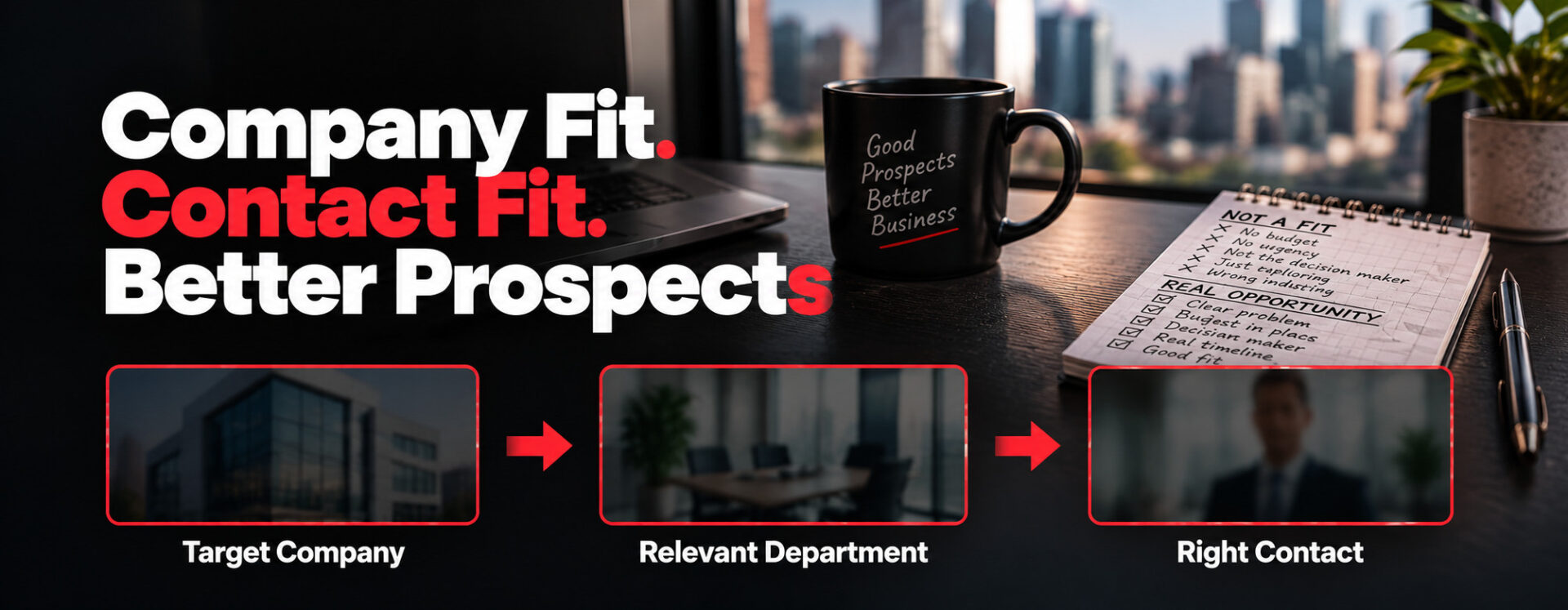
This applies whether you sell software, professional services, equipment, or marketing support. A broad list can create activity without useful conversations, while a relevant audience gives the team a stronger starting point. Effective targeting combines company information, job responsibilities, organisational context, and contact details that suit the campaign. Businesses exploring prospect data can review Jared’s Leads list solutions to see options for defining an audience by industry, geography, company characteristics, and contact criteria.
Why Is Finding the Right Company Only Half the Job?
Imagine a software provider selling inventory management tools to mid-sized retailers. Its team identifies suitable retailers, but most messages go to general inboxes or employees who do not work with inventory operations. The company selection may be sound, yet the contact selection makes it difficult to start a relevant discussion.

The person who experiences a problem may not control the budget, and the person approving a purchase may not evaluate the product. At a smaller retailer, the owner may oversee operations and purchasing. At a larger company, an operations director may define the need, a technology manager assess integrations, and a finance leader review the cost.
Company targeting and contact targeting should work together. Company data establishes which organizations are worth considering, while professional roles help identify whom to approach. This avoids treating every employee at a suitable company as an equally valuable prospect. Jared’s sales lead solutions can be a starting point for aligning company selection with campaign goals.
Who Is the Right Decision Maker in a B2B Company?
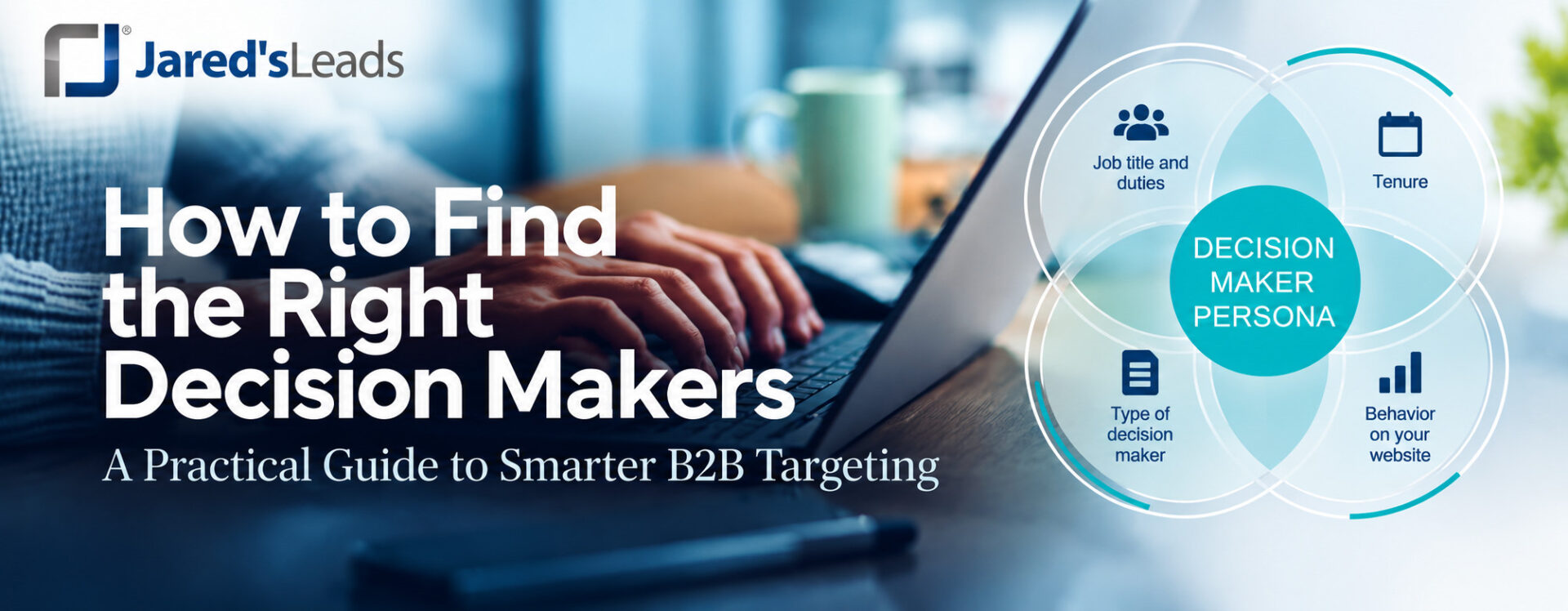
A decision maker has meaningful authority over a purchasing choice, but business buying rarely follows one fixed pattern. Depending on the company and product, the decision may rest with an owner, department head, procurement team, executive, or group of stakeholders. Someone who influences the evaluation can still be valuable even if that person does not sign the contract.

It helps to distinguish the roles in a buying process. The problem owner understands the challenge; an evaluator checks operational, technical, or financial requirements; an internal champion recommends a solution; a budget holder authorizes spending; and procurement may manage vendor comparisons and terms. In a small business, one person may perform several roles, while a larger organization often separates them.
The best contact is someone whose responsibilities connect to the problem you solve, with other stakeholders included when necessary. An operations manager may be a strong starting point for scheduling software, while enterprise security software may involve IT, legal, security, and finance. A focused business contact list can help organize contacts around appropriate company and role criteria.
How Should You Define Your Ideal Customer Before Searching for Contacts?
Before choosing job titles, define which businesses have the strongest reason to buy from you. “Companies in the United States” is too broad to guide a sales team. A more useful profile might specify regional accounting firms, multi-location retailers, or manufacturers that need a particular type of equipment. The goal is to identify organisations where the problem you solve is likely to matter.
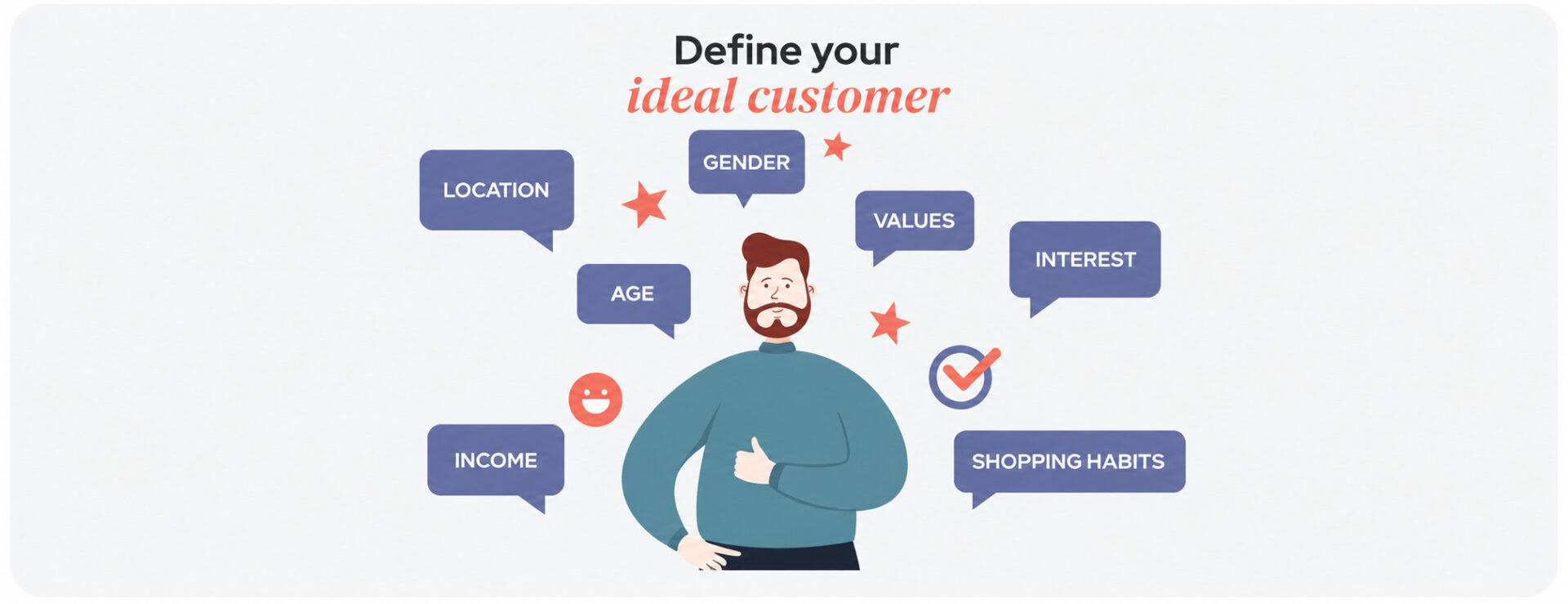
Use relevant factors such as industry, geography, company size, revenue range, business model, and operational needs. Not every campaign requires every field, and some details may not be available for every organisation. Prioritise characteristics that affect your ability to serve the customer and that indicate a plausible need for your offer.
Existing customers can help sharpen the profile. Review which accounts were a good fit, received value, and were likely to renew or expand. Look for patterns, but do not assume that every shared attribute caused the purchase. Also define disqualifiers, such as a geography you cannot serve, a company size that cannot support your pricing, or a use case your product does not address. A profile should guide targeting without excluding promising prospects on weak assumptions.
Once the profile is clear, select companies and then decide which roles are relevant inside them. Teams turning an audience profile into contact criteria can explore Jared’s targeted list services and ask which filters are available for their market.
Which Job Titles Should You Target for Your Product or Service?
Job titles work best when they reflect the business problem you solve. Searching only for CEOs and owners may suit offers for small companies, but it can miss the people who manage a specialist function in a larger organisation. Searching every person with “manager” in a title can be too broad.
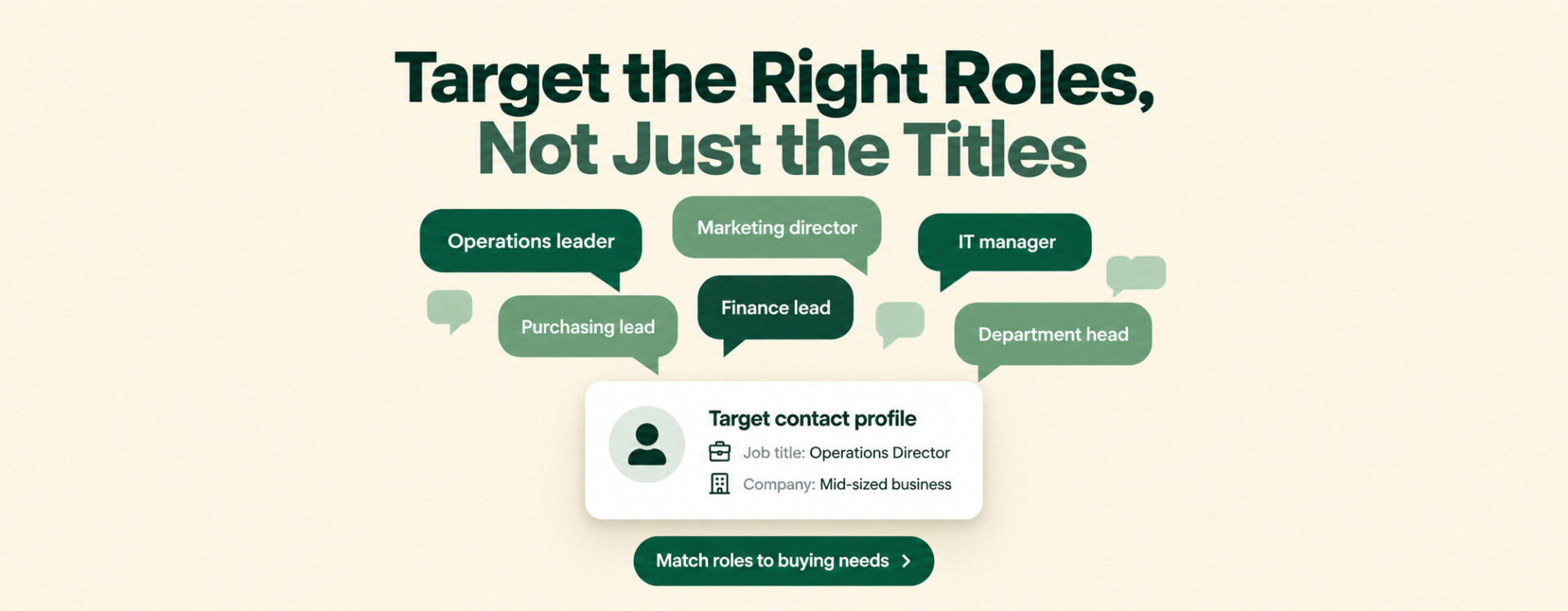
Identify the department that normally owns the problem. A recruiting platform may suit talent acquisition leaders or HR directors; production equipment may interest plant managers, production directors, or purchasing teams; and demand generation services may be relevant to marketing directors or revenue leaders.
Allow for title variations. One company may use “Head of Operations,” while another uses “Director of Business Operations” for a comparable role. Seniority also differs by company size, so list primary titles most closely connected to the need and secondary titles that may influence the purchase.
A title alone does not prove authority, so check the role in context. It can help to record a short reason for including each title, such as ownership of the relevant workflow, responsibility for selecting vendors, or influence over the budget. That explanation keeps the targeting strategy tied to the offer rather than letting the search expand simply because more titles are available. For professional email contacts, Jared’s B2B email list service can be explored for job title, industry, geography, and company size targeting, subject to available data.
How Does Company Size Change the People You Should Contact?
Company structure affects who evaluates a product, controls the budget, and takes part in a decision. In a small business, the owner may approve software, choose a marketing agency, and select suppliers. That person may be the right contact when the offer affects the business broadly and needs no specialist evaluation.
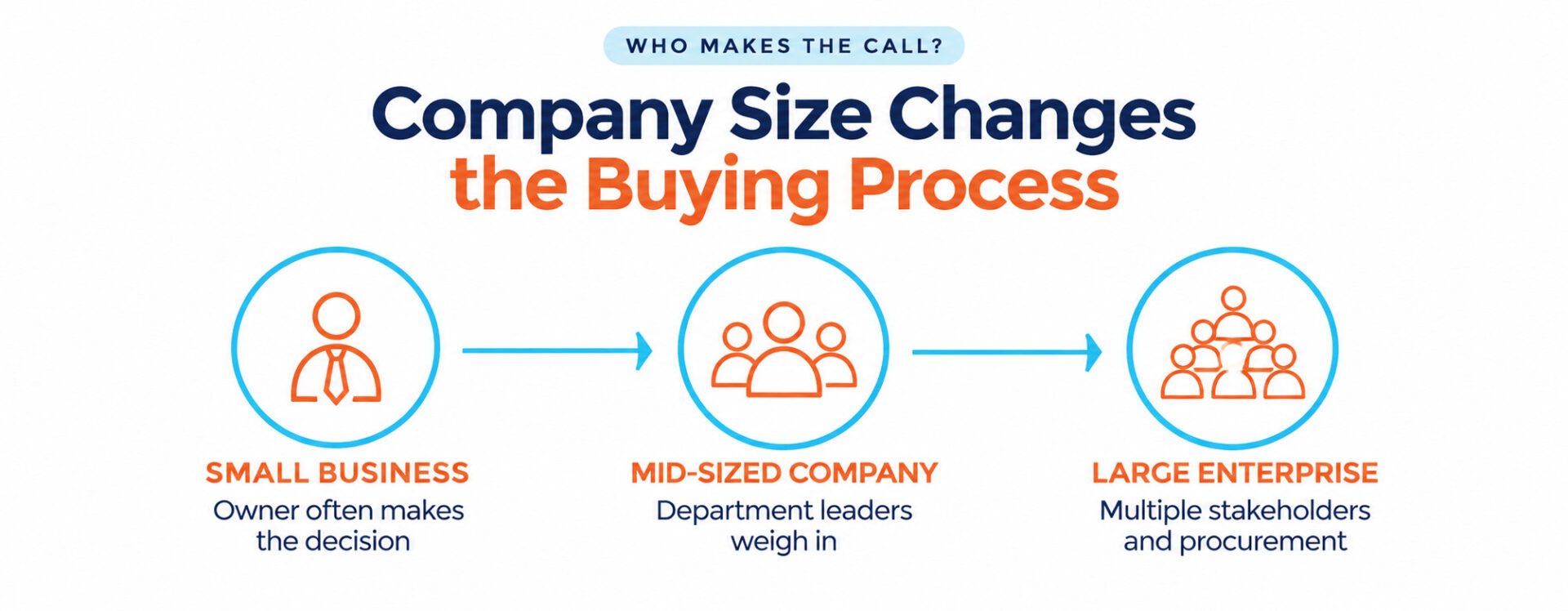
Larger organisations divide responsibilities across departments. Operations may identify workflow problems, IT may review technology and security, finance may examine cost, and procurement may manage vendor requirements. A relevant contact may recommend a product without giving final approval, so more than one stakeholder may need to be considered.
Size alone does not determine authority. A founder may delegate purchasing, while a small business owner may rely on an outside adviser. Segment companies by size and adjust contact priorities to reflect likely responsibilities. To explore business audiences by company profile and role, see Jared’s business and contact lists.
How Can SIC and NAICS Codes Improve Decision Maker Targeting?
SIC and NAICS codes categorize businesses by industry, making them useful for narrowing a large market into a more relevant pool of potential accounts. They do not identify the right contact inside each company. A code describes how a business is classified, not whether its owner, operations director, IT manager, or purchasing lead participates in a buying decision.
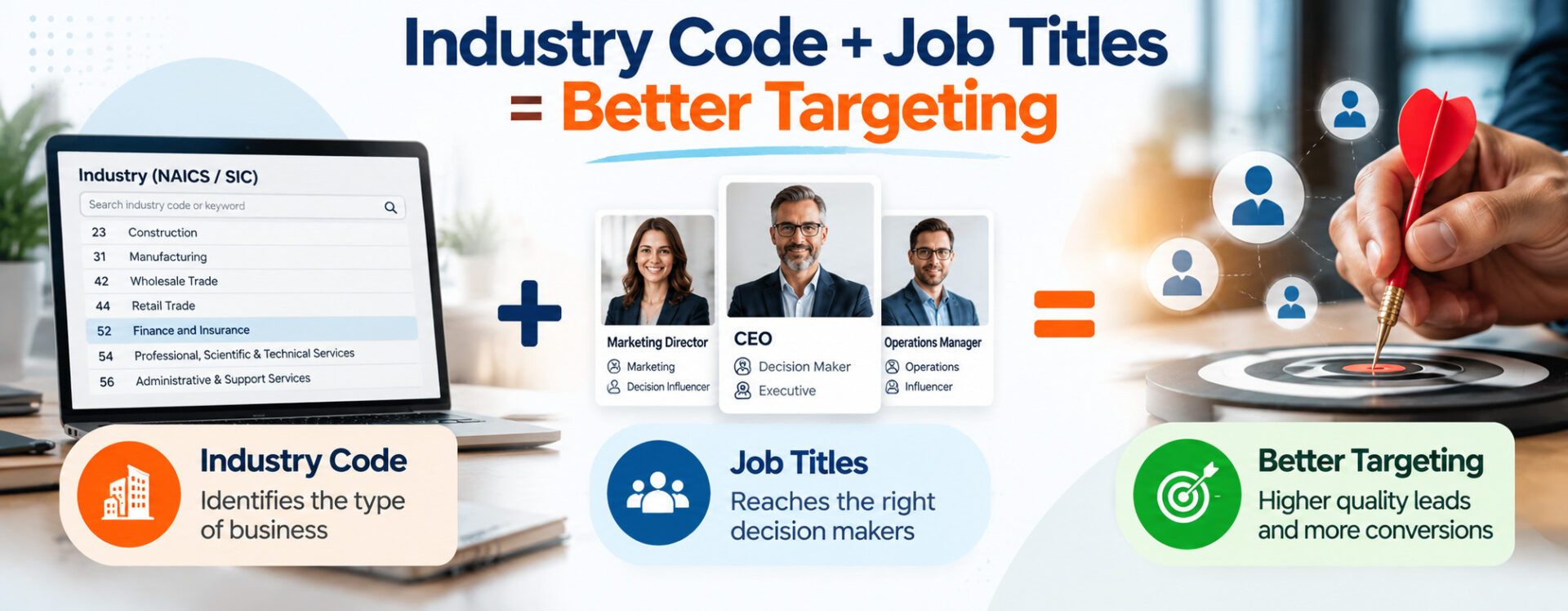
A supplier serving commercial construction firms might use an industry classification to find relevant companies, then refine the audience by geography and company size. The appropriate contact depends on the product: safety equipment and project management software may require different roles even within the same industry.
Combining industry codes with job titles is more useful than relying on either alone. Company filters establish which businesses belong in the target market, while professional roles help identify people connected to the need. Since company records are not always complete, review a sample before committing to a large campaign.
Define industry, geography, company profile, job roles, and channel requirements together. Jared’s B2B email lists can be explored for SIC or NAICS and job title targeting options, where available.
How Do You Research and Verify a Potential Contact?
Contact data helps identify a likely prospect, but basic research can prevent targeting errors. A company website may explain its services, locations, leadership, and priorities. Team biographies and company announcements can help establish whether a person still holds the relevant role.

Professional profiles can add context, but they do not prove that every detail is current. People change employers and departments, and similar titles can mean different things at different companies. Check the person’s role and the company’s structure when that distinction matters to your offer. For high value accounts, keep a note of the source and date of your check so another salesperson can understand why the contact was selected and know when it may be time to review the record again.
Verify the fields your campaign needs. Email validation, phone checks, and postal address processing serve different purposes, and no single check proves every field is accurate. Reviewing a sample before launch can show whether the filters produce relevant companies and contacts.
If you already have a database, consider deduplication, updated company details, or missing fields before buying more records. Jared’s Leads describes data hygiene, enrichment, and verification options through its list and data services.
Which Contact Details Do You Need for Your Outreach Channel?
The right decision maker also needs to be reachable through a suitable channel. Email campaigns need an appropriate business email field, telephone prospecting requires relevant phone information and compliance checks, and direct mail depends on a usable postal address.

The channel should shape your data requirements without changing the definition of a qualified contact. A valid email does not make an irrelevant recipient a good prospect, and a phone number does not prove that someone can approve a purchase. First select relevant companies and roles, then decide which fields the chosen method requires.
Some businesses coordinate multiple channels, such as an email followed by a permitted phone follow up, while reserving direct mail for selected accounts. Keep outreach records consistent to avoid duplicate contact and make follow up more useful.
Choose the list for the campaign: review Jared’s B2B email lists, targeted phone lists, or business mailing lists. Confirm available fields before ordering.
What Mistakes Make Decision Maker Lists Less Effective?
One common mistake is targeting the most senior person at every company without considering who owns the problem. Seniority can indicate influence, but a department leader may be the better first contact when the executive delegates the decision.

Another mistake is using job title filters that are too narrow or too broad. Include reasonable title variations while keeping them connected to a clear business need, and review a sample to see whether the results are relevant.
Record volume can also distract from list quality. A large file has limited value if contacts do not match the target market or the fields do not support the campaign. A smaller audience with relevant roles may be easier to research and manage.
Finally, use results to improve future targeting. If a role produces replies but few qualified opportunities, reconsider the contact criteria, offer, or buying process. If relevant contacts show little interest, the message may need work rather than the list. Businesses refining their audience can discuss requirements through Jared’s Leads.
How Should You Measure and Improve Your Targeting Over Time?
Evaluate a decision-maker list by what it helps the sales team accomplish, not by the number of names it contains. Agree on the campaign outcomes that matter, such as reaching the intended roles, generating relevant replies, booking qualified meetings, or creating sales opportunities. These measures help separate list quality from messaging, offer, and follow-up.

Review results by segment. Compare patterns across company sizes, industries, job functions, and outreach channels. If operations leaders in one segment engage more often, that finding can inform future targeting. If certain titles produce little useful engagement, check whether those contacts truly own the problem.
Do not treat one campaign as definitive evidence. Small samples, seasonal changes, messaging, and follow-up can affect results. Look for repeatable patterns and document adjustments so the team can learn what changed. For example, a high delivery rate paired with few relevant replies may point to a targeting or message problem, while repeated invalid contact details suggest that data verification needs attention. Separate these signals before deciding what to change. If results show that company or contact records need improvement, review the underlying data before buying more. Jared’s Leads describes audience selection and data support through its list services.
How Can Jared’s Leads Help You Reach Relevant Business Contacts?
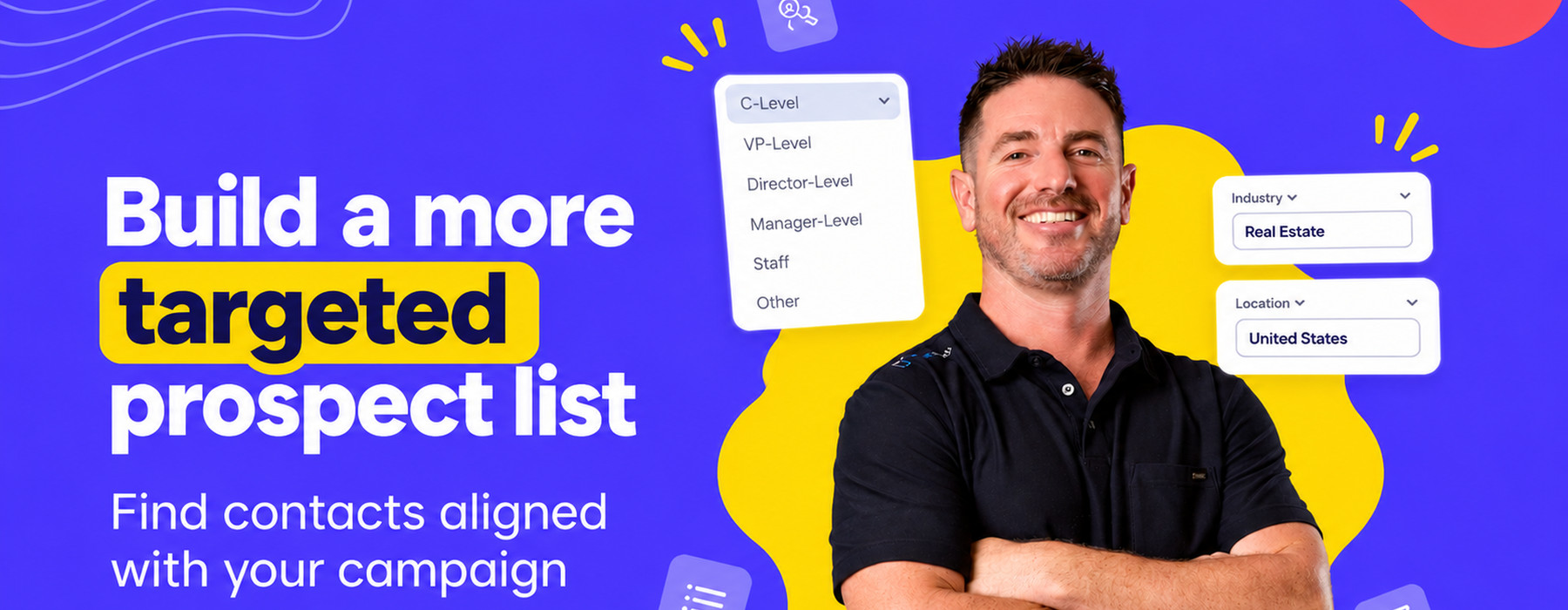
A useful decision maker list starts with a defined audience rather than a generic file of names. Businesses need to identify which companies they want to reach, which professional roles matter, and which fields are required for the campaign. Requirements differ between a firm selling to local businesses, a software provider targeting enterprise accounts, and an agency focused on a specialist market.
Jared’s Leads offers business and contact list options that can be scoped around industry, geography, company size, SIC or NAICS classification, and job title where available. It also offers email, phone, mailing, sales lead, and data services. Explain the product being sold, the target companies, the roles to prioritize, and the geographic market to clarify the request.
Before purchasing, confirm available filters, expected record count, and any verification or data preparation processes. Ask which fields will be included, whether the selection can be narrowed by title or company attributes, and what delivery format is available for your CRM or workflow. No provider can guarantee that every contact will convert, because response depends on the offer and the sales process as well as the data. Visit Jared’s Leads to review services or use the contact page to discuss a specific targeting requirement.
Frequently Asked Questions

Q.1. How do I find decision makers at a company?
Start by identifying the business problem your product solves and the department most closely connected to that problem. Then use company information, job titles, and professional profiles to identify people who may evaluate, influence, or approve a purchase. Confirm that their role is current and select contact fields that suit the outreach channel. A targeted list can make the research process more manageable, but the criteria should be defined before the contacts are selected. For high value accounts, verify the buying group more carefully; for broad campaigns, test a sample to make sure the filters return the intended audience.
Q.2. Is the CEO always the best person to contact?
No. At a small company, the CEO or owner may make many purchasing decisions, but larger organizations often distribute responsibility across departments. An operations leader, IT director, marketing executive, or procurement professional may be better placed to evaluate a particular product. The appropriate contact depends on the problem being solved, the value of the purchase, and the company’s decision making process.
Q.3. How do SIC and NAICS codes help with prospecting?
SIC and NAICS codes help group companies by industry so a sales team can focus on businesses that are more likely to need its product or service. These codes do not identify individual decision makers, so they should be combined with company characteristics and relevant job titles. The resulting audience is more useful when both the organization and the contact match the campaign criteria.
Q.4. What should a B2B decision maker list include?
Depending on the campaign, a list may include company name, contact name, job title, business email, phone number, location, industry, and relevant company details. Not every field will be available for every record, so confirm the deliverables before purchasing. The data should match the intended channel and be checked using appropriate verification methods where available. Businesses comparing options can review Jared’s B2B email lists and confirm which fields are available.
Q.5. How often should decision maker contact data be reviewed?
There is no single schedule that suits every market, but contact data should be reviewed before important outreach cycles and whenever campaign activity suggests that records may be outdated. Bounced emails, disconnected numbers, changed job titles, and duplicate records can signal a need for review. A regular process for correcting and suppressing records can help prevent the same avoidable errors from repeating.
Final Takeaway
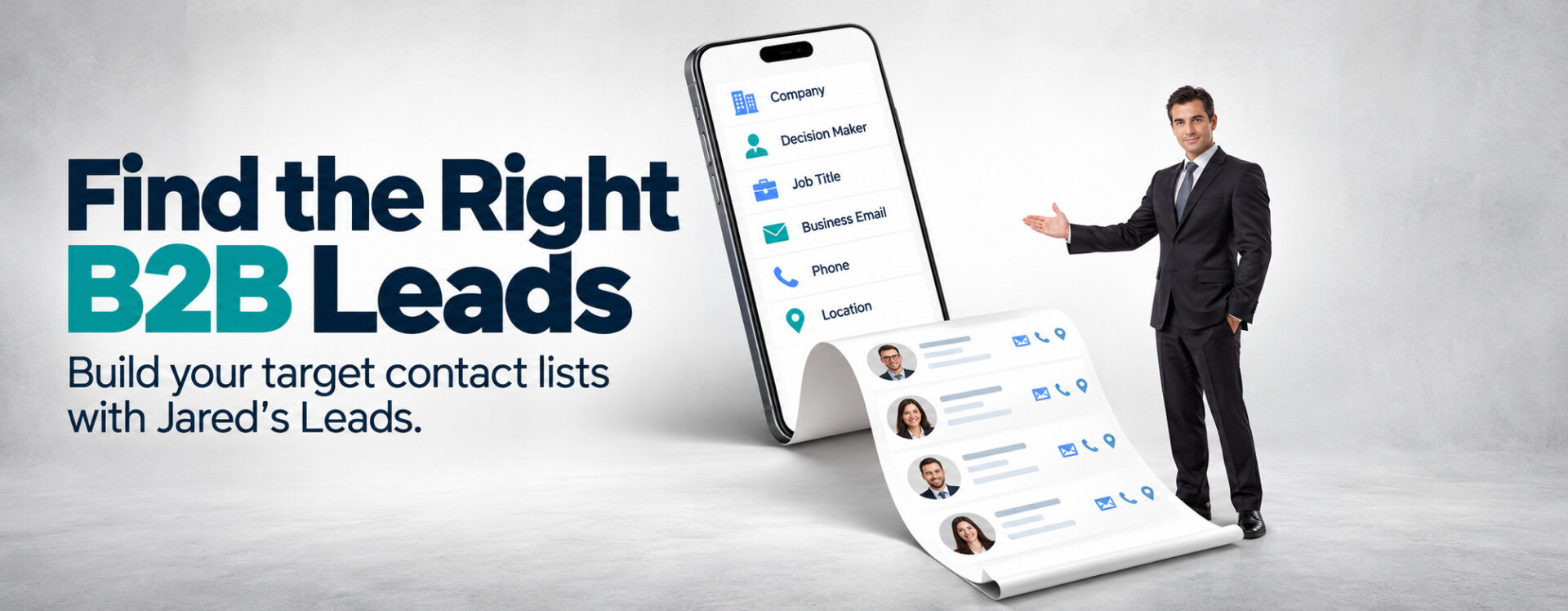
Finding the right decision makers starts with identifying the right companies, selecting relevant job titles, and using accurate contact information. By combining industry classifications, company size, professional roles, and contact verification, businesses can build more targeted prospect lists and focus their sales efforts on relevant opportunities.
Need the right B2B leads for your next campaign? Contact Jared’s Leads to request a targeted business contact list based on your preferred industry, location, company size, and decision maker job titles. Tell us whether you need business email addresses, phone numbers, or mailing addresses, and we will help you explore the available options.
Start planning your targeted prospect list today – Visit Jared’s Leads to explore available services, or contact the team to discuss your campaign requirements and request a tailored recommendation. The better you define your audience before outreach begins, the easier it becomes to build a focused prospecting strategy around the businesses and decision makers that matter to your sales goals.