Introduction
Businesses can generate sales opportunities in several ways. They can build targeted prospect lists, purchase contact data, generate inquiries through marketing campaigns, or receive leads from people who have recently expressed interest in a product or service. The challenge is figuring out which approach makes sense for how a particular business sells.
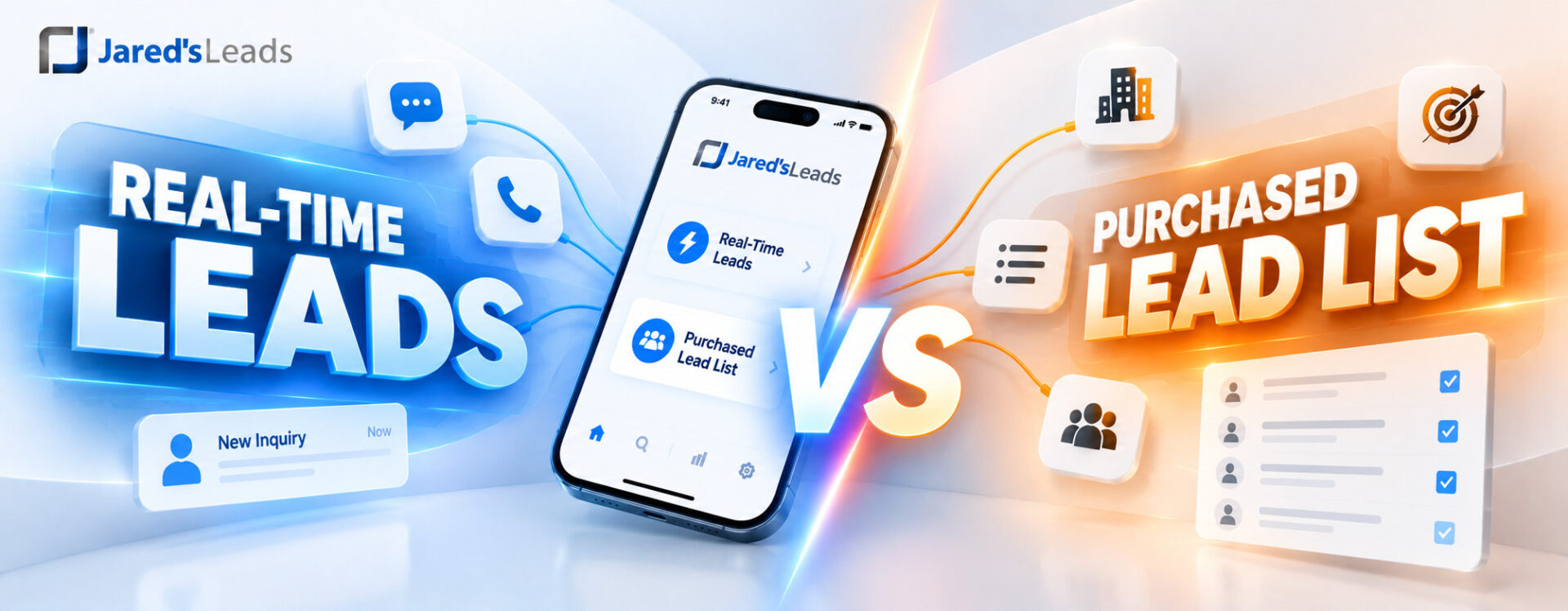
Two options that are often compared are real-time leads and purchased lead lists. While both can help businesses build a sales pipeline, they work differently. A purchased lead list gives you a defined audience to prospect, while real-time leads are connected to a recent inquiry or expression of interest.
The difference becomes important when you consider timing, buyer intent, sales resources, and follow-up. A business running an outbound campaign may need a large, carefully targeted audience. Another business may need to contact potential customers shortly after they submit an inquiry.
There is no universal answer. The right approach depends on your market, sales process, budget, and ability to follow up. In some cases, businesses may benefit from using both.
If you are evaluating different types of lead-generation solutions, the Jared’s Leads homepage provides an overview of the company’s data and lead-generation services.
What Is a Purchased Lead List?
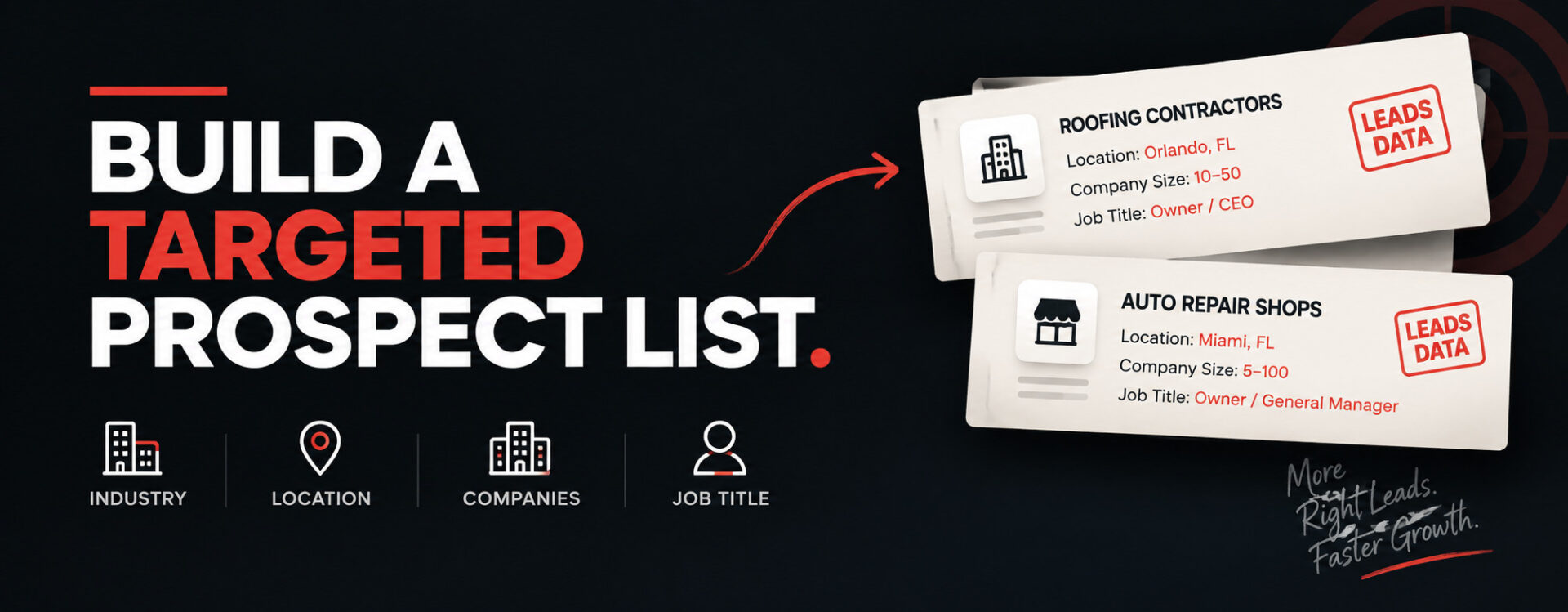
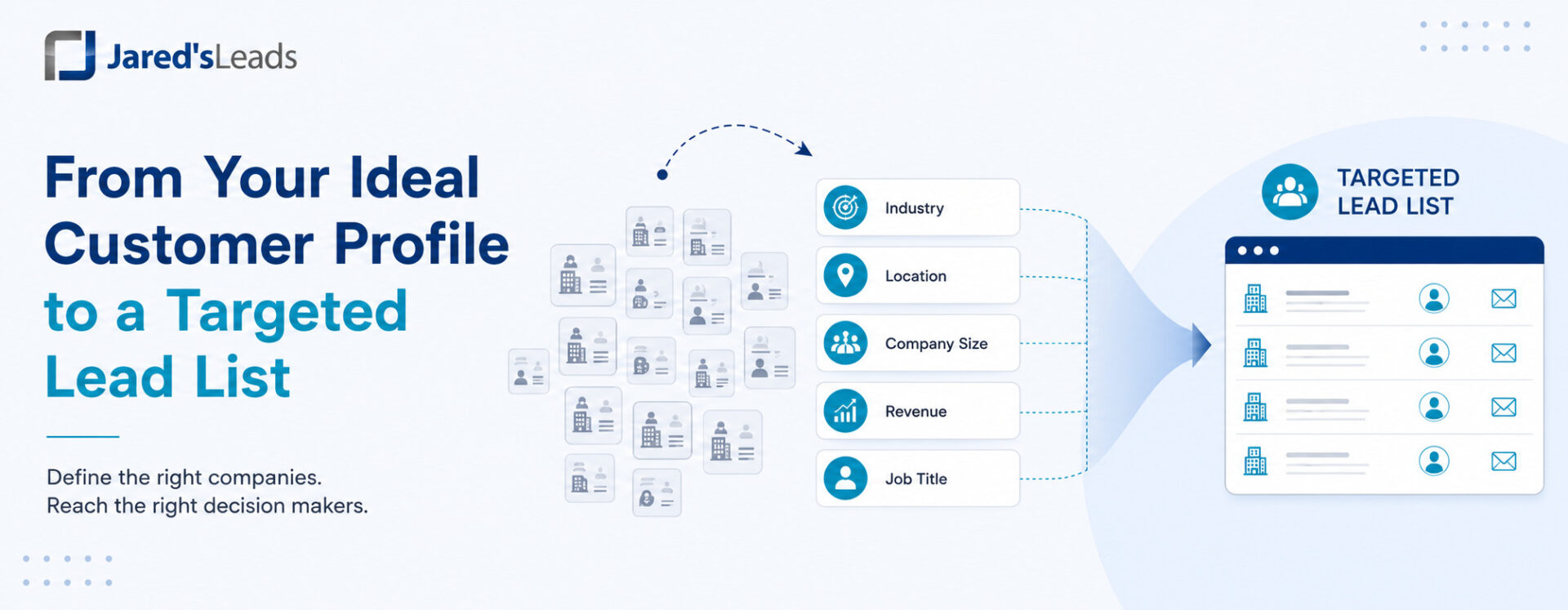
A purchased lead list is a collection of prospect or contact records built around specific targeting requirements. Depending on the campaign, those requirements can include industry, location, company size, revenue, job title, demographics, SIC or NAICS classification, and other characteristics.
The main advantage is control over who you want to reach. Instead of waiting for prospects to discover your company, you can identify the audience that fits your customer profile and create an outbound campaign around that audience.
For example, a software company selling solutions to manufacturers might want to reach companies with 50 to 500 employees in specific states and contact owners, operations executives, or IT leaders. A targeted list can be built around those requirements instead of giving the sales team a broad database containing unrelated businesses.
This makes purchased lists useful for outbound email, cold calling, direct mail, account-based marketing, and market expansion. Jared’s Leads currently offers targeted business email lists based on factors such as industry, geography, job title, company size, revenue, SIC, and NAICS.
The important thing to remember is that a purchased list identifies potentially relevant prospects. It does not necessarily mean that every person on the list is actively looking for your product today.
That distinction is important because audience fit and buyer intent are not the same thing.
What Are Real-Time Leads?

Real-time leads work differently. They are connected to a recent action taken by a potential customer, such as submitting an inquiry, requesting information, asking for a quote, or completing another qualifying activity.
The defining characteristic is recency. The prospect has recently done something that indicates interest in a particular product or service, giving the sales team an opportunity to respond while that interest is still relatively fresh.
Jared’s Leads positions its real-time lead solutions around capturing intent signals, validating and categorizing opportunities, and delivering leads into the appropriate sales workflow.
Consider a homeowner who submits a request for an HVAC estimate. That person may be researching several providers at the same time. A company that receives the inquiry quickly can begin the conversation while the need is still active.
That does not guarantee a sale. Lead quality, qualification, competition, pricing, sales skills, and follow-up still influence the outcome. Real-time simply changes the context in which the salesperson begins the conversation.
This is why real-time leads require more than a source of inquiries. Businesses also need a process for receiving, assigning, contacting, and following up with those prospects.
Timing and Buyer Intent Change the Sales Conversation
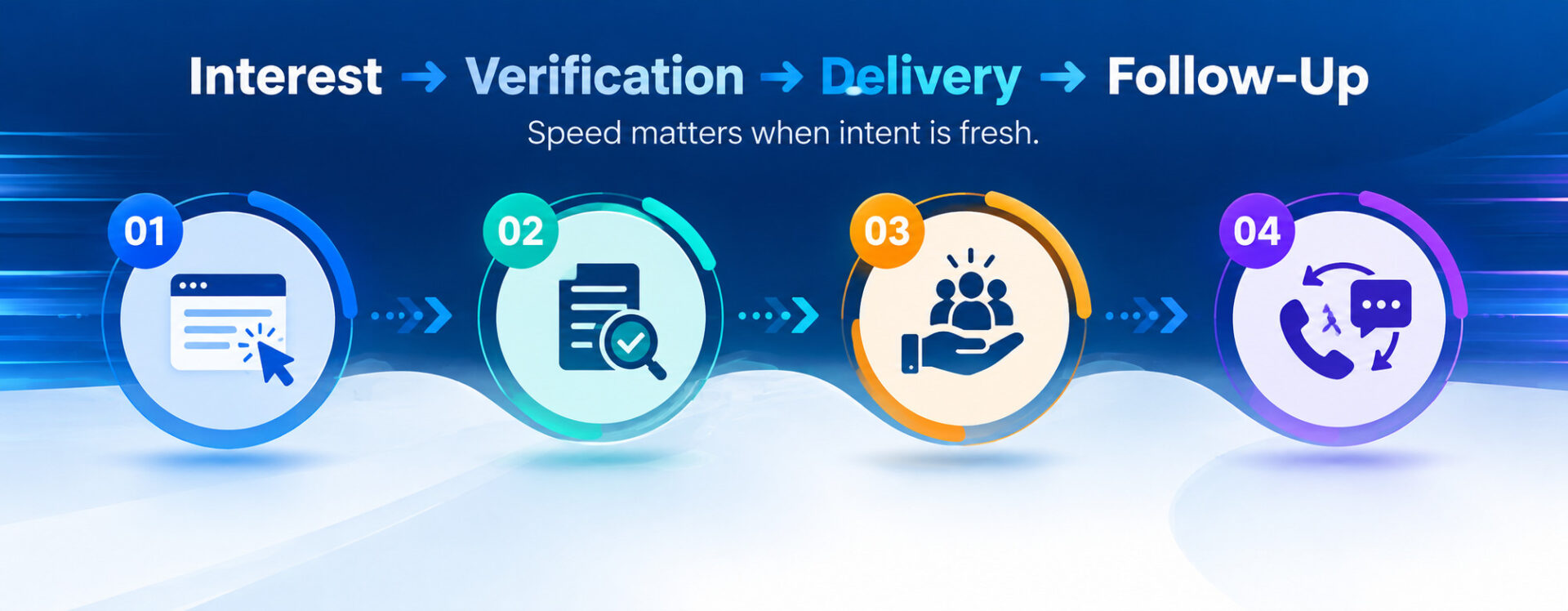
One of the biggest differences between purchased lists and real-time leads is when the sales conversation begins.
With a purchased list, the business generally controls when outreach starts. The prospect may fit the company’s Ideal Customer Profile, but there is no guarantee that the person is currently looking for the product or service.
That is perfectly normal for outbound prospecting. The purpose of the campaign is to introduce the company, establish relevance, create interest, and eventually develop an opportunity.
Real-time leads begin from a different position. The prospect has recently taken an action connected to the category, so the salesperson has additional context for the first conversation.
For example, an insurance company contacting someone who recently requested insurance information can approach the conversation differently from an insurance company cold-calling someone simply because that person fits a demographic profile.
However, businesses should not assume that a real-time inquiry automatically represents a ready-to-buy customer. The prospect may still be comparing options, gathering information, or deciding whether to move forward.
This is where having the right sales process matters. The lead source creates the opportunity, but the quality of the conversation and follow-up determines what happens next.
Businesses that want to understand how targeting affects lead quality can also review Jared’s Leads’ guide on what makes a high-quality lead list.
When Should You Use Purchased Lists and When Real-Time Leads?

The right choice depends largely on your sales process, target audience, and how quickly your team can follow up. Purchased lead lists make sense when you already know who you want to reach and need to build a specific audience at scale. You can target prospects by industry, location, company size, job title, demographics, and other criteria. This approach works well for outbound email, calling, direct mail, and account-based prospecting. Jared’s Leads offers targeted contact and marketing lists built around specific campaign requirements.
Real-time leads are different because timing becomes a major part of the strategy. These are prospects who have recently taken an action such as submitting an inquiry or requesting information. They can be a strong fit for businesses where responding quickly matters, particularly competitive industries such as home services, insurance, mortgage, automotive, and financial services. Jared’s Leads delivers real-time leads so sales teams can work on fresh opportunities while the prospect’s interest is still active.
You do not necessarily have to choose one approach. Many businesses can use both.
Purchased lists can help build a larger targeted prospecting pipeline, while real-time leads can provide opportunities that require faster follow-up. The important question is how each source fits your sales process, team capacity, and campaign goals.
If you are unsure which option makes sense, Jared’s Leads can also help you evaluate the broader picture, including audience data, campaign execution, data quality, and follow-up through its marketing data solutions
The decision ultimately comes down to the type of sales motion your business uses. If your priority is reaching a defined market, expanding territory coverage, or building a structured outbound campaign, a purchased list may provide the audience you need. If your priority is responding to prospects who have recently demonstrated interest, real-time leads may better fit the workflow. Businesses can also use both approaches, depending on the campaign. Jared’s Leads marketing data solutions combine audience data, campaign activation, data hygiene, and follow-up support, allowing businesses to build their lead strategy around their actual sales process rather than relying on a single source of prospects.
How Should You Compare Cost and ROI?
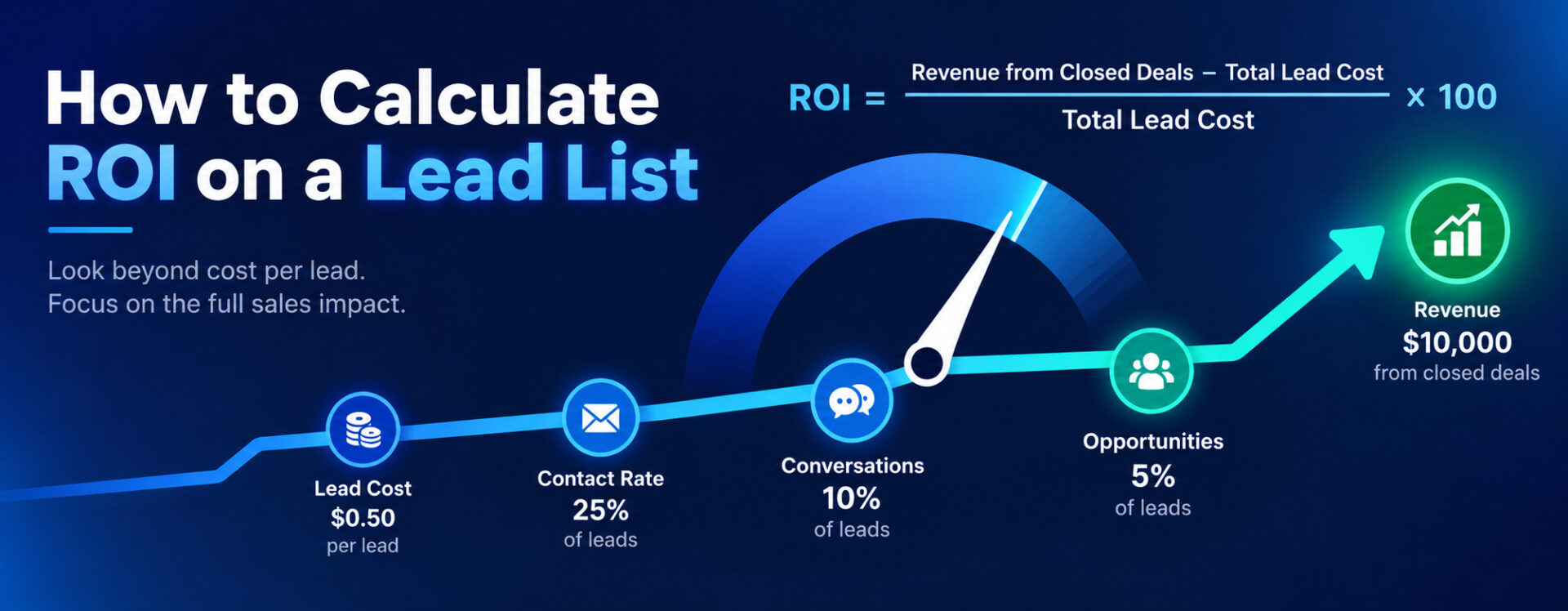
Cost per lead is an important consideration, but it should not be the only number you use when comparing lead sources.
A low-cost purchased list may contain thousands of records, but if only a small percentage are relevant or reachable, the sales team may spend significant time working through contacts that do not produce opportunities.
The same principle applies to real-time leads. A lead may arrive quickly and still fail to become a customer because the prospect is not qualified, the salesperson cannot reach them, or the business is not competitive for that particular opportunity.
A better way to evaluate the investment is to look at what happens after the lead enters the sales process. Contact rates, conversations, qualified opportunities, appointments, conversions, customer acquisition cost, and revenue can provide a much clearer picture of performance.
Jared’s Leads’ current email-list offering, for example, discusses data quality, deliverability, segmentation, campaign performance, and metrics such as conversion rate and cost per acquisition rather than treating the size of a list as the only measure of value.
Businesses should also consider the internal cost of working the leads. Salesperson time, CRM management, email campaigns, calling, follow-up, data cleaning, and campaign management all contribute to the real acquisition cost.
That is why the better question is not simply “Which lead is cheaper?”
It is “Which lead source produces the economics that work for our sales process?”
How Do You Choose the Right Lead Source?

The best place to start is with your sales process.
If your company needs to identify a specific audience, enter a new market, reach decision-makers, or run a large outbound campaign, a targeted lead list may be a natural fit. You can define the audience and give your sales team a structured group of prospects to work through.
If your company depends on people actively requesting information, quotes, applications, or consultations, real-time leads may fit better. In that situation, the ability to receive and respond to inquiries quickly becomes an important part of the strategy.
You should also consider your team’s capacity. Purchased lists require consistent prospecting, segmentation, messaging, and nurturing. Real-time leads require a fast and organized response process. Neither approach can produce strong results if the business does not have the resources to work the opportunities properly.
It is also worth considering whether your business needs one approach or both. A company with a mature sales organization may benefit from using targeted lists for long-term prospecting while using real-time leads for more immediate opportunities.
If you are unsure where to begin, Jared’s Leads can help you define the audience and campaign requirements before selecting a data solution. The company’s broader Solutions page provides an overview of its available lead and data services.
For businesses specifically looking for targeted B2B audiences, the Business Email Lists service provides options for targeting by industry, geography, company size, revenue, job title, SIC, and NAICS.
And if your priority is recent prospect activity, you can review the Real-Time Leads service to understand how that model works.
How Jared’s Leads Can Help You Decide Which Lead List Is Right for You

Choosing between real-time leads, purchased contact lists, and other data options starts with understanding what your sales team actually needs. Jared’s Leads helps businesses decide based on their target audience, sales process, campaign goals, and follow-up capabilities, not simply by choosing the largest list available. The goal is to match the right type of data with the way your business generates and converts opportunities.
Jared’s Leads offers different list types for different sales objectives. Businesses looking for targeted prospects for outbound campaigns may need a curated contact list based on industry, geography, company size, job title, or other criteria. Businesses that want prospects who have recently expressed interest may be better suited to real-time leads. You can review the available options through the Jared’s Leads contact lists and lead solutions to understand how these categories differ.
The timing of your sales process also matters. If your team has a strong follow-up process and can respond quickly when a prospect shows interest, real-time leads can provide an opportunity to engage while that intent is still active. Jared’s Leads provides real-time leads for businesses that need fresh prospect opportunities delivered soon after an interest signal is captured, validated, and categorised.
For businesses focused on outbound prospecting, a targeted contact list may make more sense. These lists can be built around specific audience characteristics and used for email, phone, direct mail, or other outreach campaigns. The important factor is defining the audience before purchasing the data. Industry, location, company size, job title, and other criteria can significantly affect whether a list fits your sales strategy.
Jared’s Leads can also help businesses determine whether they need leads, contact lists, data enhancement, or campaign support. Its marketing data solutions cover audience data, campaign activation, data hygiene, compliance, and follow-up automation. This gives businesses a way to evaluate the complete process rather than treating the lead list as an isolated purchase.
The right choice ultimately depends on how your business sells, who you want to reach, how quickly your team can follow up, and whether you need active prospects or targeted contacts for outbound campaigns. By defining these requirements first, Jared’s Leads can help you identify a list that fits your campaign instead of simply selling you more records.
Frequently Asked Questions
Q.1. Are real-time leads better than purchased lead lists?
They serve different purposes. Real-time leads are connected to recent prospect activity and can be useful when a business has a fast follow-up process. Purchased lead lists are designed to help businesses identify and reach a defined audience through outbound campaigns.
Q.2. Are purchased lead lists useful for B2B sales?
Yes. Targeted B2B lists can support email marketing, cold calling, direct mail, account-based marketing, territory development, and market expansion. The quality of the targeting is important because the list should reflect the audience the sales team actually wants to reach.
Q.3. Are real-time leads exclusive?
Not necessarily. Real-time describes when the prospect activity occurred and how quickly the information is delivered. It does not automatically mean that only one company receives the lead. Distribution and exclusivity terms should always be confirmed with the provider.
Q.4. Can a business use both types of leads?
Yes. A business can use targeted lists to build a proactive prospecting pipeline and real-time leads to respond to recent inquiries. The two approaches can complement each other when each has an appropriate sales workflow.
Q.5. How should I choose between real-time leads and purchased lists?
Start with your sales model. If you need to identify and reach a defined market, a targeted list may be appropriate. If you need to respond to people who have recently expressed interest, real-time leads may fit better. If you have both needs, combining the two may be worth considering.
Final Takeaway

Real-time leads and purchased lead lists are not simply two versions of the same product. A purchased list helps you identify and reach a defined audience, while real-time leads connect your sales team with prospects who have recently taken an action related to your product or service.
The right option depends on your sales model, audience, follow-up capabilities, campaign objectives, and economics. A company expanding into a new market may need targeted data to build its prospecting pipeline, while a company that depends on inbound inquiries may place greater value on receiving and responding to fresh opportunities.
For some businesses, one approach will make more sense. For others, combining targeted prospecting with real-time opportunities can create a more complete pipeline strategy.
The goal is not simply to acquire more leads. It is to reach the right prospects, at the right stage of their buying journey, with a sales process capable of turning those opportunities into customers.
If you want to discuss your target audience and determine which type of lead solution fits your campaign, you can contact Jared’s Leads to discuss your requirements.