
Introduction
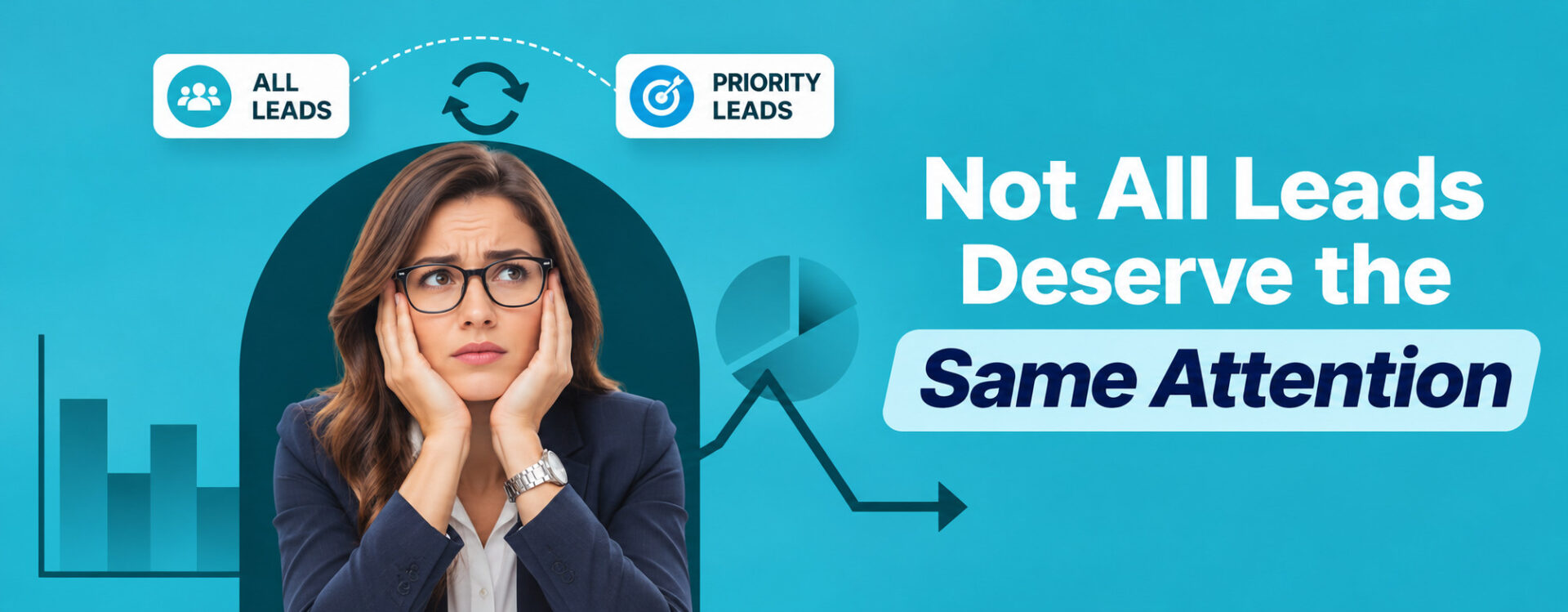
A sales team can spend an entire week contacting businesses and still struggle to create meaningful opportunities when every prospect receives the same level of attention. Some companies fit the target market but have no immediate need, while others have a clear problem but the person listed in the database may not influence the purchase. A smaller group may have the right company profile, a relevant decision maker, and a reason to consider a solution now. The challenge is recognizing that difference before valuable sales time is spent.
Prioritizing B2B leads means deciding which companies and contacts deserve attention first, which should be nurtured, and which should leave the active prospecting queue. A useful system considers company fit, contact relevance, buying signals, timing, potential value, and the ability of the sales team to serve the account. For businesses building a new prospecting audience or improving an existing database, Jared’s Leads provides targeted business data and sales lead options that can be scoped around campaign goals.
What Does It Mean to Prioritize B2B Leads, and Why Does It Matter?

Lead prioritization allocates sales and marketing effort according to how suitable, relevant, and timely a prospect appears to be. A high-priority lead is not necessarily the person who opened the most emails or downloaded the most content. It is a prospect whose company fits the market, whose role connects to the problem being solved, and whose circumstances justify a conversation. Strong engagement from an unsuitable account may be less valuable than a quieter prospect that closely matches the ideal customer profile.
Sales capacity is limited, even in organizations with large outbound teams. Representatives need time to research accounts, prepare messages, make calls, update CRM records, and follow up on opportunities. Treating every prospect as equally urgent spreads attention across businesses with very different levels of fit and readiness. Prioritization creates a clearer order of work, helping a team focus on relevant opportunities while placing suitable but less urgent accounts into nurture.
It also helps to distinguish a contact from an account. A contact is an individual professional, while an account is the organization where that person works. Several contacts can influence one B2B purchase, so ranking each person separately may hide the wider opportunity. Compare Jared’s list solutions when deciding which audience type supports your campaign.
Start With an Ideal Customer Profile and Assess Company Fit
An ideal customer profile, or ICP, describes the type of organization most likely to benefit from a product or service and become a suitable customer. It should reflect evidence from current customers, product requirements, sales experience, and the economics of serving an account. A company selling workforce software to multi-location healthcare providers, for example, may focus on organizations with a suitable employee range, supported locations, and operational complexity that makes the product relevant.

Review customers that adopted successfully, expanded usage, renewed, or reached value without disproportionate support. Look for patterns in industry, company size, business model, location, technology environment, and the problem that prompted the purchase. Also examine customers that were difficult to serve, because their characteristics may reveal useful disqualifiers. Treat the ICP as a working profile and revise it as sales conversations provide better evidence.
Evaluate companies against required and preferred criteria. Industry matters, but businesses in the same sector can differ by size, geography, and operating model. Relevant factors may include industry classification, employee count, revenue range, locations, and business type. A supported region may be essential, while a preferred employee range may simply improve fit. Jared’s business list options can help translate an ICP into company-level filters where available.
Why Does Contact Quality Matter as Much as Company Fit?

A company can be an excellent match while the person in the database is not the right person to approach. B2B purchases may involve the person who experiences the problem, the professional who evaluates solutions, a budget holder, and a senior stakeholder who approves the decision. The mix changes with company size and purchase complexity, so a job title should be treated as a clue rather than proof of authority.
Identify the department that owns the problem your product addresses. A recruiting platform may call for HR or talent acquisition leaders, while an operations system may be relevant to operations directors or plant managers. Technology purchases may involve IT, security, operations, and finance. The first contact should understand the problem, while other stakeholders can be mapped as the account progresses.
A priority model should reflect contact relevance, not just seniority. A chief executive may have final authority but little involvement in evaluating a specialist tool, whereas a department director may be the internal champion. Jared’s B2B email lists can be explored for business contacts and decision-maker targeting by role and company criteria, subject to data availability.
Separate Fit, Intent, Engagement, and Timing
A common weakness in lead scoring is combining every signal into one number without understanding what it represents. Company fit indicates whether the prospect resembles a customer your business can serve. Intent suggests whether there may be a current need or buying process. Engagement reflects interaction with your business, while timing indicates whether a conversation is relevant now or should happen later. These dimensions are related, but they answer different questions.
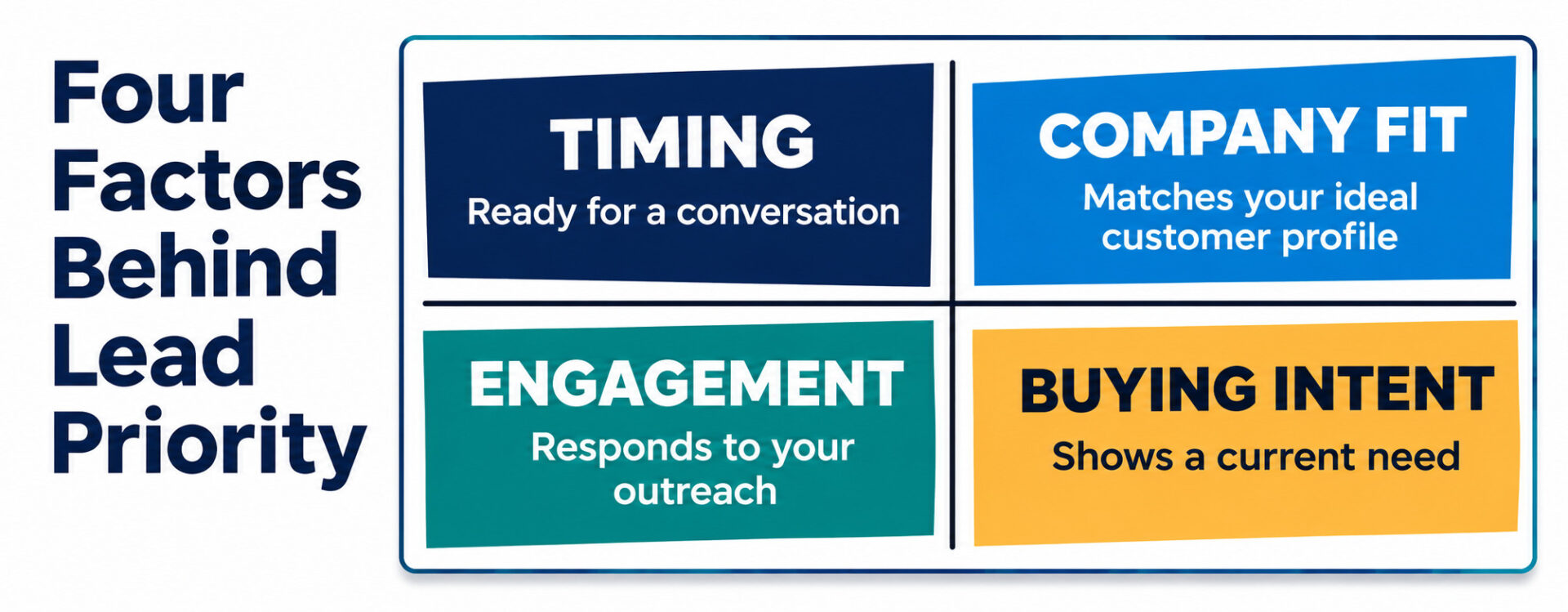
A company may be a strong fit but show no immediate interest, making it a candidate for nurture rather than urgent sales outreach. Another may request a demonstration but still fall outside the serviceable market. High engagement from an unsuitable account should not outweigh a fundamental mismatch in fit, and low engagement does not always mean low potential in markets where senior decision makers rarely interact with marketing content.
A practical model can use a fit grade and an engagement or intent score, followed by a timing review from a sales representative. Salesforce makes a similar distinction in its lead qualification guidance: grading evaluates who a prospect is, while scoring evaluates what the prospect does. Jared’s sales leads page outlines prospect data options for B2B and other campaigns.
Build a Lead Scoring Model and Turn Scores Into Priority Tiers
A lead scoring model assigns values to attributes or actions so prospects can be compared consistently. A small number of relevant factors is usually easier to explain and maintain than a long list of arbitrary points.
Start with company fit by deciding which industries, company sizes, geographies, and business types deserve positive or negative weight. Add contact relevance, then identify buying signals such as a pricing request, inbound inquiry, referral, consultation request, or repeated engagement with relevant service content. Give stronger weight to evidence of need than to passive activity such as a single page view.

Review past opportunities and customers before setting thresholds. Compare accounts that progressed with those that stalled or were disqualified. If CRM history is limited, begin with transparent rules and test them with experienced salespeople. Convert scores into action-based tiers such as immediate follow-up, active prospecting, nurture, and disqualify or review. Each tier needs an owner and a next step. Jared’s marketing data solutions outline audience data, hygiene, activation, and follow-up support.
Which Buying Signals Should Increase Priority, and How Much Is an Opportunity Worth?
Buying signals are actions or changes that suggest an organization may be considering a solution. Direct signals include asking for pricing, submitting a request, booking a consultation, or explaining a current business challenge. Other signals may come from a company announcement, new location, hiring pattern, technology change, or operational shift that creates a possible reason to review a product.

The meaning of a signal depends on the offer. Hiring growth may matter to a recruitment technology provider, while a new facility could be relevant to an equipment supplier. Funding may justify research, but it does not prove a company has budgeted for your service. Prioritize signals that are recent, relevant, and specific, and record the source where possible.
Not every qualified prospect represents the same commercial opportunity. A large account may have high potential value but a long buying process and acquisition cost, while a smaller business may decide quickly. Compare deal size, margin, sales cycle, implementation needs, geography, and support costs. Prioritize accounts where fit, value, access, and service capacity align. Businesses using phone prospecting can explore Jared’s phone lists.
Keep Lead Data Organized, Current, and Useful
Even a carefully designed scoring model can produce poor decisions when records are incomplete or outdated. A contact may have changed jobs, a company may have closed a location, a phone number may no longer be active, or two records may refer to the same person. Duplicates and inconsistent job titles waste research time and can lead to messages being sent with incorrect information.

Standardize the fields that affect prioritization, including company names, domains, industry categories, locations, employee ranges, job titles, lead sources, and statuses. Record the source and date of important information where possible. Define who can change a lead’s status and how duplicates are handled, because inconsistent updates undermine the model.
Review data quality continuously. Refresh prospect files before major campaigns and correct job changes, invalid details, or duplicates. If the company already has a large database, cleaning it may be more useful than buying more records. Jared’s data services include hygiene, append, verification, and deduplication, depending on requirements.
Match the Priority Level to the Right Outreach and Follow-Up
The outreach plan should reflect why each account sits in its tier. A high-fit account with a relevant buying signal may justify personal research and a direct message tied to the business issue. A suitable company with no immediate signal may be better served through useful information and periodic follow-up. Someone who has requested a quote should not receive the same generic introduction as a contact added through a broad market list.

Choose a channel that fits the audience and campaign. Business email may suit professional outreach, phone can support a direct conversation, and direct mail may suit selected accounts. Coordinated outreach can be useful, but every touch should be recorded so representatives do not contact the same person without context. Explain why the offer may be relevant rather than imply that a data field proves the prospect is ready to buy.
Set a follow-up expectation for every tier, whether that means a prompt response to an inquiry, a planned cadence for active prospects, or a review date for nurture accounts. The cadence should respect the sales cycle and applicable communication rules. For businesses considering postal outreach, Jared’s direct mail services provide information about audience targeting and campaign preparation.
How Do You Measure Performance and Avoid Common Prioritization Mistakes?
A prioritization system should be judged by whether it improves the quality and efficiency of the sales process. Start with a baseline before changing the model. Review how many leads become qualified conversations, how many meetings create opportunities, how many opportunities become customers, and how long each stage takes. Compare results by source, industry, company size, job function, territory, and priority tier when the sample size is large enough to be meaningful.

Watch for false positives and false negatives. A false positive scores highly but proves unsuitable; a false negative scores poorly but later becomes a valuable opportunity. Both reveal weaknesses in the model. A job title linked to successful deals may deserve more weight, while a signal that creates activity without opportunities may deserve less. Review results with sales representatives and change criteria deliberately.
Avoid giving too much weight to activity that is easy to measure. Email opens, page views, and downloads do not necessarily mean a company has a need, budget, or authority to purchase. Scoring can also become too complicated to explain or maintain. Keep the model transparent, review it as markets change, and never allow a score to override basic data checks. Businesses refining audience selection can compare requirements with the Jared’s Leads solutions overview.
How Should You Handle Compliance and Responsible Prospecting?
Prioritizing leads does not remove the responsibility to use business contact data appropriately. The rules depend on the recipient, channel, jurisdiction, type of communication, and how the data is used. A business email address does not mean every message is automatically permitted, and a phone number in a database does not remove the need to check applicable calling restrictions. Teams should establish a review process before launching campaigns.
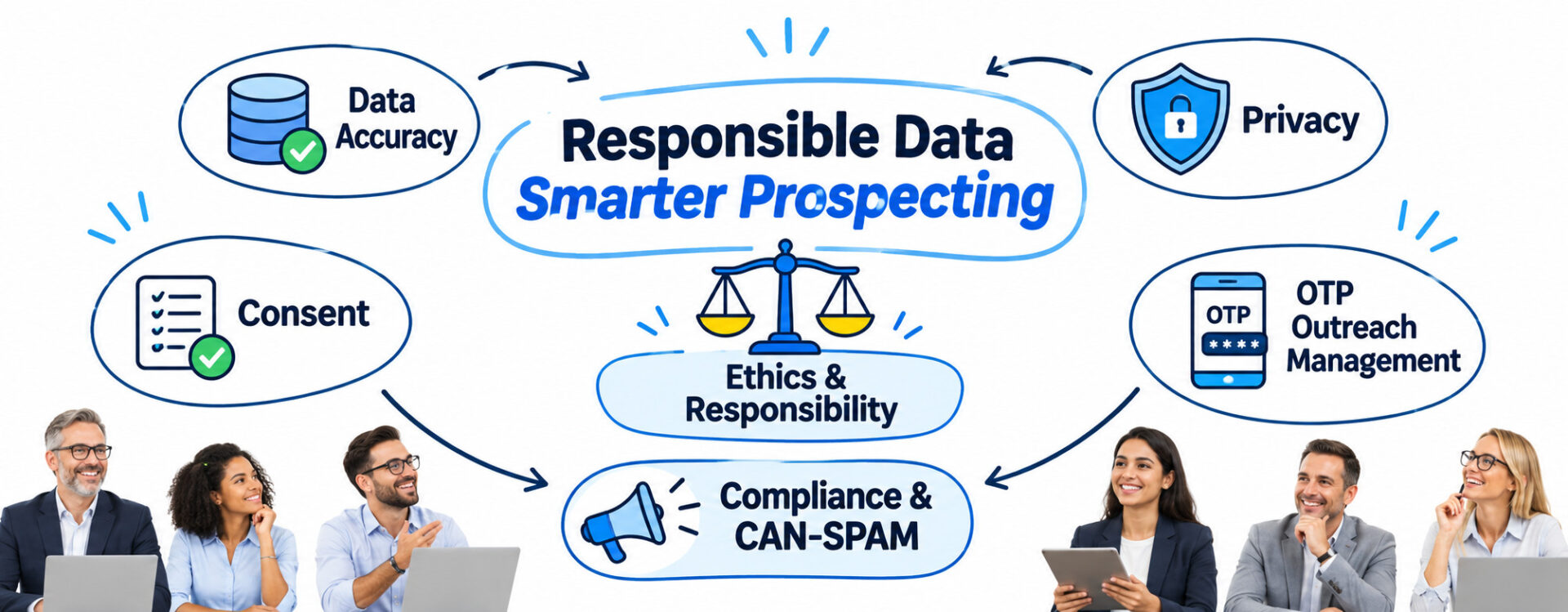
In the United States, the Federal Trade Commission’s CAN-SPAM guide explains that the Act applies to commercial messages, including business-to-business email. Requirements include accurate sender details, non-deceptive subject lines, a valid postal address, a clear opt-out method, and honoring opt-outs within the required period. Telephone campaigns may involve federal and state restrictions on do-not-call requests, automated calls, consent, and calling practices. Confirm the rules for each campaign and seek qualified legal advice when needed.
Data hygiene supports responsible prospecting. Duplicate suppression, address processing, email or phone verification, and suppression list management can reduce errors, although no preparation step guarantees every record is current or every campaign is compliant. Document the intended channel and required fields. Jared’s Leads describes preparation services through its data and list solutions, but the organization conducting outreach remains responsible for its practices.
How Jared’s Leads Can Help You Prioritize B2B Prospects
Prioritization begins with a clear audience definition. A business needs to know its target industries, company characteristics, relevant job roles, serviceable markets, and intended outreach channel. Without these decisions, a team may receive a large file without a practical basis for deciding whom to contact first.
Jared’s Leads offers business lists, sales leads, email lists, phone lists, mailing lists, and data services. Available business filters may include industry, SIC or NAICS classification, company size, geography, revenue range, and professional role. Data hygiene and append services may help businesses improve an existing database. Available records and fields vary by audience and source, so confirm details before ordering.
Start with a description of the campaign rather than a request for the largest possible file. Explain what you sell, which businesses may need it, the decision maker roles, target locations, and whether you need email, phone, or postal information. Jared’s Leads can review the criteria and available counts. Explore Jared’s Leads or contact the team to discuss your prospecting requirements.
Frequently Asked Questions
Q.1. What is the best way to prioritize B2B leads?
Evaluate company fit, contact relevance, buying intent, timing, and potential value together. Define the ideal customer profile first, then identify contacts connected to the problem you solve. Use meaningful buying signals, but do not let activity outweigh poor company fit. A tiered system with clear next steps helps sales teams act consistently.
Q.2. What is the difference between lead scoring and lead prioritization?
Lead scoring assigns values to company attributes, contact details, or prospect actions. Lead prioritization uses those scores, business judgment, and sales capacity to decide which prospects receive attention first. A score supports the decision, but it should not replace a representative’s judgment when new information changes the picture.
Q.3. Should B2B companies prioritize fit or buying intent?
Both matter. Fit indicates whether the company is a sensible potential customer, while buying intent suggests whether it may be considering a solution now. A strong buying signal from an unsuitable company may not justify sales effort, while a high-fit company with no current signal may still be worth nurturing.
Q.4. How many lead priority levels should a business use?
Three or four practical tiers are often enough, provided each has a clear meaning and next action. A team might use immediate follow-up, active prospecting, nurture, and disqualified or review. Add more categories only when they change how prospects are handled, rather than creating extra administration.
Q.5. How often should B2B lead scores be reviewed?
Review frequency depends on sales cycle length, lead volume, and market changes. A steady, low-volume pipeline may be reviewed monthly or quarterly, while frequent campaigns may need closer checks. Revisit the model when product positioning, market focus, or conversion patterns change, so scoring stays connected to sales outcomes.
Q.6. Can purchased B2B contact lists be prioritized?
Yes, when the list contains fields that support the business’s criteria and suits the planned campaign. Segment contacts by industry, geography, company size, and job title, then assess fit and research the account. A compiled record is not automatically an active inquiry or a high-intent lead. Jared’s Leads provides B2B email list options for targeted contact data.
Q.7. What metrics show whether lead prioritization is improving sales?
Track qualified conversations, meetings that create opportunities, opportunity-to-customer conversion, sales cycle length, and cost per qualified opportunity. Compare results by priority tier and lead source, not just total outreach volume. Consider sample sizes and campaign differences before treating a short-term response change as lasting improvement.
Conclusion: Put Your Sales Attention Where It Can Make a Difference

Prioritizing B2B leads is not about ranking every name in a database. It is about understanding which companies fit, identifying the people connected to the buying decision, recognizing meaningful signals, and deciding how much effort each prospect deserves. These steps give sales teams a clearer order of work and help them avoid treating very different accounts equally.
Keep the process practical and open to revision. Build an ideal customer profile, use a simple scoring model, organize prospects into action-based tiers, and review results with salespeople. Keep data current, use buying signals carefully, and follow the requirements for each channel. Evidence from conversations and sales outcomes should shape the process over time.
If you are building a B2B prospecting campaign or improving an existing database, define the companies, locations, and decision maker roles you want to reach. Contact Jared’s Leads to discuss your targeting requirements, request an audience count, and identify list options that fit your campaign. A well-defined prospect list gives the team a better starting point for focused sales activity.