Finding potential business customers is only the beginning of a successful B2B sales strategy. Once a company has identified its ideal customer profile, located relevant businesses, and identified the people responsible for purchasing decisions, the next challenge is getting those prospects to engage. Business decision-makers receive promotional emails, sales calls, and marketing materials throughout the week, making it increasingly difficult for individual outreach attempts to stand out.
This is where multi-channel B2B prospecting becomes valuable. Instead of depending entirely on email, telephone outreach, or traditional mail, businesses coordinate multiple communication methods around a shared audience and campaign objective. The goal is not to contact prospects repeatedly through every available channel, but to create relevant opportunities for engagement while respecting communication preferences and applicable regulations.
A successful campaign requires accurate contact information, relevant messaging, a structured follow-up process, and clear performance measurements. When these elements work together, businesses can improve their prospecting process and create more consistent opportunities for sales growth.
What Is Multi-Channel B2B Prospecting?
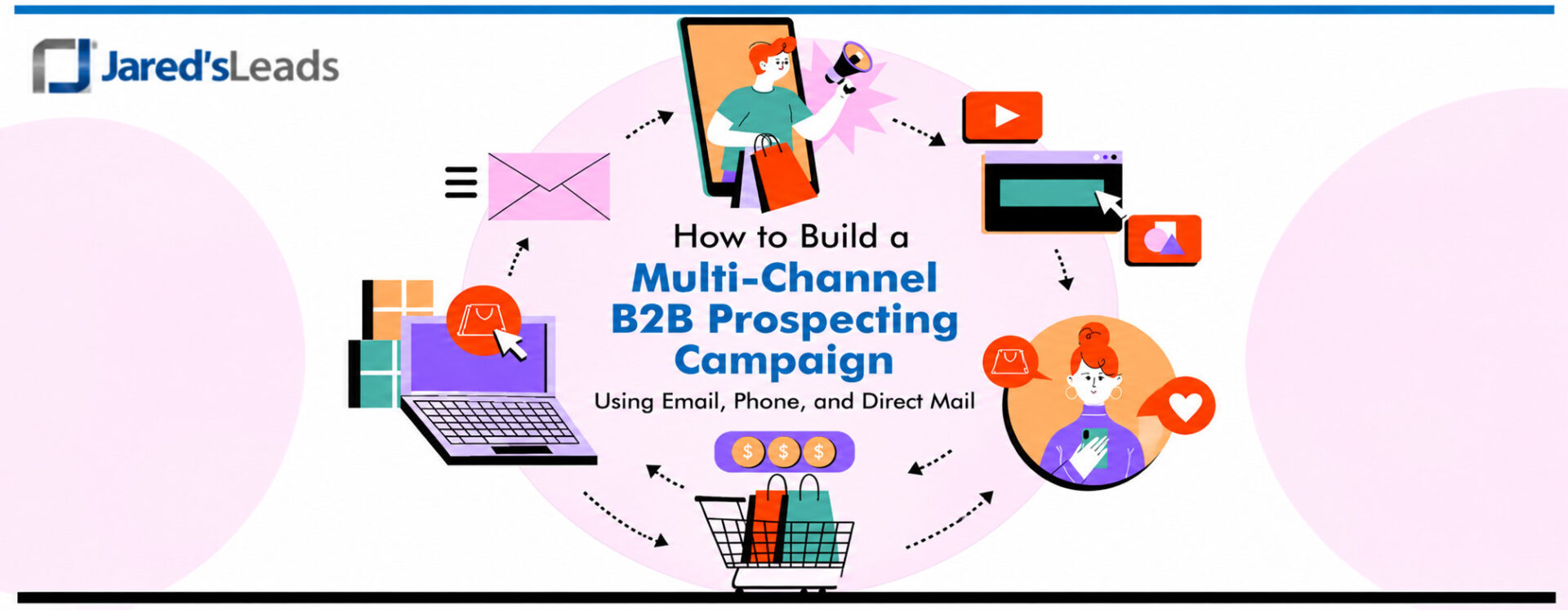
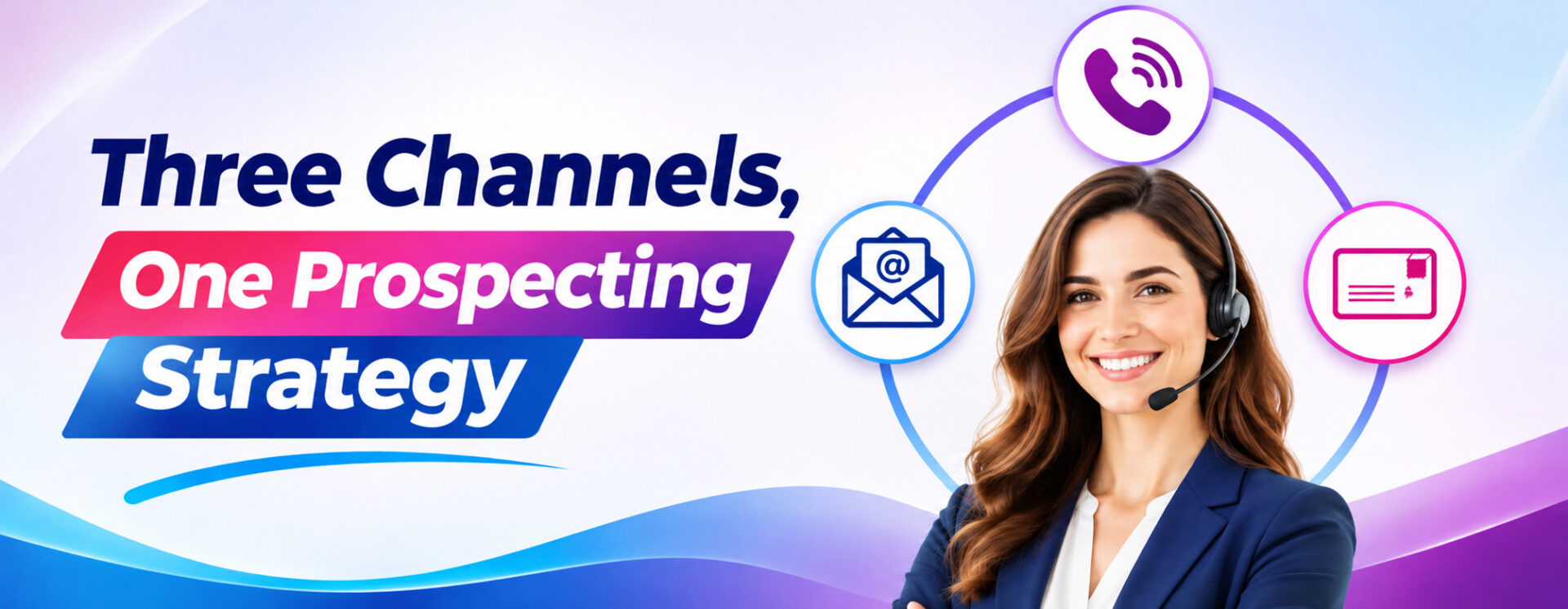
Multi-channel B2B prospecting is an approach that uses multiple communication methods to identify, reach, and engage potential business customers. Common channels include business email, telephone calls, direct mail, and professional networking platforms. Rather than treating each channel as an independent campaign, businesses coordinate their activities so that every interaction contributes to a broader sales objective.
Consider a software company selling inventory management solutions to regional distributors. It might identify businesses operating warehouses and employing purchasing or operations managers. The marketing team could introduce the solution through targeted emails, while sales representatives contact selected prospects to understand their operational requirements. A personalised brochure or industry case study could provide another opportunity to communicate the product’s value.
Each channel serves a different purpose. Email introduces an idea and shares useful information, telephone conversations help representatives understand business requirements, and direct mail provides physical material that prospects can review at their convenience. Coordinating these methods creates a more complete outreach experience.
Businesses planning this approach should first understand their available audience and contact information. Jared’s Leads offers targeted business and B2B mailing lists that can help organizations identify relevant companies using available industry and geographic criteria.
Why Does Single-Channel Prospecting Often Fall Short?
Depending entirely on one communication method can restrict opportunities to connect with potential customers. A prospect may overlook an email because of competing priorities, while another decision-maker might prefer speaking with a representative before considering a new service. Similarly, an unsolicited telephone call without sufficient context may be ignored even when the company has a genuine requirement.
Email marketing illustrates this challenge. A carefully written message may reach the intended contact, but that does not guarantee the recipient will open it, understand the offer, or respond immediately. Deliverability issues, crowded inboxes, irrelevant messaging, and outdated contact records can all affect campaign performance. Increasing email volume does not necessarily solve these problems.

Telephone prospecting has different limitations because reaching decision-makers can require several attempts. Direct mail involves additional production, postage, and delivery considerations, making audience selection particularly important.
A coordinated approach creates additional opportunities for engagement while helping marketing teams understand which channels work best for different audience segments. Businesses can begin by reviewing Jared’s Leads’ B2B lead lists and contact data solutions to identify suitable audiences before investing in outreach.
How Should Businesses Define Their Target Audience?
The quality of a multi-channel campaign depends heavily on the audience selected before outreach begins. Businesses sometimes focus on the number of contacts they want to reach rather than identifying organizations most likely to benefit from their products or services. A large database may look attractive, but if most records belong to companies outside the target market, the sales team can waste considerable time pursuing unsuitable opportunities.
The first step is to define an ideal customer profile, commonly known as an ICP. This profile describes the characteristics of organisations that represent the strongest potential customers. Relevant factors may include industry, employee count, annual revenue, geographic location, company structure, and purchasing requirements. A cybersecurity provider, for example, may prioritise companies with dedicated IT departments rather than attempting to contact every business in a particular region.

After defining the company profile, businesses should identify the individuals involved in purchasing decisions. Depending on the product, these might include business owners, chief executives, operations directors, procurement managers, or IT directors. Larger organizations may involve several stakeholders, so campaigns should distinguish between people who evaluate solutions and those who approve spending.
SIC and NAICS classifications, company size, and geographic filters can help narrow the audience, although these classifications should support research rather than replace it. Companies can explore Jared’s Leads’ business email lists to identify relevant contacts using available industry, professional role, and company criteria.
How Can Businesses Use B2B Email Outreach Effectively?
Email is often a useful starting point for multi-channel prospecting because it allows businesses to introduce their products, explain a relevant problem, and provide information that prospects can review at their convenience. However, messages compete with numerous other communications, making relevance and clarity particularly important.
An effective B2B email campaign should begin with a specific audience and a clear reason for contacting that audience. A message sent to a manufacturing operations director should address different priorities from one sent to a financial services marketing manager. The subject line, opening paragraph, business problem, and proposed next step should reflect the recipient’s responsibilities rather than relying on generic promotional language.
For example, a company offering warehouse automation software could explain how manual inventory processes create operational delays and invite the recipient to discuss whether automation is appropriate for their organization. This is more useful than sending a broad product announcement without explaining its business relevance.
Businesses should also monitor sending infrastructure and contact data. Email authentication protocols such as SPF, DKIM, and DMARC, along with appropriate sending practices and regular removal of invalid addresses, can support a healthier email program. Useful indicators include delivery rates, bounce rates, meaningful replies, unsubscribes, and qualified opportunities.
Compliance is equally important. In the United States, the CAN-SPAM Act applies to commercial email, including business to business messages. Requirements include accurate sender information, non-deceptive subject lines, a valid postal address, and an effective opt-out mechanism. Businesses should consult the FTC’s CAN-SPAM compliance guide before launching campaigns. Relevant contact data can be sourced through Jared’s Leads’ B2B email lists, subject to appropriate use and compliance checks.
When Should Businesses Use Telephone Prospecting?
Telephone outreach can be particularly useful when a business opportunity requires clarification or when a sales representative needs to understand a prospect’s requirements before recommending a solution. Email can introduce a company and communicate its value proposition, but a conversation allows representatives to ask questions, understand objections, and determine whether there is a genuine business fit.
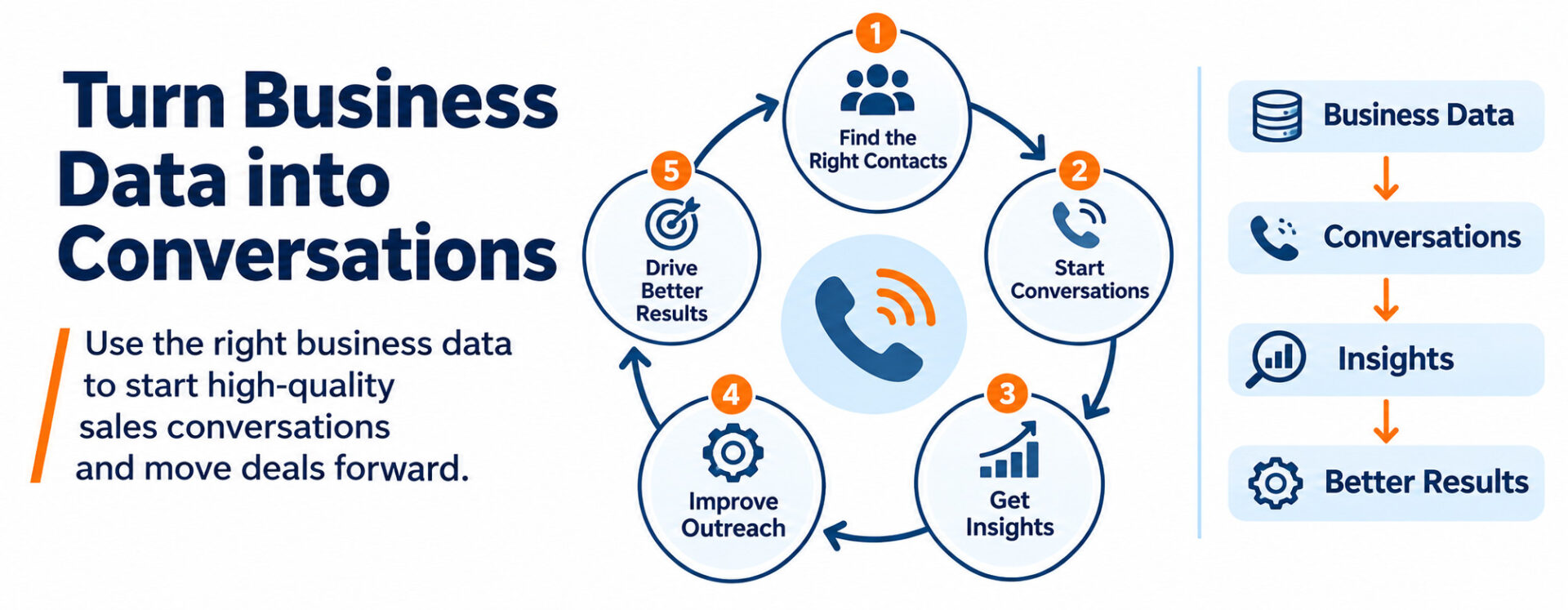
For example, a commercial equipment supplier targeting manufacturing companies might use email to introduce a maintenance solution before contacting selected prospects to discuss equipment requirements and existing service arrangements. The conversation helps the sales team distinguish between organizations that simply want information and those with an active purchasing requirement.
The quality of the telephone prospect list is important. Representatives need appropriate business numbers, accurate company information, and relevant contact details wherever available. Calling the wrong person repeatedly wastes time and can create a negative impression. A segmented audience also allows sales managers to assign prospects to representatives with suitable industry knowledge.
Every telephone campaign should have a clear objective, such as confirming the appropriate contact, understanding a business challenge, arranging a demonstration, or scheduling a future conversation. Representatives should introduce themselves transparently, explain why they are calling, and respect requests not to receive further calls.
Businesses planning outbound campaigns can explore Jared’s Leads’ telemarketing lists. Before activating a campaign, organizations should evaluate applicable calling regulations, including consent and Do Not Call requirements.
How Can Direct Mail Strengthen B2B Outreach?
Direct mail remains a useful business communication channel because it allows companies to present their products and services through a physical format. A professionally designed letter, brochure, product catalogue, or personalized package can communicate information differently from an ordinary digital message. For businesses selling commercial equipment, professional services, or complex solutions, physical materials provide another opportunity to establish credibility.
Consider a commercial roofing company targeting property management firms and owners of large buildings. An email could introduce its inspection services, while a direct mail package could provide a printed overview of its capabilities, service areas, and relevant project experience. The recipient can review the material, share it with colleagues, or retain it for future reference.

The effectiveness of direct mail depends on more than design. Postal address information must be relevant and sufficiently accurate for the intended campaign. Businesses should consider geographic targeting, business categories, and company locations before selecting recipients. Address standardization and duplicate removal can also reduce avoidable delivery problems.
Companies should make responding straightforward by including a dedicated landing page, QR code, campaign-specific phone number, or clearly presented offer. These elements help connect physical mail with the wider sales process.
Businesses planning physical outreach can explore Jared’s Leads’ direct mail services and targeted mailing lists to identify appropriate audiences and prepare their campaigns.
How Should Businesses Coordinate Email, Phone, and Direct Mail?

The real advantage of multi-channel prospecting comes from coordinating the channels rather than using them independently. Without a shared campaign plan, separate marketing and sales teams may contact the same prospect with unrelated messages or approach the individual at inconvenient times. This can create confusion, duplicate work, and unnecessary communication.
A coordinated campaign should begin with a shared audience definition and a clear record of which contacts are assigned to each channel. The marketing team should understand the campaign objective, the sales team should know which prospects require personal attention, and the direct mail team should have accurate postal information and delivery schedules. A central CRM can help maintain this information and provide visibility into previous interactions.
For example, a B2B software provider might introduce its product through a targeted email campaign, followed by personal telephone outreach to selected prospects. High-priority accounts could also receive a printed overview containing relevant product information. Each interaction should communicate a consistent value proposition without repeating identical promotional messages.
Timing should reflect the prospect’s response. If someone requests a meeting after receiving an email, the sales team should update the CRM and prevent unrelated automated outreach from continuing. If a prospect requests that marketing communication stop through a particular channel, the appropriate suppression records should be updated.
Businesses can explore Jared’s Leads’ business and marketing list categories when planning audience selection across different outreach channels. The communication schedule should then be managed around prospect preferences and applicable requirements.
How Can Businesses Build an Effective Prospecting Sequence?
A prospecting sequence is the planned order and timing of interactions designed to move a potential customer from initial awareness toward a meaningful sales conversation. The sequence should reflect the target audience, product complexity, purchasing process, and communication methods available to the business. There is no universally correct number of emails or calls because the needs of a local service provider differ from those of an enterprise software company.
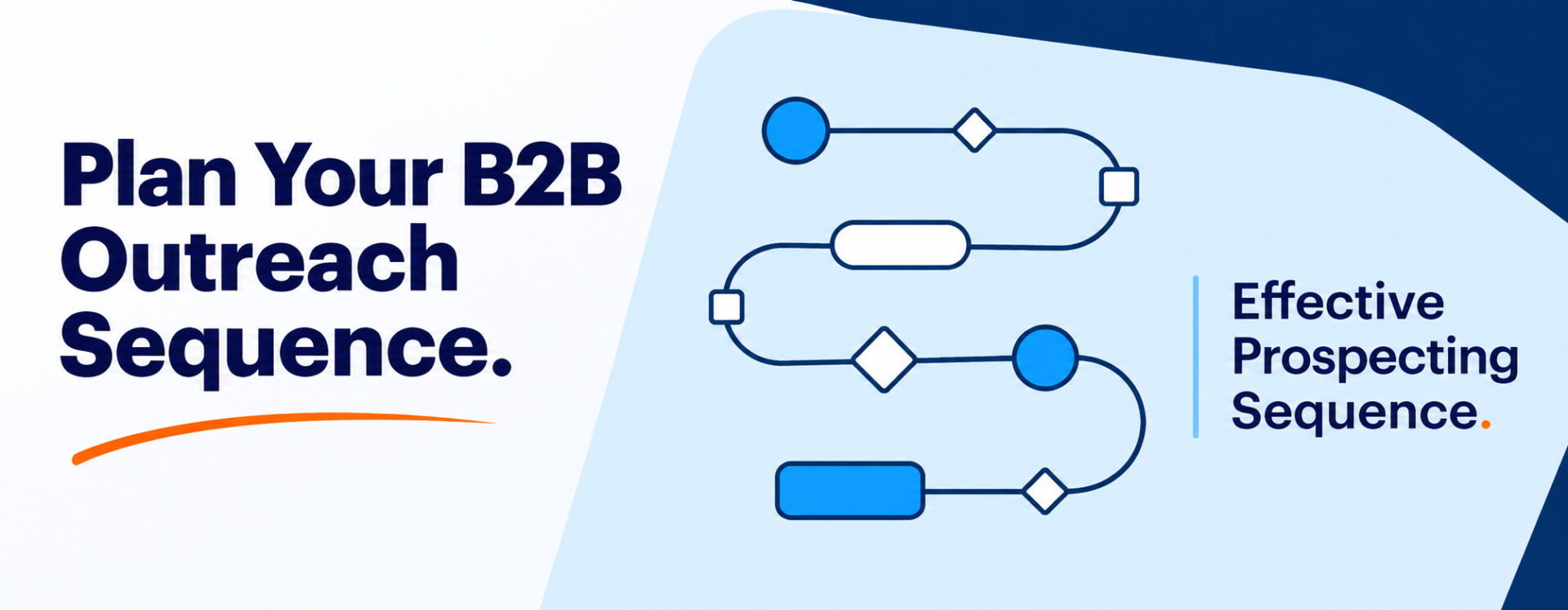
A useful starting point is to establish a campaign duration and define the purpose of each interaction. The first communication introduces the company and explains why its offer may be relevant. Subsequent interactions can provide additional information, answer common questions, or offer a conversation with an appropriate representative. Direct mail can be included when the account value and campaign objectives justify the additional investment.
For example, a company selling commercial cleaning services might introduce its offering to facility managers through email before contacting selected accounts to understand their existing service arrangements. A personalized brochure could then be sent to prospects who have expressed interest in reviewing alternative providers.
The sequence should include clear exit conditions. A prospect who books a meeting should move into the appropriate sales process, while anyone who unsubscribes or requests no further contact should be removed from the relevant marketing activity. CRM records should capture campaign history, contact ownership, and the next appropriate action. Businesses can explore Jared’s Leads’ LeadWave platform as part of a broader approach to lead management and follow-up.
How Should Businesses Measure Multi-Channel Campaign Performance?
A multi-channel campaign should be measured according to the business outcomes it produces rather than the number of messages, calls, or mailpieces distributed. A campaign may generate substantial activity but still perform poorly if contacts are irrelevant or the sales team cannot reach decision-makers. Measurement should therefore connect marketing activity with the progress of prospects through the sales process.
For email, useful indicators include delivery rates, hard bounces, meaningful replies, unsubscribes, and qualified opportunities. Telephone campaigns can be evaluated through conversations with relevant contacts, appointments scheduled, and qualified opportunities. Direct mail performance can be assessed using response codes, dedicated landing pages, QR code activity, inbound calls, and opportunities associated with the mailing.
Businesses should distinguish between basic engagement and meaningful commercial results. A prospect requesting a product demonstration may represent a stronger opportunity than someone who simply clicks a link. Similarly, a telephone conversation that identifies an active purchasing requirement can be more valuable than several calls that reach individuals without decision-making responsibility.
Attribution also requires attention. If a prospect receives an email, speaks with a representative, and later responds to direct mail, it may be misleading to attribute the entire sale to only one channel. Marketing teams should record the sequence of interactions and distinguish between first-touch, last-touch, and assisted conversions wherever their reporting system allows.
Finally, businesses should compare campaign expenses with qualified opportunities, closed revenue, customer acquisition cost, and expected customer lifetime value. Organizations preparing their databases can explore Jared’s Leads’ data and list services to support more structured prospecting activities.
What Common Mistakes Should Businesses Avoid?
One common mistake is assuming that using more channels automatically produces better results. Adding email, telephone, and direct mail without a clear purpose can increase expenses and create a poor recipient experience. Each channel should have a defined role that reflects the audience, value of the opportunity, and company’s ability to manage responses.
Another problem is using identical messaging everywhere. An email needs a concise introduction and a clear next step, while a telephone conversation requires listening and responding to the prospect’s situation. A direct mail piece has different design and space requirements, and its message should be understandable without requiring a lengthy sales presentation.

Poor data quality can undermine even a well-designed campaign. Duplicate records, outdated job titles, incorrect addresses, invalid email addresses, and disconnected telephone numbers reduce efficiency. Businesses should establish a process for reviewing and maintaining contact information rather than assuming that a purchased or internally maintained database will remain accurate indefinitely. Jared’s Leads offers business list and data solutions that organizations can evaluate when preparing their prospect records.
Failing to coordinate marketing and sales teams can also create problems. If automated emails continue after a representative has arranged a meeting, prospects may receive conflicting messages. Shared CRM records and clear communication rules can prevent unnecessary follow-up.
Finally, compliance should never be treated as an administrative task that can be addressed after a campaign begins. Commercial email, telephone calls, and postal marketing involve different legal and regulatory considerations. Businesses should review consent, suppression, identification, privacy, and recordkeeping obligations before activating each channel.
How Can Jared’s Leads Help Build a Stronger Prospecting Foundation?
Successful multi-channel prospecting begins with understanding which businesses a company wants to reach and selecting contact information that supports its intended campaign. Different organizations need different types of data, and the requirements of an email campaign may not be identical to those of telephone or direct mail outreach. Businesses should therefore evaluate their audience, targeting criteria, and intended communication methods before choosing a data solution.
Jared’s Leads helps organizations build targeted marketing and contact lists for B2B prospecting, email outreach, telephone campaigns, and direct mail. Its solutions include business email lists, mailing lists, telemarketing lists, and supporting data services, with available targeting options that can include industry, geography, company characteristics, and professional roles.

Companies planning email outreach can explore B2B email lists, while organizations preparing telephone campaigns can review telemarketing lists. Businesses planning physical outreach can also consider direct mail services and targeted mailing lists.
The team can help businesses discuss their audience, geographic coverage, desired contact fields, and campaign requirements before selecting an appropriate solution. This can be particularly useful for companies entering new markets, targeting specialized industries, or coordinating prospecting activities across multiple business units.
The objective is not simply to deliver a large database of contacts, but to help businesses identify a relevant audience and establish a practical foundation for their sales and marketing activities. Companies interested in exploring their options can contact Jared’s Leads to discuss targeting requirements and request information about available list counts and pricing.
Frequently Asked Questions About Multi-Channel B2B Prospecting
Q.1. What is a multi-channel B2B prospecting campaign?
A multi-channel B2B prospecting campaign is a coordinated approach to reaching potential business customers through two or more communication methods, such as email, telephone, and direct mail. Its purpose is to create relevant opportunities for engagement while maintaining consistent messaging and appropriate follow-up.
Q.2. Is multi-channel prospecting more effective than email-only outreach?
Multi-channel prospecting can provide additional opportunities to reach business decision-makers, particularly when different contacts prefer different communication methods. However, it is not automatically more effective in every situation. Results depend on audience relevance, data quality, messaging, timing, and campaign execution.
Q.3. How many times should a business contact a B2B prospect?
There is no fixed number of appropriate contact attempts for every campaign. Frequency should reflect the prospect’s preferences, the nature of the offer, the communication channel, and applicable regulations. Businesses should establish reasonable contact limits and honor opt-out requests.
Q.4. Which channel should businesses use first: email, phone, or direct mail?
The best starting channel depends on the target audience, product, and campaign objective. Email can introduce a business proposition, telephone outreach can support conversations that require clarification, and direct mail can provide a physical presentation of the offer.
Q.5. What information is needed to build a targeted B2B prospect list?
A targeted B2B prospect list may include company name, industry, geographic location, company size, business address, contact name, professional title, business email, and telephone number, depending on availability. SIC and NAICS classifications can also help narrow the audience.
Q.6. Can businesses use the same contact list for email, phone, and direct mail?
Some datasets contain combinations of business email addresses, telephone numbers, and postal addresses, but having contact information does not automatically establish permission to use every communication channel. Businesses should review applicable requirements and maintain appropriate suppression and preference records.
Q.7. How can companies measure the ROI of a multi-channel campaign?
Companies can evaluate campaign ROI by comparing the total cost of data, creative development, email infrastructure, sales labor, telephone activity, and direct mail production with the revenue generated. Qualified opportunities, appointments, conversion rates, and customer acquisition cost also help explain how each channel contributes to commercial results.
Q.8. Is purchased B2B contact data suitable for cold outreach?
Purchased business contact data may support prospect research and outreach when it comes from appropriate sources, is relevant to the intended audience, and is used in accordance with applicable laws and platform policies. Businesses should evaluate data provenance, accuracy, permitted use, and jurisdictional requirements before launching a campaign.
Conclusion: Build a Prospecting Strategy Around Better Connections

Multi-channel B2B prospecting is not about sending more emails, making more calls, or distributing more promotional material simply to increase campaign activity. It is about understanding which businesses a company wants to reach, identifying the right people within those organizations, and creating relevant opportunities for communication through channels that serve a clear purpose. When email, telephone, and direct mail are coordinated around a shared audience and sales strategy, businesses can develop a more structured approach to prospect engagement.
The foundation of this process is reliable audience information, thoughtful segmentation, and a clear understanding of how each channel contributes to the buying journey. Companies should maintain accurate records, coordinate marketing and sales teams, measure meaningful outcomes, and respect the legal requirements associated with every form of outreach. A well-managed campaign does not need to overwhelm prospects with repeated messages; it needs to make every interaction relevant and worthwhile.
Whether a business is entering a new market, expanding its sales pipeline, or improving an existing prospecting program, the right contact data and a carefully planned outreach strategy can make the process more manageable. Jared’s Leads helps organizations explore targeted business email lists, telemarketing lists, mailing lists, and related data services to support their prospecting requirements.
Ready to build a more targeted B2B prospecting campaign? Visit Jared’s Leads to explore available contact data solutions or speak with the team about building a list around your industry, audience, and campaign objectives.