What Are SIC and NAICS Codes, and Why Do They Matter for Business Lists?
SIC and NAICS codes are classification systems used to group businesses according to the economic activities they perform. For a marketer, they offer a structured way to describe which types of companies belong in a prospecting audience. Rather than asking for a broad list of manufacturers, contractors, or professional services firms, a business can use an industry classification as one part of a more specific data request. When the codes match the intended audience, they can make targeting more consistent and reduce irrelevant records.
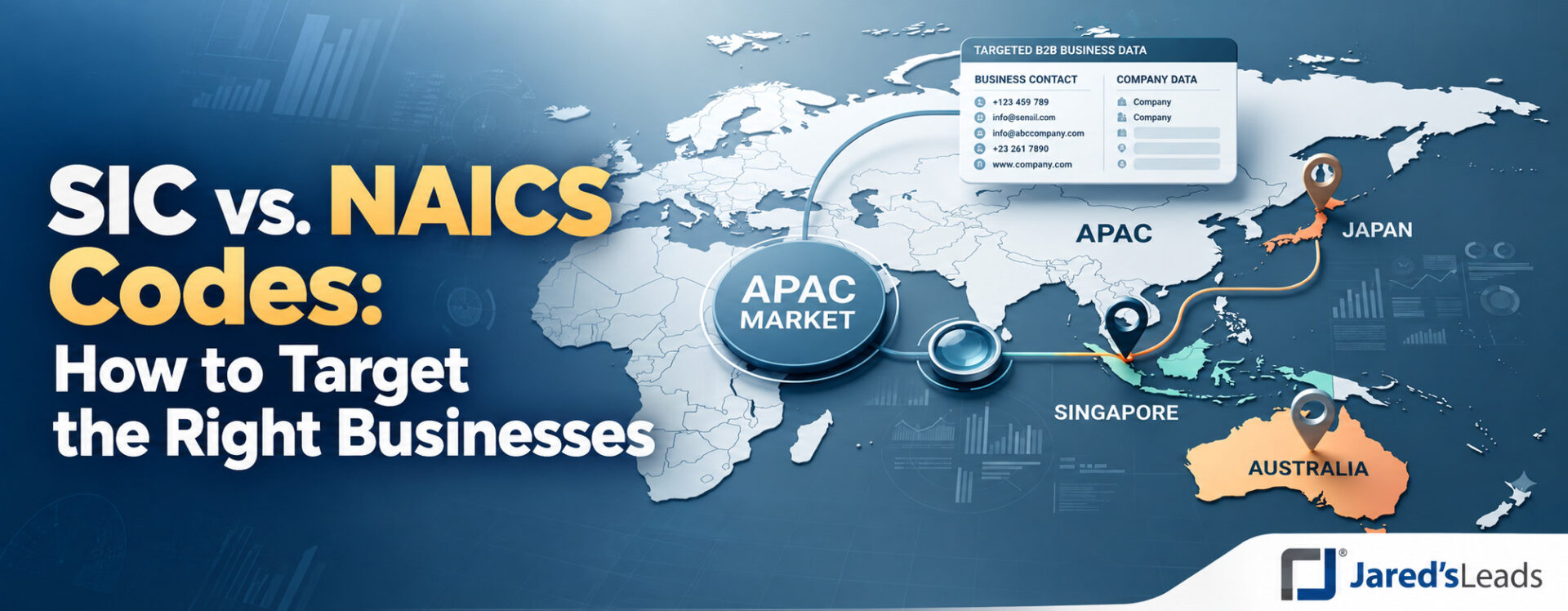
SIC stands for Standard Industrial Classification. The original United States SIC system uses four digit codes. NAICS stands for the North American Industry Classification System and uses six digit codes in the United States. NAICS was introduced in 1997 to replace SIC for federal statistical classification. SIC codes have not disappeared, however, and can still be found in legacy databases and commercial marketing data.
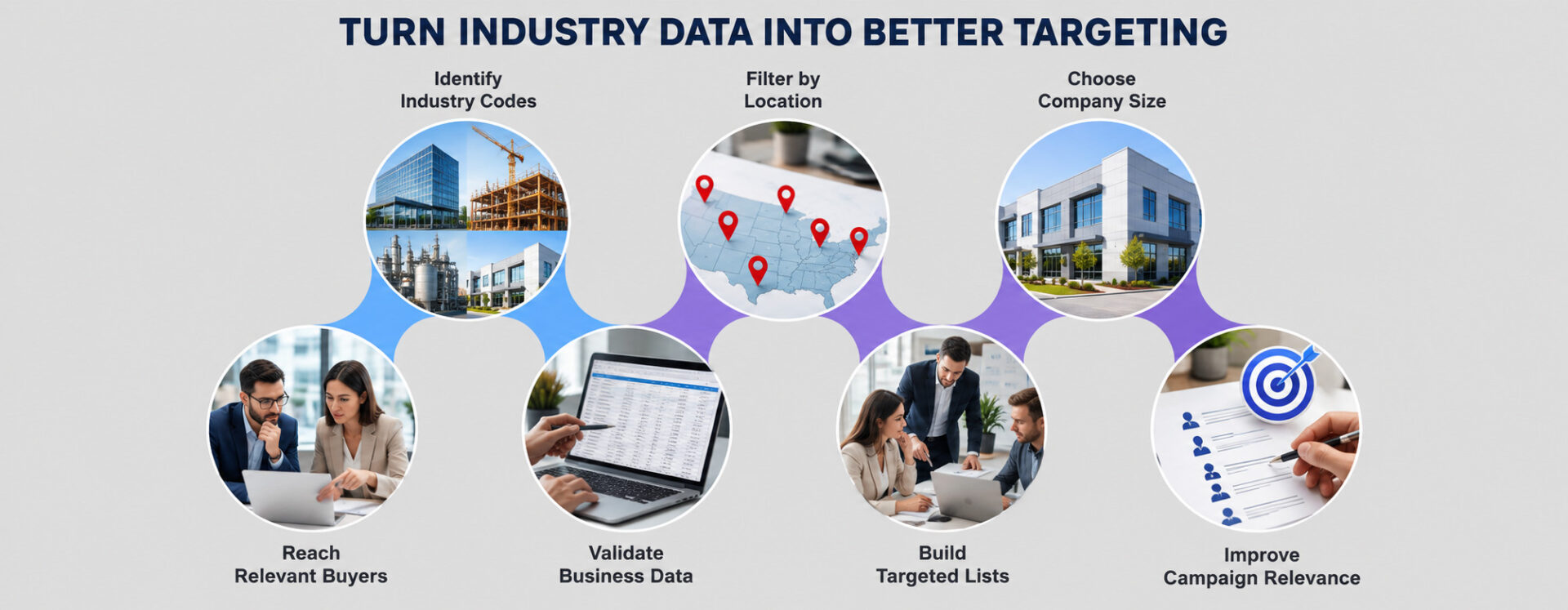
These codes describe industry activity, not whether a company is ready to buy. Combine them with geography, company size, revenue, and the roles you want to reach. Jared’s Leads explains available audience options on its business and consumer lists page, where businesses can explore list types and discuss criteria for a custom request.
What Is the Difference Between SIC and NAICS Codes?
SIC and NAICS both classify business activity, but they differ in their history, structure, and current use. SIC is the older US classification system. NAICS was designed to provide a more modern framework for classifying economic activity and to improve comparability among the United States, Canada, and Mexico. Official NAICS references are maintained by the US Census Bureau, while OSHA provides a searchable SIC manual.
The original US SIC structure contains four digits. NAICS uses six digits, with each level identifying a more specific part of the classification hierarchy. In NAICS, the first two digits identify the sector, the third identifies the subsector, the fourth the industry group, the fifth the NAICS industry, and the sixth the national industry. More digits provide detail, but do not guarantee that a code is right for a campaign.
| Feature | SIC | NAICS |
| Full name | Standard Industrial Classification | North American Industry Classification System |
| Original US code length | Four digits | Six digits |
| Main role today | Legacy classifications and selected commercial databases | Current US federal statistical classification framework |
| Marketing use | Useful where customer records or provider data use SIC | Useful for current industry targeting when available |
| Mapping between systems | May need review against NAICS | May not correspond to one SIC code exactly |
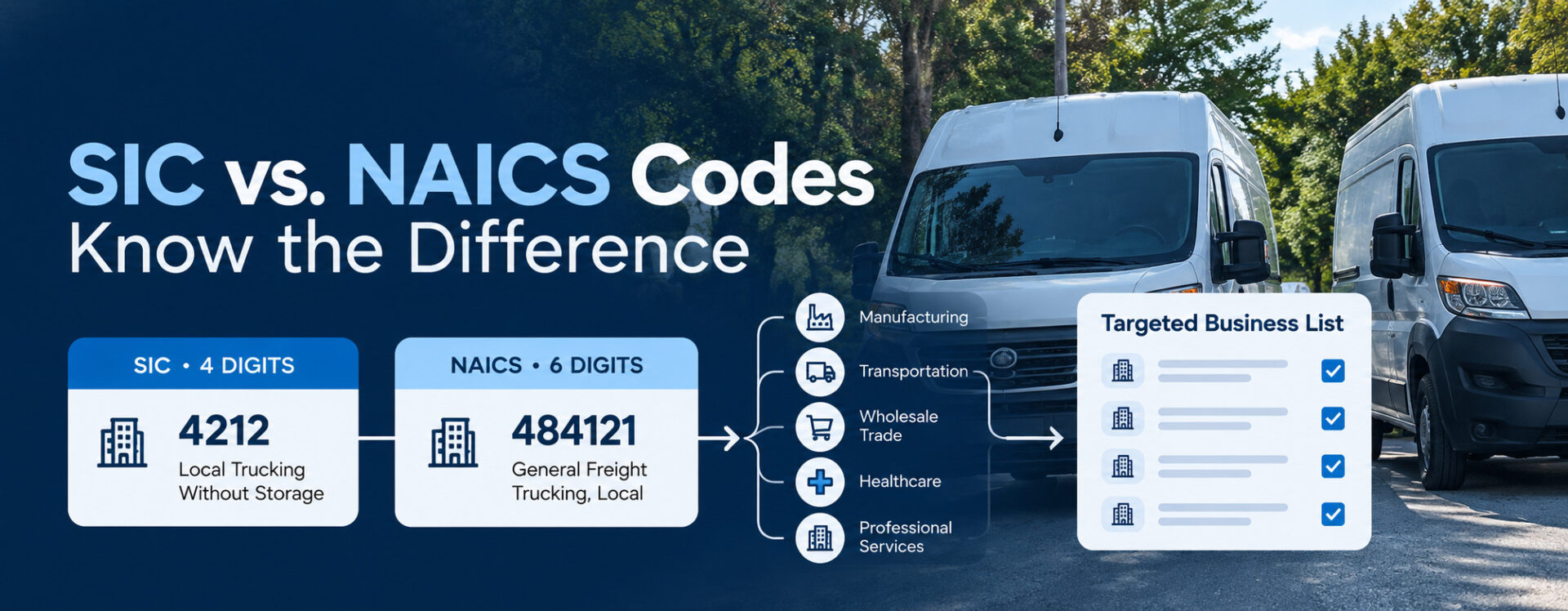
For definitions and code lookup, consult the US Census Bureau’s NAICS resources and OSHA’s SIC system search. If your campaign requires an industry specific audience, Jared’s Leads also offers business email lists targeted by industry, SIC or NAICS, role, geography, and company size, subject to the available data and requested criteria.
Is NAICS Always Better Than SIC for Marketing?
NAICS is usually the logical starting point when you are building a new US industry definition because it is the current federal statistical classification framework and provides a six digit structure. It can be especially helpful when the industry you want to reach is clearly represented in the NAICS hierarchy and your data provider maintains those fields. NAICS is not automatically best for every campaign.
A company may have years of historical customer records organized around SIC codes. A sales team may know which SIC groups have produced good opportunities, or its CRM may depend on those classifications for reporting. Switching systems simply because NAICS is newer could make comparisons harder unless the new classification improves targeting. In that case, preserving SIC may be practical, or the company may map records carefully to NAICS for a specific campaign.
The key question is which classification identifies your intended businesses in the provider’s actual data. Ask which system and version it uses and whether the selected categories return enough records. Jared’s Leads lets customers scope requirements through its targeted mailing lists service. A sample count helps evaluate availability before purchase.
How Are SIC and NAICS Codes Structured?
Both systems organize industry categories in a hierarchy, allowing a user to start with a broad sector and narrow the focus. The SIC system groups activities into divisions, major groups, industry groups, and individual industries. Commercial providers may use extended SIC codes or proprietary labels, so ask which definition appears in the file.
NAICS uses six digits in the US structure. The first two digits identify the sector, followed by increasingly specific levels for subsector, industry group, NAICS industry, and national industry. The system is production oriented, meaning that establishments are grouped around similar economic activities. Check the complete description rather than relying on a short title.

An overly narrow category may exclude good prospects, while a broad one may include companies with little need for your offer. Choose detail based on your product and customer. The official 2022 NAICS Manual explains the hierarchy.
Translate likely codes into a data request, combining them with geography, company characteristics, and available contact fields. Jared’s Leads’ business mailing list options can be scoped around those criteria.
Does a Code Describe an Entire Company or One Business Location?
A classification code does not necessarily describe every activity conducted by a company as a whole. NAICS is designed to classify establishments, which generally refers to individual physical locations where business activity takes place. A larger company may operate a manufacturing facility, a distribution center, and a corporate office, each with a different purpose. A record for one location may not describe every activity of the wider organization.
This distinction affects campaign planning. An industrial equipment seller may need operating facilities, while a corporate services provider may prefer headquarters or senior decision makers. A local vendor may need branches, while an account based campaign may need one record per parent company.
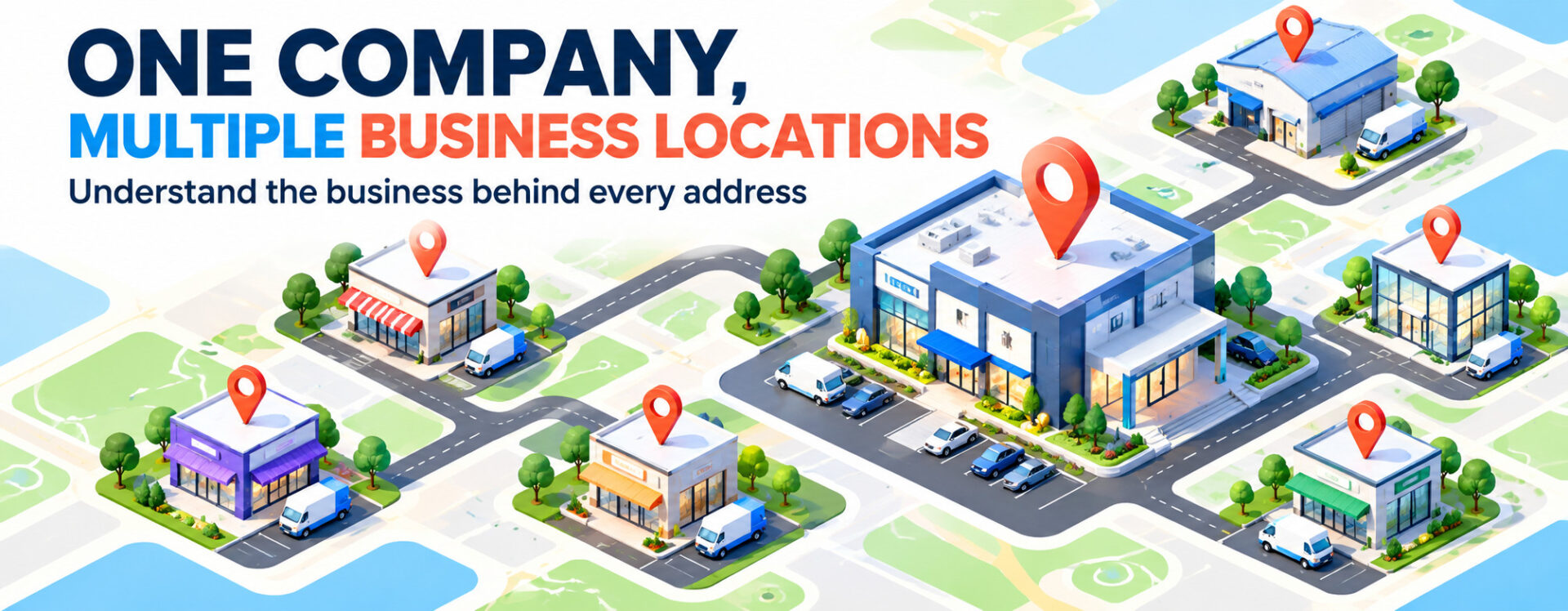
Ask how a provider handles headquarters, branches, subsidiaries, and duplicate records. Also clarify whether a record count represents businesses, locations, or individual contacts. These quantities are not interchangeable. Specify if several contacts at one company are needed.
Jared’s Leads can discuss business data requirements through its B2B email list service and its main list catalog. When making an inquiry, specify whether you need corporate accounts, branch locations, decision makers, or a mix. That detail helps make the scope of the requested list clearer from the start.
How Can You Find the Correct SIC or NAICS Code?
Begin by describing what the target business actually does. If you sell products to commercial contractors, determine whether you need general contractors, specialty trade contractors, building material suppliers, or another group. Define the activity that distinguishes a suitable customer from a related business.
Next, use official lookup tools to identify possible codes. Search the US Census Bureau’s NAICS resources for current US classifications, and use OSHA’s SIC search when working with SIC. Review the definition and included or excluded activities rather than relying on a short label.
Then compare the candidate categories with your existing customers. Which industries have become customers, which are profitable, and which have a clear use for your offer? Customer history can help validate a choice. If adjacent categories appear relevant, keep them separate initially so their results can be compared.

Finally, check whether the codes exist in the provider’s data and ask for an estimated record count. A code can be valid in an official manual without being available or consistently populated in every commercial database. Jared’s Leads offers custom targeting through its business lists and data services; include your proposed codes and other requirements when requesting a count so the available audience can be assessed before purchase.
How Do You Build a More Precise Mailing List With Industry Codes?
Start with the campaign objective, not with a request for the biggest possible file. Describe the businesses you want, the problem your product solves, and the regions you can serve. Then list the criteria that affect customer fit, such as industry, company size, annual revenue, business location, and the roles you need to contact. Separate primary requirements from optional filters so the final audience does not become unnecessarily restrictive.
Choose the SIC or NAICS categories that reflect the target activity and combine them with the other important criteria. A company selling compliance software might want selected industries, a particular employee range, and compliance or operations leaders. A distributor might focus on relevant establishments in a defined territory. The filters should reflect product use and the purchasing process.
Before ordering, request a count using the complete criteria. If the audience is unexpectedly large, revisit the broadest filters. If it is too small, consider whether a related industry or a wider geography would still be commercially relevant. Do not widen the audience merely to reach a record target; more names do not guarantee better fit.

Ask which fields are included and what can be supplied as an additional option. Industry codes do not guarantee that email addresses, phone numbers, mailing addresses, or decision maker details will be available for every record. Jared’s Leads describes available fields and targeting on its business email lists page and mailing lists page. Review the specification before approving the list, and examine a sample where one is available.
After launch, track results by segment to learn which industries generate relevant replies and qualified opportunities. Use those findings to refine later requests rather than relying on intuition alone.
What Mistakes Should You Avoid When Using SIC and NAICS Codes?
One mistake is choosing a code because the label sounds right. Similar labels can cover different activities, so read the definition, consider exclusions, and validate a sample. If a business performs several activities, focus on the one relevant to your offer.
The second mistake is assuming every NAICS code maps directly to one SIC code. Crosswalks can help compare the systems, but some categories split or combine differently. If you are converting an older customer file, use the relevant crosswalk as a guide and review the underlying activities. A mechanical code replacement can silently change what your list includes.
Another common mistake is relying on industry alone. Businesses in the same category can differ in size, location, purchasing authority, and need. Combine classification with meaningful additional filters and define exclusions in advance. It is also important to distinguish between companies, establishments, and contacts so the requested record count matches the campaign’s real needs.
Finally, do not assume every provider maintains its codes in the same way. Classification versions, refresh schedules, source coverage, and matching processes can differ. Ask how the codes are applied, when records were reviewed, and what happens when the data cannot support the exact criteria. Jared’s Leads’ list management and data services can be relevant when a business needs to organize, enrich, or segment existing records as well as develop a new audience.
What Should You Ask a Business List Provider Before Buying?
Start by asking which classification system is available and how codes are assigned. If the provider uses extended SIC classifications or proprietary industry labels, ask how those fields relate to the original system. Also confirm whether the requested NAICS codes reflect the version you selected. Clear answers help you compare providers on the actual targeting requirements rather than on general claims about database size.
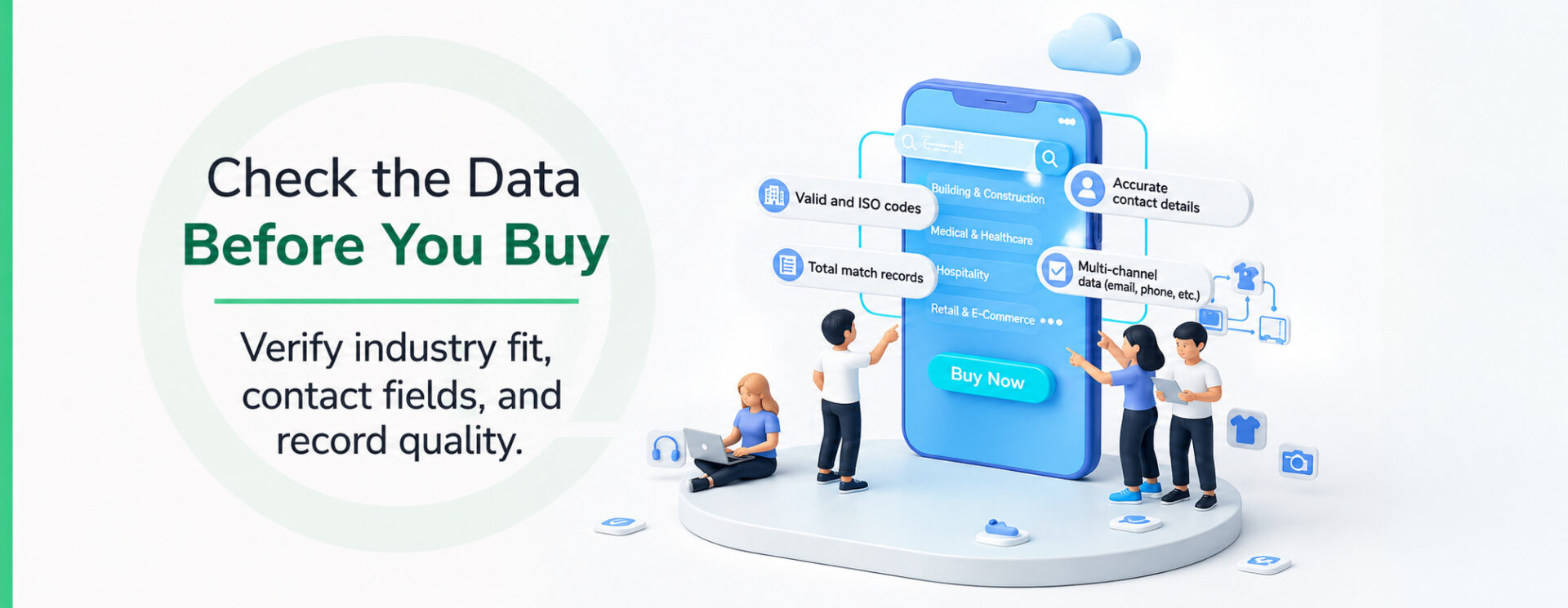
Request a count using your proposed industry codes, geography, company size, and contact requirements. Confirm whether the count represents unique companies, locations, or contacts, and explain how you want duplicates and subsidiaries handled. Ask which fields are included in the base list and which, if any, are available as additional services. It is better to resolve these questions before delivery than to discover that the file does not contain a required field.
Ask about data sources, refresh practices, and whether a sample is available. No classification system guarantees a perfect fit, so review how closely records match your specifications.
Jared’s Leads provides information about its audience options through the mailing lists landing page and B2B email lists page. When requesting a quote, share your intended use, selected codes, geographic area, target roles, and required fields. A clear brief makes it easier to review available volume and decide whether the data fits the campaign.
How Jared’s Leads Helps With Industry Targeted Business Lists
Jared’s Leads helps businesses explore targeted mailing lists and B2B data based on the audience requirements of their campaigns. Depending on the data available and the specific request, business list criteria can include industry, SIC or NAICS classifications, geography, company size, revenue, and decision maker roles. These filters help translate a marketing objective into a data specification that can be reviewed before the list is purchased.
Start with the companies you need to reach, not an arbitrary record count. Describe your product, industries, territory, and desired contacts. If you are unsure about codes, share the business activities and customer characteristics so the targeting requirements can be clarified.

For campaigns that require business email contacts, explore Jared’s Leads’ B2B email list options. If the campaign is primarily based on postal addresses, the targeted mailing lists service is the more relevant starting point. Available fields and counts vary by audience and data source, so confirm what can be provided for the specific market you intend to target.
Jared’s Leads also provides list management and data services to help eligible businesses enrich records, manage segments, or improve an existing dataset.
Use the contact page to request a count or quote. Share your proposed codes, geography, company attributes, number of contacts per company, and required fields.
Frequently Asked Questions About SIC and NAICS Codes
If you are evaluating an industry targeted list for an upcoming campaign, review Jared’s Leads’ B2B email list options to see how industry and company criteria can be combined.
Q.1. What is the main difference between SIC and NAICS codes?
SIC is the older Standard Industrial Classification system and uses four digits in the original US structure. NAICS uses six digits and was adopted in 1997 for US federal statistical classification. SIC remains relevant in legacy records and some commercial databases, so the best choice depends on the target activity and available data.
Q.2. Are NAICS codes more accurate than SIC codes?
Neither system guarantees accuracy. A record is useful only if the activity is classified correctly and the source information is current. Ask the provider which version it uses and whether a sample is available.
Q.3. Can I use both SIC and NAICS codes in one mailing list request?
A provider may support either system or both, depending on its database. Explain whether the codes are alternative ways to find the audience or whether both fields must appear in delivered records. Request a count using that logic.
Q.4. Where can I look up official SIC and NAICS codes?
Use the US Census Bureau’s NAICS website and OSHA’s SIC system search. Read the full descriptions and notes before selecting a category.
Q.5. Can SIC and NAICS codes identify company decision makers?
No. They classify business activities, not people. Combine industry targeting with relevant job titles, seniority, and contact fields. The right contacts depend on your product and the company’s purchasing process.
Q.6. Do industry codes guarantee that a company will buy my product?
No. A code does not prove need, budget, or purchase intent. Use it as a starting point, apply other qualification criteria, and review results by segment to learn which audiences produce opportunities.
Q.7. Should I choose the most detailed code available?
Not automatically. A detailed code can exclude relevant businesses, while a broad one can include unsuitable companies. Review definitions, compare categories with customer knowledge, and request a count before deciding.
Q.8. How often should industry data be updated?
Providers use different refresh schedules, and classification fields may be maintained separately from contact details. Ask when records were last reviewed and how updates are handled. The right frequency depends on the data and how quickly the market changes.
Final Thoughts: Use Industry Codes as a Starting Point, Not the Whole Strategy
SIC and NAICS codes help define industry segments, but they are not a complete qualification process. Identify activities that match your offer, verify codes with official resources, and combine them with relevant company attributes, geography, and contact roles. Confirm what a list includes before buying.
Use campaign results to refine the audience over time. If a segment produces irrelevant responses, review the code selection and other filters. If a related segment produces worthwhile opportunities, test it separately rather than immediately merging it into every future campaign. A consistent process helps marketing and sales teams understand which audience definitions are working and why.
When you are ready to build an industry focused audience, Jared’s Leads can help you review available targeting options, estimate list volume, and specify the data required for your campaign. Explore the main list catalog or contact Jared’s Leads with your proposed codes and campaign goals to discuss a suitable next step.