A lead list is only useful when the people on it make sense for the campaign you are planning to run. Having thousands of names and contact records does not automatically give a sales or marketing team thousands of opportunities. If the list contains people who do not fit the product, live outside the service area, work in the wrong industry, or have nothing to do with the buying decision, the size of the list can become more of a distraction than an advantage.
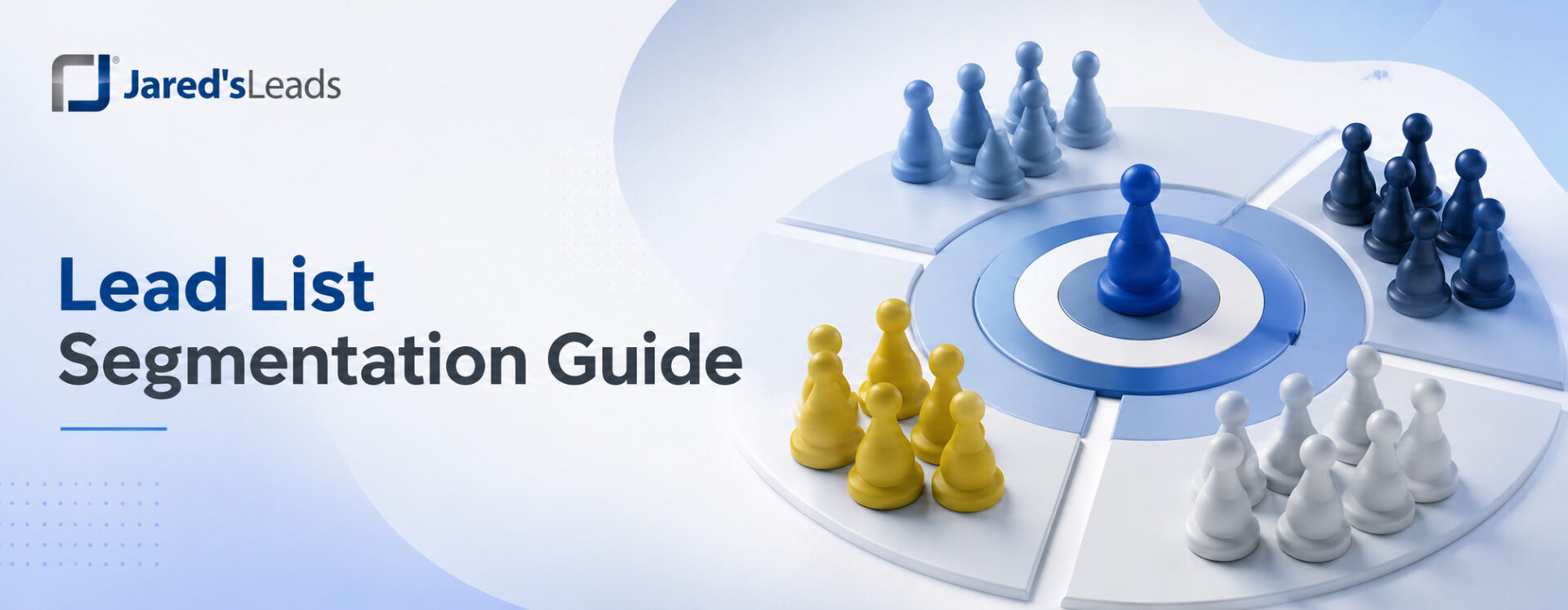
This is where lead list segmentation becomes important. Segmentation means dividing a larger audience into smaller groups based on characteristics that actually matter to the campaign. Those characteristics could include industry, company size, location, job role, demographics, household characteristics, or other information that helps identify a better fit.
The goal is not to create as many segments as possible. The goal is to understand the audience well enough that each group receives a more appropriate message and sales approach.
For businesses building targeted audiences, Jared’s Leads’ marketing and contact list solutions can be used to define audiences around factors such as industry, geography, job title, company size, demographics, and other available criteria.
What Is Lead List Segmentation?
Lead list segmentation is the process of taking a larger database of prospects and dividing it into smaller groups that share relevant characteristics. Those groups can then be used for different marketing campaigns, sales activities, outreach channels, or messages.
Consider a company that sells accounting software to businesses. A single list containing restaurants, construction companies, manufacturers, professional services firms, and retailers may technically contain potential customers. But the problems those businesses face are not necessarily the same. A restaurant may care about labor costs and point of sale integration, while a manufacturer may be more concerned with inventory, purchasing, and production reporting.
Putting both audiences into one campaign forces the company to use a general message. Segmenting the list creates the opportunity to communicate with each group in a way that reflects its situation.
The same principle applies to the people inside those companies. A CFO, operations manager, business owner, and IT director may all work for the same organization, but they may have very different responsibilities and reasons for considering a purchase.
Good segmentation recognizes these differences instead of treating the entire database as one audience.
Start With the Customer You Actually Want

Before deciding how to segment a list, define the type of customer you are trying to reach.
For a B2B campaign, this usually means creating an Ideal Customer Profile. The profile describes the characteristics of companies that are most likely to benefit from your product or service. It might include industry, company size, geography, annual revenue, number of locations, business model, or other characteristics.
Once the company profile is clear, you can determine which people inside those organizations are relevant.
For example, a software company might decide that its strongest prospects are healthcare businesses with 100 to 1,000 employees in five specific states. The people it wants to reach might be CFOs, finance directors, controllers, and other senior financial decision makers.
That is a much more useful definition than simply saying, “We need healthcare leads.”
Jared’s Leads’ business lead solutions are built around B2B targeting factors including industry, location, company size, and decision maker information.
For consumer campaigns, the starting point is different. You may need to understand the household or individual characteristics that make someone a reasonable prospect. Jared’s Leads describes its consumer lead data as being filterable by factors such as location, homeowner status, income range, and consumer interests. Consumer lead targeting can therefore be approached differently from B2B segmentation.
Segment by Geography

Geographic segmentation is one of the most straightforward ways to divide a lead list, but it can have a major impact on how a campaign is executed.
A business operating nationally may not want to approach every market in exactly the same way. Sales territories, local competition, market demand, climate, population characteristics, and service availability can all differ from one area to another.
A company may therefore create segments by state, city, ZIP code, county, metropolitan area, radius, or another geographic boundary.
A roofing company, for example, may only want homeowners in specific ZIP codes. A regional financial services company may want prospects within a defined territory. A national B2B supplier may divide its audience by sales territory so that each representative receives the appropriate accounts.
Geography becomes even more useful when combined with other filters. Instead of targeting everyone in a city, you might target businesses in that city within a particular industry and company size range.
Jared’s Leads’ targeted mailing lists support geographic targeting by state, ZIP code, city, county, radius, and custom territories, along with other audience criteria.
The important thing is to use geography when it changes the way the campaign should be handled. There is little value in creating separate geographic segments if every group will receive exactly the same message and sales treatment.
Segment B2B Lists by Industry and Company Size
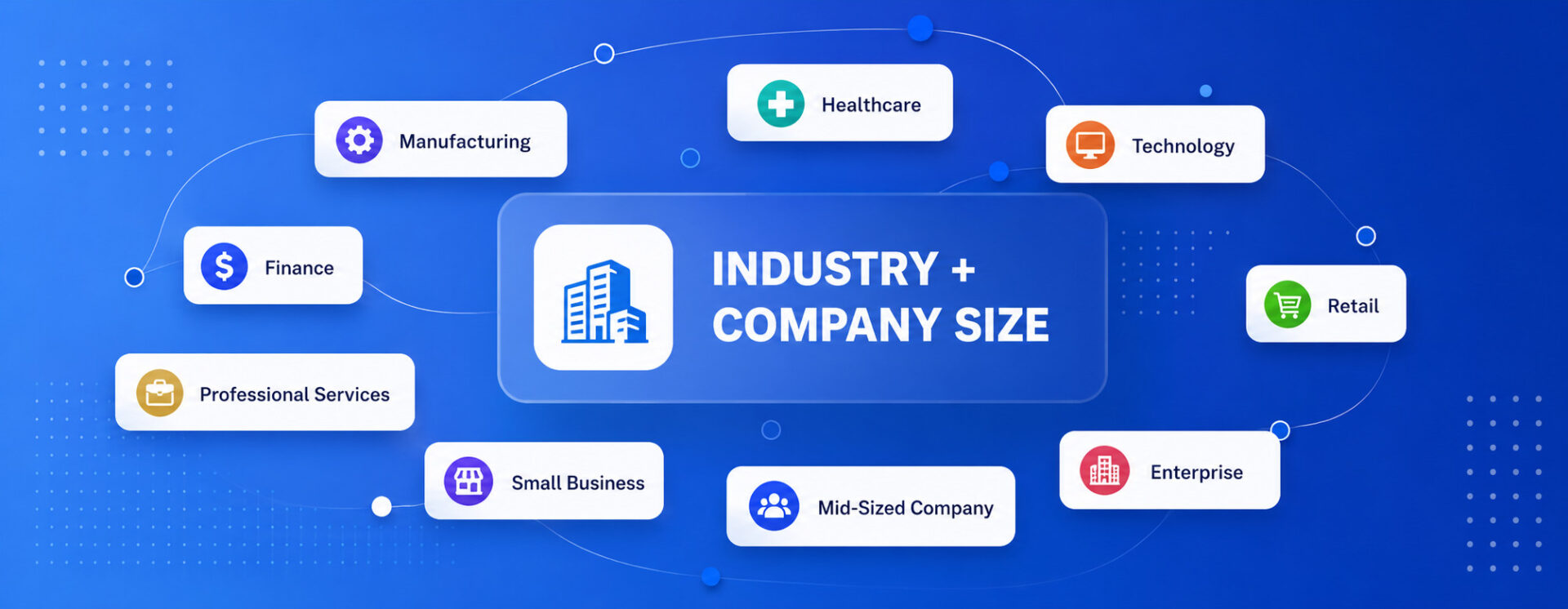
Industry is another important segmentation factor because businesses in different industries often have different problems and priorities.
A cybersecurity company might create separate campaigns for healthcare organizations, financial institutions, manufacturers, and professional services firms. The underlying service may be similar, but the concerns and language used to explain the value can be different.
Company size can add another layer of useful information.
A business with 15 employees may have a very different buying process from a corporation with 5,000 employees. The smaller company might have one owner making most purchasing decisions, while the larger company could involve procurement, finance, IT, operations, and senior management.
That difference can affect the sales cycle, the decision makers involved, the type of offer that makes sense, and even the channel through which you approach the company.
Jared’s Leads’ business list options include company level criteria such as industry, company size, geography, SIC and NAICS information, and decision maker roles where available.
Rather than asking for the largest possible B2B audience, start by asking which companies are actually capable of becoming good customers.
Segment by Job Role and Decision Maker

Finding the right company does not necessarily mean you have found the right prospect.
In B2B marketing, the person who uses a product may not be the person who approves the purchase. The person who identifies a problem may not control the budget. A department manager may influence the decision while an executive gives the final approval.
That makes job role an important segmentation factor.
A company selling marketing software may want marketing directors and CMOs. A payroll provider may focus on HR and finance leaders. A manufacturing equipment company may need operations managers, plant managers, procurement professionals, or owners.
It is also important not to rely too heavily on one exact job title. Companies use different titles for similar responsibilities, so segmentation should consider related roles when appropriate.
Jared’s Leads’ B2B email list solutions are designed around both company level and person level targeting, including professional contacts, job titles, corporate email information, and other available business data.
The more clearly you understand who influences the buying decision, the easier it becomes to build a useful segment.
Segment Consumer Lists Around Meaningful Characteristics
Consumer campaigns require a different segmentation strategy.
Instead of industry and job title, consumer audiences may be divided according to geography, demographics, homeownership, household characteristics, interests, life events, or other available information.
For example, a home improvement company might want homeowners in a particular income range and geographic area. A moving company might be interested in people who have recently relocated. An insurance provider may need a specific combination of location, household characteristics, and other available audience information.
The mistake is to assume that every demographic field is automatically useful. A segment should exist because the characteristic helps identify a better prospect or changes the campaign.
Jared’s Leads’ consumer lead page describes consumer audiences that can be segmented around location, homeowner status, income range, and consumer interest categories.
The more closely the segment reflects the actual customer profile, the more useful the resulting list becomes.
Match the Segment to the Campaign Channel

The channel you plan to use should influence how you organize your audience.
An email campaign requires usable email information. A calling campaign needs appropriate phone data. Direct mail requires accurate postal information. A multichannel campaign may require several of these fields at the same time.
This does not mean that every person on the list needs to be placed into a separate channel segment. It means you should understand what information is necessary to execute the campaign properly.
For example, a business could identify a group of decision makers in a specific industry and then determine which records have usable email addresses, phone numbers, or postal addresses. The same prospect may eventually receive more than one type of outreach, depending on the campaign strategy.
Jared’s Leads’ email list options can support targeted email audiences, while Jared’s Leads’ phone lists and mailing lists provide options for phone and postal outreach.
The important point is that segmentation should make campaign execution easier, not create unnecessary administrative work.
Do Not Over Segment the List
Segmentation becomes counterproductive at some point.
If you create dozens of tiny audiences, you may end up with groups that are too small to support meaningful campaigns. Your marketing team may also have to create too many versions of the message, while your sales team has to remember too many different approaches.
A useful test is simple: would you change the message, offer, channel, timing, or sales approach for this group? If the answer is no, there may be no reason to make it a separate segment.
For example, separating companies with 200 employees from companies with 201 employees probably does not create a meaningful difference for most campaigns. Separating companies with 20 employees from companies with 5,000 employees could.
The purpose of segmentation is to identify meaningful differences, not to make a database look sophisticated.
Jared’s Leads’ list building process starts by defining the target audience and its criteria before building the list, which is a useful way to think about segmentation before getting distracted by the sheer number of available filters.
Clean the Data Before You Segment It

Segmentation is only as useful as the data behind it. If the information in a lead list is outdated, incomplete, duplicated, or inaccurate, even carefully selected segments can produce the wrong audience. A company may think it is targeting current decision makers, businesses within a specific market, or customers that meet certain criteria, when the underlying records no longer reflect reality. Data quality therefore needs to be considered before the segmentation process begins, not after the list has already been divided into different groups.
Consider a campaign designed to reach senior executives at companies within a particular industry. If some contacts have changed jobs, some companies have moved, and other records contain duplicate or incomplete information, the resulting segment may look accurate in a spreadsheet while being much less useful in practice. The problem is not necessarily the targeting criteria. The problem is that the information used to apply those criteria is no longer reliable. The same issue can occur with consumer data when addresses, household information, or other audience characteristics are outdated.
Cleaning the data before segmentation can involve identifying duplicate records, correcting or updating information, verifying contact details, removing records that no longer meet the campaign requirements, and filling important gaps where appropriate. It also gives businesses an opportunity to organize an existing database around the characteristics they actually need for future campaigns. Instead of repeatedly working around problems in an old CRM or spreadsheet, businesses can create a cleaner foundation for segmentation, outreach, and measurement.
This is particularly valuable for businesses that already have a substantial customer or prospect database. Starting with a new list is not always necessary when the existing data contains valuable information that can be cleaned and reorganized. Jared’s Leads list management services can help businesses clean, verify, update, organize, suppress, append, and segment existing contact data so it is more useful for marketing campaigns.
When the underlying information is reliable, segmentation becomes much more meaningful. You are not simply dividing a database into smaller groups. You create audiences that are more likely to represent the customers and prospects you intended to reach.
How Jared’s Leads Helps Build Better Segmentation and Better Results
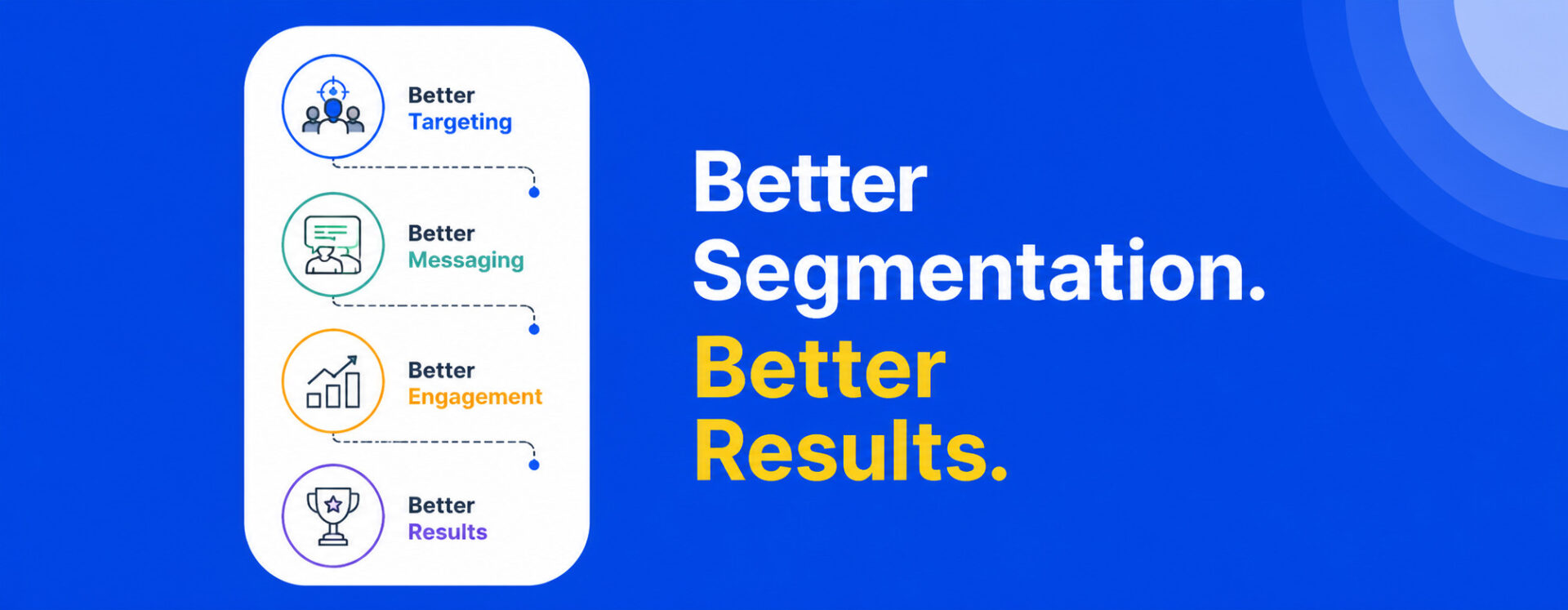
Better segmentation starts with understanding the campaign, not simply choosing filters from a database. Jared’s Leads has been helping businesses build targeted audiences since 2008, with experience across B2B, B2C, direct mail, email, phone, and specialty audiences. The company has also been recognized on the Inc. 5000 list multiple times and maintains an A+ Better Business Bureau rating.
That experience matters because every campaign has different requirements. A business may need to reach a particular industry, geographic market, company size, job function, homeowner group, income range, or combination of criteria. Jared’s Leads works with clients to understand those requirements and identify the targeting options that make sense rather than simply delivering the largest possible list. Its targeted list solutions include business, consumer, email, mailing, phone, and specialty audiences.
The process can also extend beyond the initial list. Jared’s Leads provides marketing data solutions that include audience data, campaign activation, data hygiene, and follow up support. That means a business can address issues such as duplicate records, outdated information, verification, and campaign preparation before the audience is put to work.
The company also emphasizes human support rather than leaving businesses to work through a self service database alone. Clients can discuss their audience, request counts, review targeting options, and refine the list before moving forward. This approach is particularly useful when a campaign requires several segmentation criteria that need to work together.
The result is a more practical way to think about segmentation. Instead of asking how many contacts can be added to a campaign, the better question is whether the people in the audience actually match the campaign objective. Starting with that question can reduce irrelevant records, make messaging more focused, and give the business better information to use when measuring results.
If you are planning a new campaign or reviewing an existing audience, you can contact Jared’s Leads to discuss the audience you want to reach and the segmentation criteria that matter to your business.
Frequently Asked Questions
Q.1: What is the best way to segment a B2B lead list?
The best approach is to begin with your Ideal Customer Profile and identify the characteristics that genuinely separate strong prospects from weak ones. Industry, company size, geography, and decision maker role are common starting points, but the right combination depends on the product and campaign. The goal is to create groups that are meaningfully different in terms of their needs, buying process, or likelihood of becoming a customer. Jared’s Leads business lists can be targeted around several of these B2B characteristics.
Q.2: How many segments should a lead list have?
There is no universal number. A good rule is to create a separate segment only when you expect to change something about the campaign for that group. If two segments will receive the same message, through the same channel, at the same time, there may be little reason to keep them separate. A few meaningful segments are usually more useful than dozens of small groups that are difficult to manage.
Q.3: Should I segment an existing customer database?
Yes, particularly if the database has grown over time and contains different types of customers or prospects. Existing records can often be divided by customer type, geography, industry, purchase history, role, or other available information. Before segmentation, however, it is worth checking the quality of the underlying data. Jared’s Leads list management services include data cleanup and segmentation for existing files.
Q.4: Can one lead belong to more than one segment?
Yes. Segments do not always have to be mutually exclusive. A business prospect could belong to a particular industry segment, geographic segment, and decision maker segment at the same time. The important thing is to understand how those filters interact and avoid creating conflicting campaigns that send the same person inappropriate or repetitive messages.
Q.5: How do I know whether my segmentation is working?
Look at the performance of the different groups rather than judging the entire list as one audience. Depending on your campaign, you might compare response rates, engagement, qualified conversations, appointments, conversions, or revenue. If one segment consistently performs differently from another, investigate why. Those findings can then be used to improve the criteria for future campaigns.
Conclusion

A well-segmented lead list is not necessarily the largest list you can build. It is the list that gives your sales and marketing teams a clearer picture of who they are trying to reach and why those prospects belong in the campaign.
Start with the customer you actually want. Define the characteristics that matter. Use geography, industry, company size, role, demographics, or other relevant criteria to create meaningful groups. Keep the number of segments manageable, clean the data before relying on it, and use campaign results to improve the audience over time.
The most important thing is to keep segmentation connected to the campaign itself. If a segment does not change the message, offer, channel, timing, or sales approach, it may not need to exist.
If you already know the audience you want to reach but need help determining the available data and list options, you can contact Jared’s Leads to discuss your requirements. You can also start with the Jared’s Leads list solutions to review the available business, consumer, email, phone, mailing, specialty, and data service options.
The objective is straightforward: build the right audience first, then build the campaign around it.