Moving to a new home means more than changing an address. It can involve finding service providers, discovering nearby businesses, buying household essentials, and establishing new routines. A recently relocated family may need an internet provider, insurance agent, dentist, furniture retailer, or home improvement contractor. For businesses serving households, this transition creates an opportunity to introduce relevant products and services.
New mover marketing is the practice of reaching households that have recently relocated. Rather than advertising to everyone in a broad area, a business can use a targeted new mover mailing list to contact households whose circumstances may make its offer timely. The objective is to present something useful when people may be considering new options. This guide covers how the strategy works, the first 90 days, audience selection, campaign planning, measurement, and how Jared’s Leads can help.
What Is New Mover Marketing?
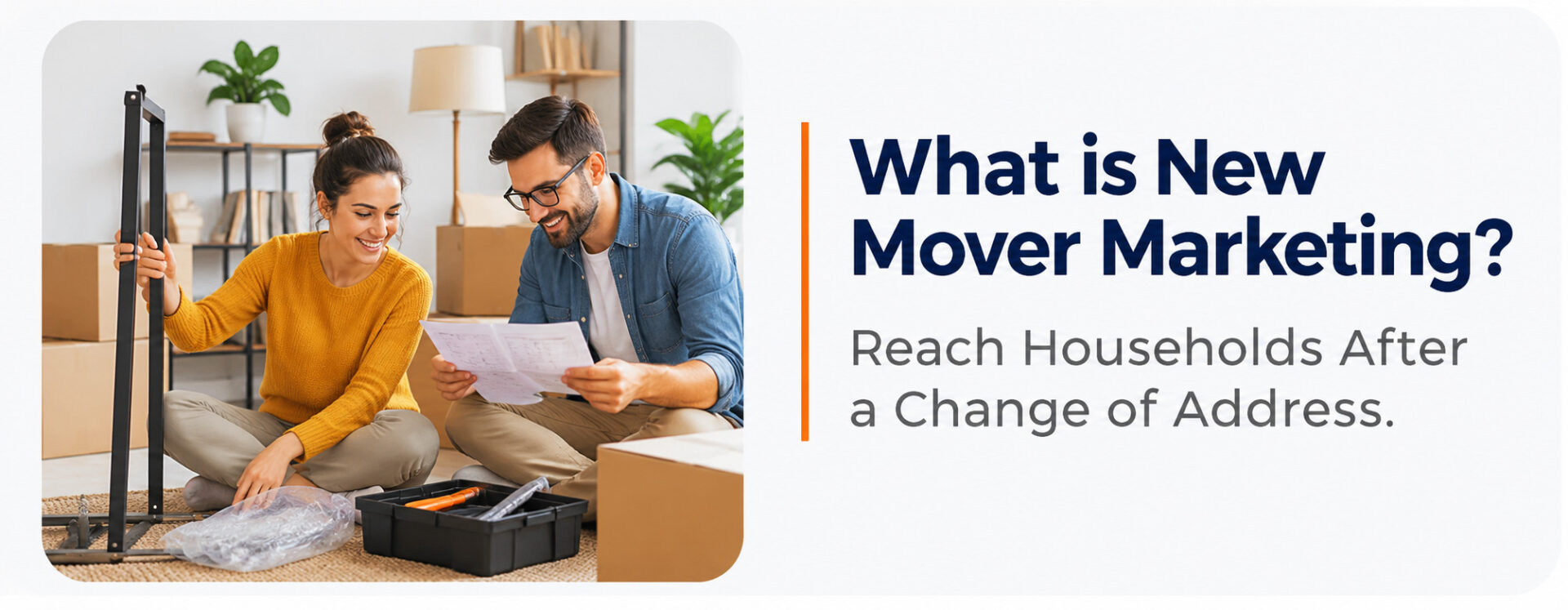
New mover marketing is a customer acquisition strategy focused on households that have recently changed their residential address. Businesses use relocation data to identify potential customers in a selected location and introduce products or services that may be relevant. Depending on the provider and audience, records may include a name, new postal address, move date, and homeowner or renter status. Other fields may be available, but should be confirmed before purchase.
A new mover mailing list is commonly used for direct mail. A retailer might send a first purchase offer, a home services company could introduce its services, or an internet provider might explain local plans. Email and phone outreach require suitable contact data and separate compliance checks. A postal address does not automatically authorize email or phone marketing.
The strategy works when the offer matches a likely need. A household that has moved may be reviewing local providers, and a relevant business can introduce itself during that decision process.
Why Recently Relocated Households Can Be Valuable
Relocation can change where people shop, which providers they use, and what they need to buy. Someone moving across town may look for a dentist or cleaning company. A family moving to another state may review insurance, utilities, and healthcare. A new homeowner may consider repairs, landscaping, security, furniture, or renovations.

The US Census Bureau reported that 11.6 percent of the US population moved to a different residence in 2025, compared with 11.8 percent in 2024. This represents a sizeable audience changing residential location each year, although not every mover is a suitable prospect for every business. The opportunity comes from matching an offer to the right household, not treating all movers as one group.
Some recent movers may consider new providers because their previous providers do not operate in the new area. Others may keep existing relationships. Effective campaigns focus on needs a business can reasonably address instead of assuming what every recipient wants.
Source: US Census Bureau, Migration and Geographic Mobility.
Why the First 90 Days Matter
The first 90 days after a move can provide a practical framework for planning outreach. It is not a fixed buying cycle, but household priorities often change as residents move from immediate setup to longer term decisions.

During the first 30 days, a household may arrange utilities, internet, cleaning, basic furniture, deliveries, and essential services. Businesses offering something needed to make the home functional can introduce themselves with a direct message and clear service information.
Between days 31 and 60, residents may begin choosing businesses they expect to use regularly. This can create opportunities for healthcare practices, fitness centers, restaurants, local retailers, and recurring service providers. Between days 61 and 90, some households may consider less urgent projects such as landscaping, painting, renovation, security, or maintenance.
These stages are planning guides, not rules. A renter may not need roofing services, while a homeowner may need a contractor immediately. Audience selection and message relevance matter more than the number of days since a move.
Which Businesses Benefit from New Mover Marketing?
New mover campaigns can support businesses whose products and services are connected to housing, local discovery, or household purchasing decisions. Home improvement companies may reach homeowners looking for plumbers, electricians, painters, roofers, landscapers, or contractors. Insurance agencies can introduce homeowners, renters, or auto coverage options to people reviewing their arrangements after a move.
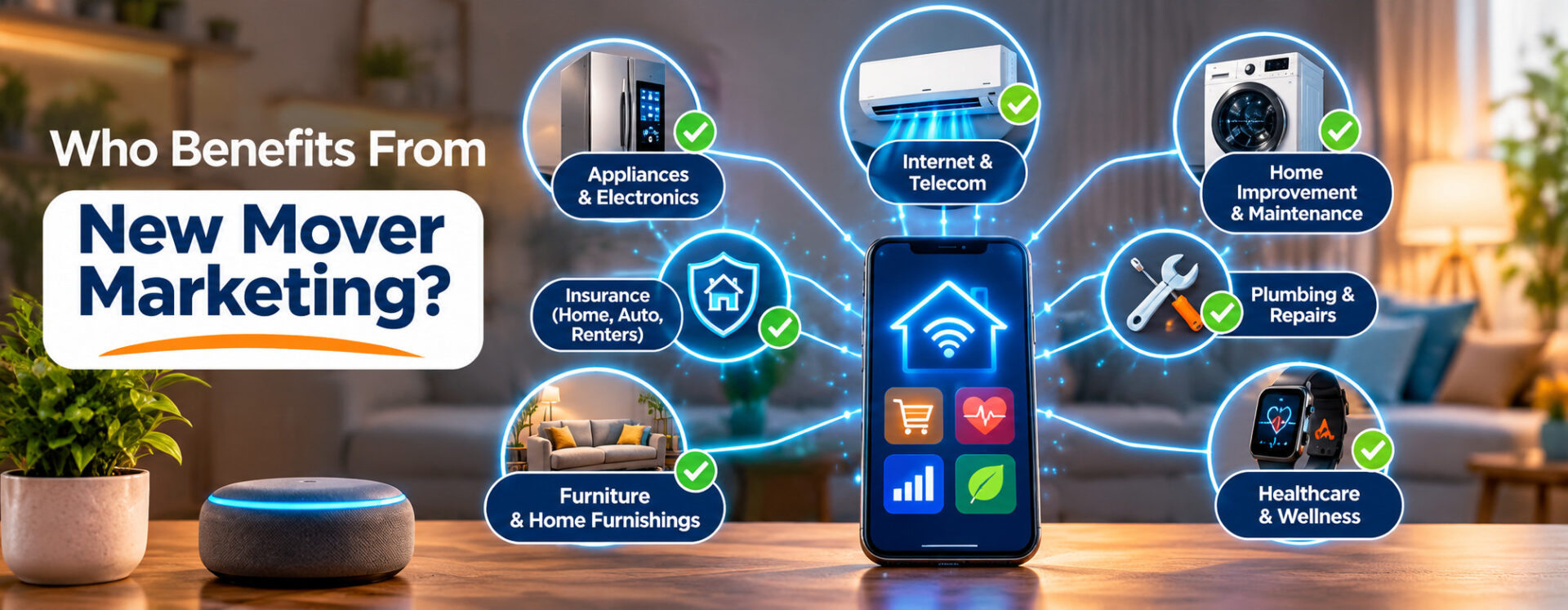
Internet and telecommunications providers can target households in their service areas and explain installation or plan availability. Furniture and appliance retailers can promote delivery, product ranges, or nearby showrooms. Healthcare and dental practices can introduce their location and appointment process to nearby residents without making assumptions about anyone’s health.
Restaurants, grocery stores, gyms, salons, cleaning companies, pet care businesses, and local retailers can also welcome new residents through neighborhood offers or useful local information. The strongest campaigns connect a product to a genuine need. An internet installation offer may suit a broad range of movers, while landscaping is more relevant to homeowners than apartment renters.
New Movers vs. New Homeowners: Understanding the Difference

A new mover list identifies households that have recently changed residential addresses. It can include renters and homeowners. A new homeowner list focuses on people identified as recent property purchasers or owners, based on the provider’s data and definitions.
This distinction affects campaign relevance. An internet provider, furniture store, restaurant, or cleaning service may want both renters and homeowners. A roofing company, solar installer, landscaping business, or renovation contractor may prefer homeowners because property ownership is more closely connected to the service.
Ask how the provider defines each audience, what date range is used, and which fields are available. Jared’s Leads offers New Mover Mailing Lists and broader Consumer Mailing Lists.
How to Build a Targeted New Mover Mailing List

Start with the campaign objective. A local internet provider may want households in its service area, while a contractor may want homeowners within a practical travel radius. A retailer may want residents near a store. The objective determines who belongs on the list.
Next, define the geography. Depending on availability, targeting may use ZIP code, city, county, state, radius, or another market area. Choose places the business can serve. Then decide whether to include homeowners, renters, or both. If income or demographic filters matter, ask whether those fields are available and whether they are self-reported, modeled, or derived from another source.
Move recency is another important filter. Ask when records were identified, whether a move date is supplied, and how frequently the provider adds or refreshes records. It is also useful to clarify whether the count represents all available records or only records that meet every selected filter. Finally, request a count before buying. It shows how many records match the selected geography and filters, and helps with budgeting. Review a sample or field layout where available. Do not assume a mailing list includes email addresses or phone numbers unless those fields have been specifically requested and confirmed.
Data Quality, Address Accuracy, and Compliance
The usefulness of a new mover campaign depends partly on data quality and recency. Ask how relocation information is sourced, how addresses are standardized, how often records are refreshed, and whether duplicates are removed. A provider should explain the available fields and the limits of its process.

For US postal campaigns, CASS and NCOALink are two important terms. CASS, the Coding Accuracy Support System, evaluates address matching software and helps improve postal coding. NCOALink is a USPS licensed service that uses change of address information to update eligible mailing records. They serve different purposes. Neither guarantees that every record is current, every item will be delivered, or a recipient will respond.
Businesses should also consider duplicate removal, suppression files, and campaign exclusions. Commercial email in the United States is subject to the CAN-SPAM Act, including rules for accurate sender information, non-deceptive subject lines, a valid postal address, and an opt-out method. Phone outreach may involve separate federal and state requirements, including applicable Do Not Call and consent rules. Buyers remain responsible for how data is used and should obtain qualified compliance guidance when needed.
See the USPS Move Update and NCOALink guidance, USPS CASS certification, and the FTC CAN-SPAM compliance guide.
Direct Mail or Email: Which Channel Should You Use?
Direct mail is a natural fit for a new mover mailing list because the central field is the household’s postal address. Businesses can send postcards, letters, brochures, or local offers. A furniture store might include a first purchase offer, while a contractor could explain its services and invite estimate requests.

Email can provide more detail, link to service pages, and help measure clicks or form submissions, but it requires suitable email data and a lawful basis for use. An email address is not automatically included in a postal record, and a postal address alone does not authorize email marketing.
Some businesses combine channels, using a postcard to introduce the company and a landing page to capture inquiries. Follow-up by email or phone should only be used when the contact data and permissions support it. Jared’s Leads also provides Direct Mail Marketing Services for businesses that need help beyond list selection.
How to Create an Effective New Mover Campaign

Begin with one clear goal, such as generating estimate requests, scheduling appointments, introducing a store, or promoting a service. A campaign with one main action is easier to understand and measure.
Make the message relevant to the household and location. Explain what the business offers, why it may be useful, and what the recipient should do next. Include the business name, contact details, website, and a clear call to action. If there is a discount, explain its eligibility period and conditions. A QR code or campaign specific landing page can help track responses, but the destination should work well on mobile devices.
Prepare the response process before the first mailpiece is sent. Assign responsibility for inquiries, return calls promptly, and ensure forms reach the right team. Track leads in a CRM or organized system so staff can record the source, follow-up activity, outcome, and sale value.
Measuring Results and Return on Investment
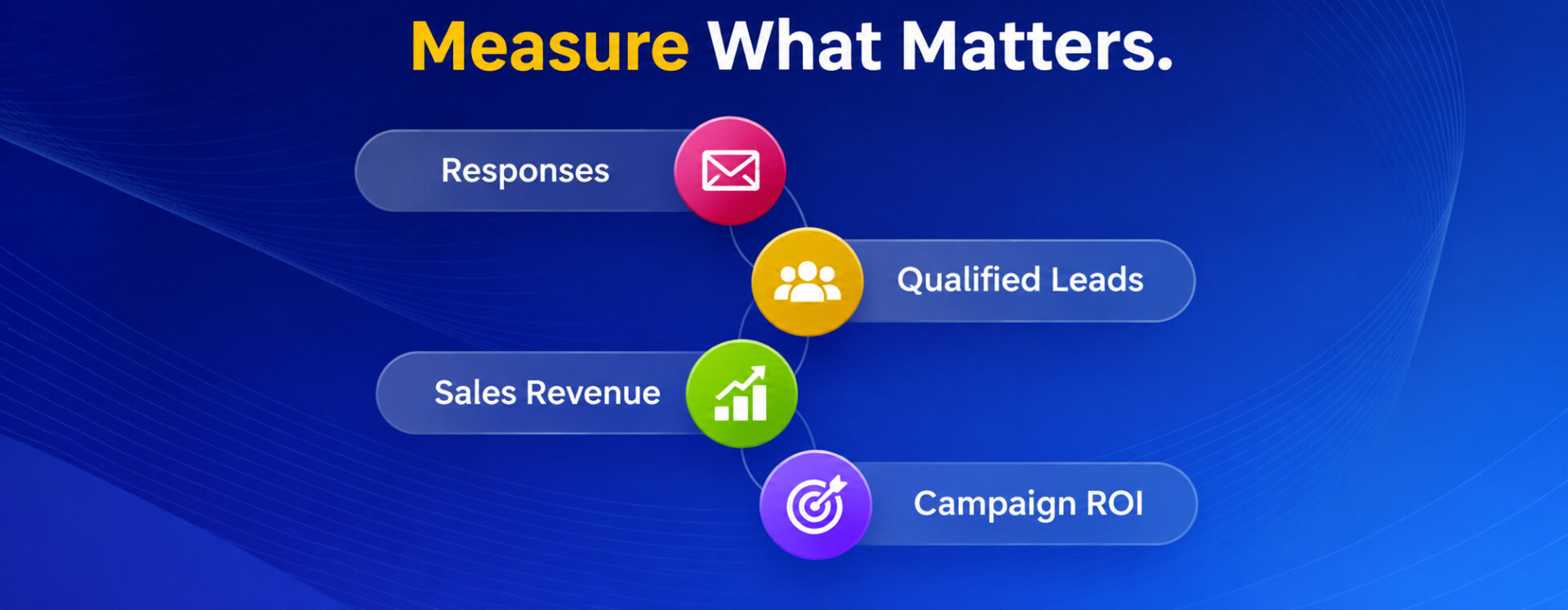
Measure performance using business outcomes, not only the number of mailpieces sent. Calculate the full campaign cost, including list costs, design, printing, postage, fulfillment, and tracking expenses. Then record responses such as calls, web forms, appointments, coupon redemptions, and purchases. Campaign specific phone numbers, QR codes, landing pages, and offer codes can help attribute results.
A simple ROI formula is:
ROI = [(Revenue attributable to the campaign − campaign cost) ÷ campaign cost] × 100
For example, if a business spends $2,000 and generates $6,000 in attributable revenue, its revenue based ROI is 200 percent. This simplified calculation does not account for product costs, labor, gross margin, or other expenses, so assess profit and customer acquisition cost as well.
For recurring services, consider customer lifetime value using realistic retention and margin assumptions. Compare results by ZIP code, audience segment, offer, and creative to understand what deserves further investment. Cost per response and cost per acquired customer can reveal problems that revenue alone may hide. A campaign can generate sales and still be unprofitable if its targeting, offer, or fulfillment costs are too high.
Common Mistakes to Avoid

Do not treat every recent mover as the same audience. Renters and homeowners may have different needs, and location determines whether a business can serve them. Also avoid focusing on list size instead of relevance. A smaller list within the correct service area can be more useful than a larger file containing poor fits.
Ask about data recency, sourcing, refresh schedules, and verification rather than assuming every new mover record is current. Campaigns can also underperform when the offer is unclear, the design is difficult to read, or the response process is not ready. Make the next step obvious and assign someone to handle inquiries. Finally, confirm the contact fields and applicable rules before using postal data for email or phone marketing.
Why Choose Jared’s Leads for New Mover Mailing Lists?
Choosing a data provider involves more than comparing list prices. Businesses need to understand how an audience is defined, which fields are available, how records are prepared, and what support is offered. Founded by Jared Knapp in 2007, Jared’s Leads provides targeted business and consumer data, mailing lists, email lists, phone lists, and campaign support.

For relocation campaigns, Jared’s Leads offers New Mover Mailing Lists. Its page describes targeting by ZIP code or radius, available move date and homeowner or renter status, weekly additions to consumer data, and CASS certification and NCOA processing before delivery. Counts and fields depend on the selected geography and criteria, so request a count and confirm the specifications before ordering.
Jared’s Leads also offers broader Consumer Mailing Lists and Direct Mail Marketing Services. For companies managing inquiries after a campaign, LeadWave can support lead routing, follow-up workflows, and engagement tracking. It is optional, so clients can continue using their existing CRM.
The company emphasizes audience targeting, a free count before purchase, and support from data specialists. Before ordering, businesses should still confirm the target definition, record recency, included fields, delivery format, and any processing performed on the file. This makes it easier to compare providers on the same criteria rather than price alone. Learn more on the About Jared’s Leads page or visit the Jared’s Leads homepage. Businesses can contact Jared’s Leads with their target geography, audience, estimated volume, and preferred channel to discuss available options.
Frequently Asked Questions About New Mover Marketing
Q.1. What is a new mover mailing list?
It is a set of household records associated with recent residential address changes. Depending on the provider, it may include names, postal addresses, move dates, and homeowner or renter status.
Q.2 How soon should a business contact new movers?
Timing depends on the offer. Essential services may be relevant soon after a move, while home improvement purchases may happen later. The first 90 days can help organize planning, but it is not a fixed buying window.
Q.3. Are new mover lists available for renters and homeowners?
They can be, depending on the provider and selected criteria. Confirm whether the list includes renters, homeowners, or both. If ownership matters, request a homeowner specific audience and verify its definition.
Q.4. Which industries can use new mover marketing?
Home improvement, insurance, internet services, furniture retailers, healthcare practices, real estate services, restaurants, cleaning companies, and local retailers may find the audience relevant. Results depend on offer, audience, location, and timing.
Q.5. Can a new mover list be used for email marketing?
Not automatically. A postal list is designed for address based outreach. Email requires suitable email data and compliance with applicable rules, including CAN-SPAM in the United States.
Q.6. How can I measure a new mover campaign?
Track responses, qualified inquiries, appointments, sales, revenue, and campaign costs. Unique phone numbers, landing pages, QR codes, or offer codes can help attribute results.
Q.7. What is the difference between a new mover list and a new homeowner list?
A new mover list can include renters and homeowners who changed addresses. A new homeowner list focuses on people identified as recent property owners or purchasers.
Q.8. Where can I get a new mover mailing list?
Jared’s Leads offers new mover mailing lists with geographic and household targeting options. Businesses can request a free count through the contact page.
Conclusion: Reach New Movers With a Relevant Offer

New mover marketing gives businesses a way to introduce products and services while households are adjusting to a new location. The opportunity is not simply that someone has moved. The move may create a reason to review service providers, discover local businesses, or purchase items for a new home.
A strong campaign begins with a clear objective and a carefully defined audience. Select relevant locations, distinguish between renters and homeowners when necessary, check data recency and address quality, and choose a suitable channel. The message should offer genuine value, make the next step easy, and lead into a reliable follow-up process. Measuring inquiries, sales, costs, and profitability will help improve future campaigns.
Jared’s Leads helps businesses explore this approach through new mover and consumer mailing lists, direct mail services, and optional LeadWave follow-up support. Visit Jared’s Leads or request a free count to find out whether a suitable audience is available for your market.