Buying a lead list is an investment in your sales and marketing pipeline. But simply receiving a large file of names, phone numbers, email addresses, or business contacts does not tell you whether that investment was successful. The real question is what those contacts do after they enter your campaign. Do they respond? Do they become qualified prospects? Do they schedule appointments? Do they become customers? Most importantly, do they generate enough revenue to justify what you spent?
This is why measuring the return on investment of a purchased lead list requires more than looking at the price you paid per record. A list can be inexpensive and still produce a poor return if the audience is not relevant to your offer. At the same time, a more targeted list can cost more per record but produce better conversion rates, lower acquisition costs, and more valuable customers. Jared’s Leads helps businesses build targeted marketing and contact lists for business, consumer, email, mailing, phone, sales, and speciality campaigns, allowing companies to define their audience before making a purchase.
The goal of ROI measurement is therefore not simply to determine whether you received what you purchased. It is to understand whether the purchased audience helped your business generate profitable results. Once you begin measuring that relationship consistently, you can make better decisions about which audiences to target, how much data to purchase, which channels to use, and where to invest your future marketing budget.
What Does ROI Mean When You Purchase a Lead List?
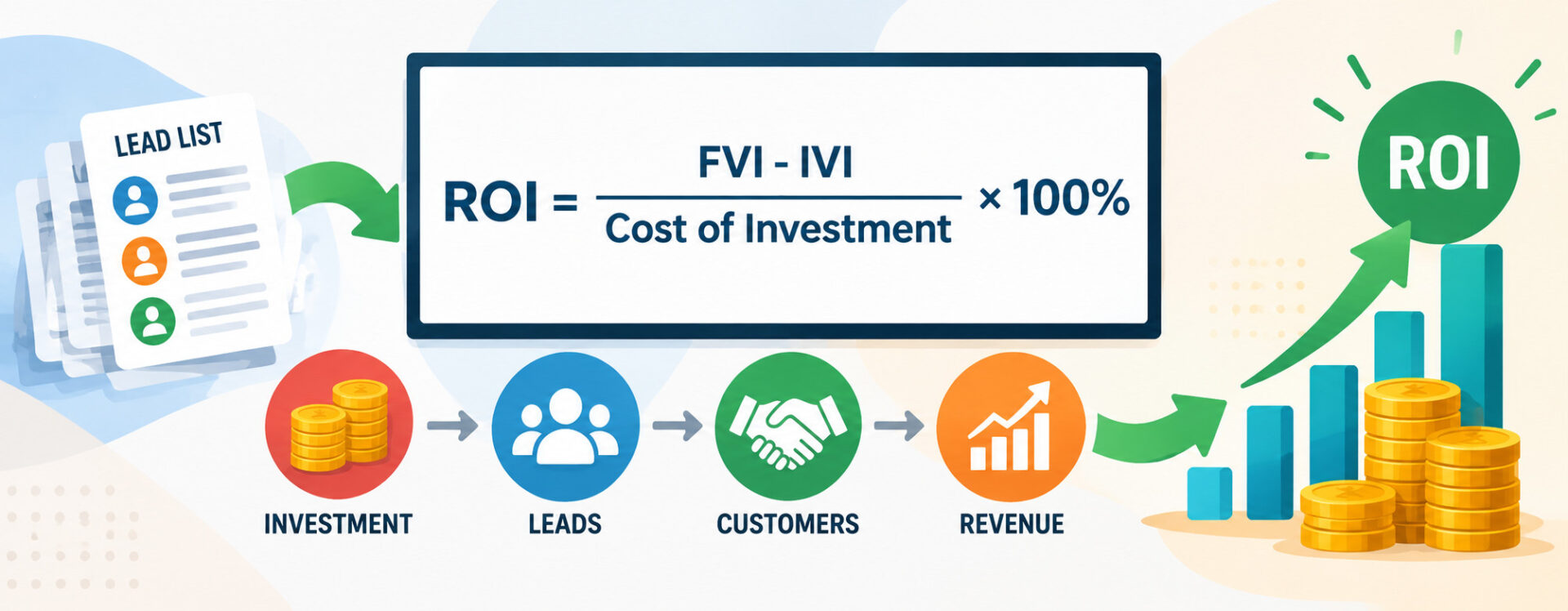
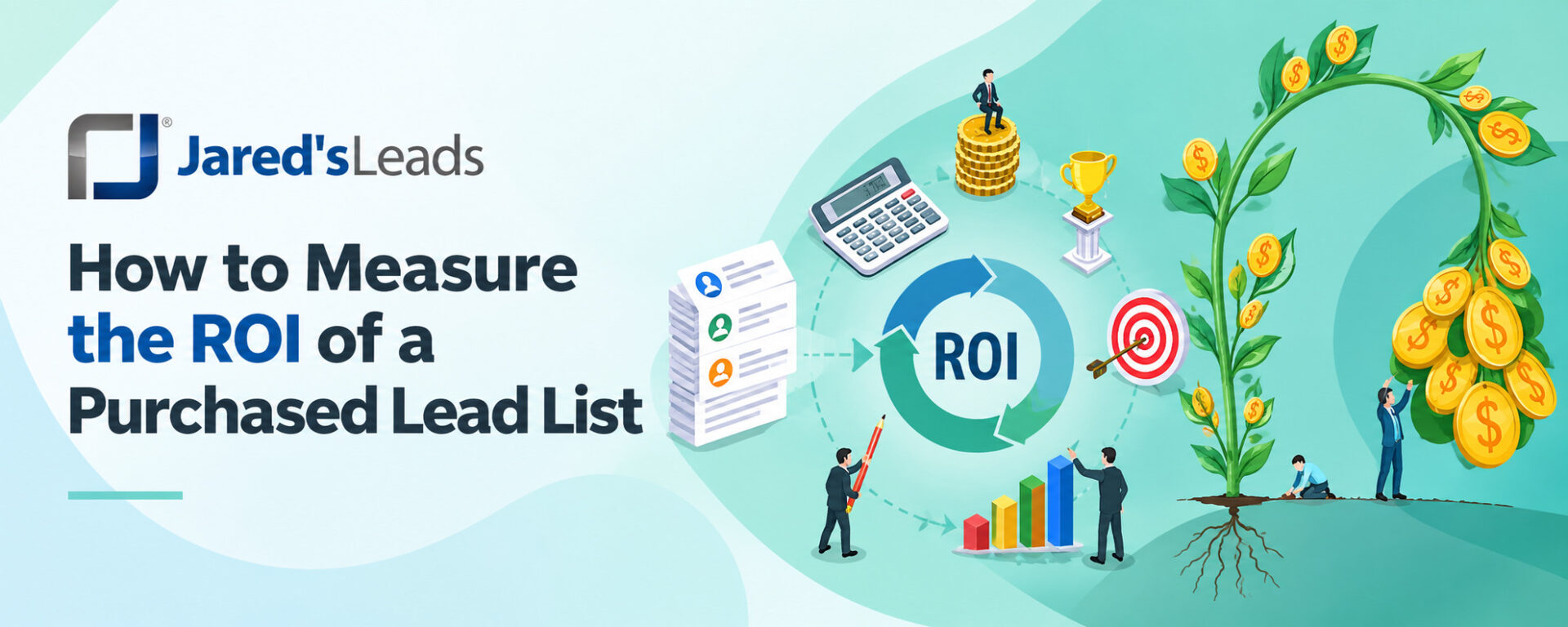
Return on investment measures the financial return generated by a campaign compared with the amount invested in that campaign. For a purchased lead list, the basic calculation is:
ROI = (Revenue Generated − Total Campaign Cost) ÷ Total Campaign Cost × 100
The important part of this formula is the phrase total campaign cost. Many businesses make the mistake of calculating ROI using only the amount paid to purchase the list. That gives you the cost of the data, but it does not necessarily represent the actual investment required to turn those contacts into customers.
Your campaign cost may include the list itself, email deployment, direct mail production, postage, sales representative time, calling expenses, advertising, creative work, software, CRM costs, appointment setting, and other expenses connected with the campaign. If you leave these costs out, your ROI calculation can look much better than the campaign actually performed.
For example, imagine that your business spends $3,000 on a targeted lead list and another $2,000 on campaign execution. Your total investment is $5,000. If that campaign produces $15,000 in attributable revenue, you generated $10,000 above the campaign investment. That represents a 200 percent ROI.
Jared’s Leads takes a targeted approach to list building, allowing businesses to define the audience, filters, geography, industry, and other requirements before receiving a list count. The company currently provides business and consumer lists along with email, mailing, phone, sales, specialty, and lead options.
Explore Jared’s Marketing and Contact Lists
Establish Your Baseline Before Buying the List

You cannot accurately measure ROI if you do not establish a baseline before the campaign begins. Before purchasing a lead list, determine what you want the campaign to accomplish and decide which metrics will define success.
Start by defining your ideal audience. For a business campaign, this could include industry, company size, geography, revenue, job title, or decision maker role. For a consumer campaign, the criteria might include location, age range, homeowner status, household characteristics, income range, interests, or other available demographic information.
You should then establish realistic expectations for the campaign. Determine your expected response rate, qualification rate, appointment rate, closing rate, average customer value, and acceptable acquisition cost. These numbers give you something to compare against once the campaign is underway.
The measurement framework should also reflect how your business actually sells. A B2B company with a long sales cycle may measure qualified conversations, meetings, proposals, opportunities, and closed accounts. A consumer business may measure inquiries, appointments, applications, purchases, or completed transactions.
Jared’s Leads provides business lead data designed around companies, decision makers, industries, locations, and other B2B targeting criteria.
Explore Business Leads from Jared’s Leads
Starting with a clearly defined audience makes the ROI analysis more useful because you can determine whether the campaign actually reached the type of prospect you intended to target.
Calculate the True Cost of Your Purchased Lead List
The price per record is useful, but it should never be the only number you use when evaluating a purchased lead list.
Suppose your business purchases 10,000 records for $2,500. Your initial cost is $0.25 per record. That may appear inexpensive, but imagine that your sales team spends another $2,000 contacting those prospects and the campaign requires another $2,000 for creative work, software, postage, or other expenses. Your actual campaign investment is now $6,500.
This distinction becomes particularly important when comparing two different lists. The cheaper list is not automatically the better investment. If the audience is too broad or poorly aligned with your offer, your sales team may spend considerably more time attempting to find qualified prospects. A more precisely targeted list may have a higher initial price while producing a lower cost per customer.
The same principle applies to direct mail. If your campaign contains inaccurate or outdated postal information, you may spend money producing and mailing pieces that never reach a potential customer.
Jared’s Leads provides targeted mailing lists built around campaign criteria such as geography, demographics, industry, profession, and other available filters.
Explore Targeted Mailing Lists
The important calculation is therefore not simply how much each record costs. It is how much your business ultimately spends to acquire each qualified customer.
Measure the Entire Conversion Funnel
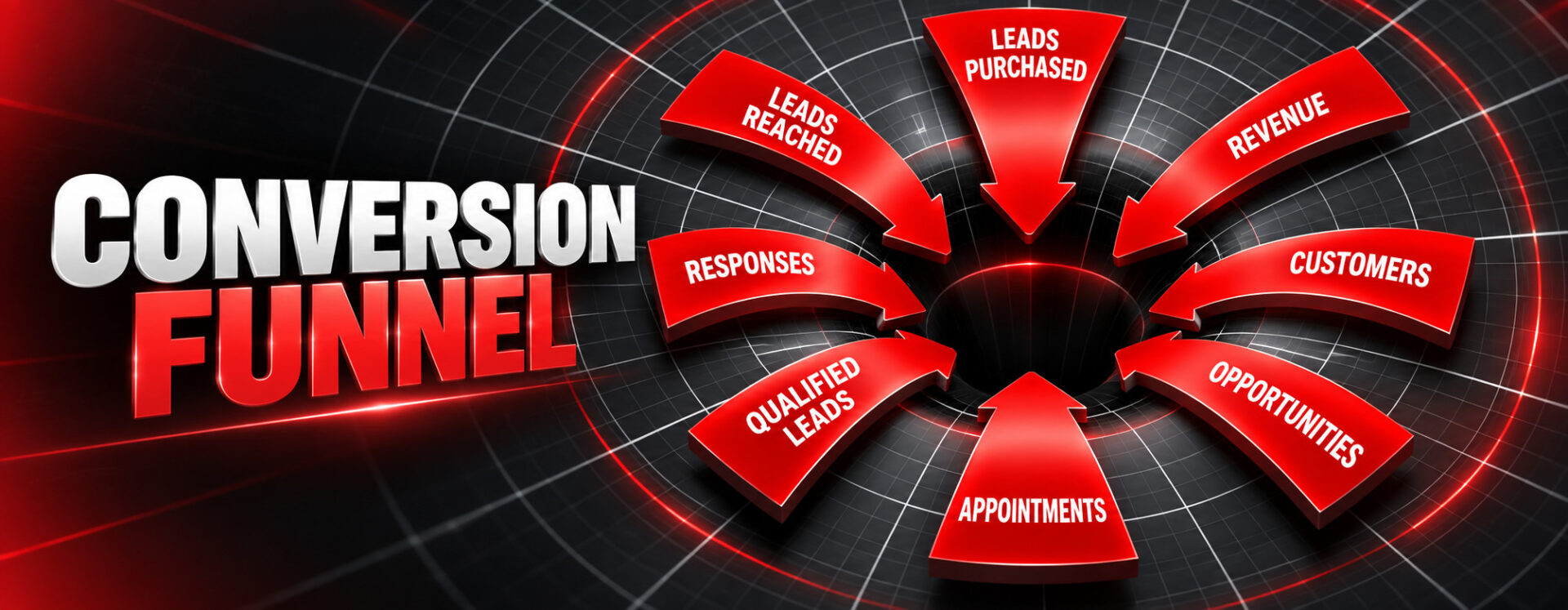
Response rate is useful, but it is only one part of the picture.
Imagine that two purchased lists each generate a 3 percent response rate. The first campaign produces 300 responses and 10 customers. The second produces 300 responses and 35 customers. Both lists generated the same response rate, yet one campaign produced more than three times as many customers.
That is why businesses should track the entire conversion journey:
Leads purchased → Leads reached → Responses → Qualified leads → Appointments → Opportunities → Closed customers → Revenue
Each stage can reveal a different problem or opportunity. If many records cannot be reached, the issue may be related to data quality. If prospects respond but very few are qualified, the audience targeting may need to be tightened. If qualified prospects schedule appointments but rarely become customers, the problem may exist in the offer or sales process.
Jared’s Leads provides data services and list management solutions designed to help businesses clean, verify, update, organize, suppress, append, and segment existing data.
Explore Jared’s List Management Services
Looking at the entire funnel allows you to determine whether the purchased list is actually responsible for poor performance or whether something else is happening after the data enters your system.
Measure Cost Per Qualified Lead
Cost per lead is one of the easiest campaign metrics to calculate, but it can also be misleading.
Suppose your business spends $5,000 and receives 500 contacts. Your cost per lead is $10. That sounds efficient until you discover that only 25 of those contacts actually meet your qualification criteria. Your cost per qualified lead is then $200.
This is why qualified lead volume is often more useful than total lead volume. A campaign that produces 100 highly relevant prospects may be more valuable than a campaign that produces 10,000 contacts with little connection to your ideal customer.
You should also calculate your cost per acquisition. Divide the total campaign investment by the number of customers generated by the campaign. If you spend $5,000 and acquire five customers, your customer acquisition cost is $1,000.
Whether that is a good result depends on what those customers are worth. If each customer generates $3,000 in gross profit, the campaign may be highly attractive. If each customer generates only $500, the same campaign would need significant improvement.
Jared’s Leads distinguishes between contact lists, leads, and data services, giving businesses different options depending on whether they need a targeted audience, prospect opportunities, or improvements to data they already own.
Compare Jared’s Lists and Lead Solutions
Consider Buyer Intent When Evaluating Lead Quality

Not every prospect is at the same point in the buying process. Some contacts simply match your target audience. Others may have recently expressed interest in a particular product or service.
That difference can have a major effect on ROI.
A prospect who recently submitted an inquiry may be more commercially valuable at that moment than a contact who simply matches your demographic or business criteria. This does not mean that compiled lists are ineffective. It means that different types of data should be evaluated according to their intended use.
Jared’s Leads offers real time leads designed around recent prospect inquiries and opportunities. These leads can be delivered quickly so sales teams can respond while the prospect’s interest is still active.
Explore Real Time Leads from Jared’s Leads
If you are using real time leads, measure the speed of follow up alongside the eventual conversion rate. A fresh lead that is contacted quickly can have a different commercial outcome from a similar prospect contacted several days later.
Measure Data Quality as Part of ROI

Data quality directly affects campaign economics.
Duplicate records, outdated addresses, disconnected phone numbers, inactive email addresses, incomplete information, and inaccurate records can all cause businesses to spend money on prospects they cannot effectively reach.
Imagine purchasing 10,000 records and discovering that 1,000 cannot be used effectively. Your real cost per usable record is higher than the original price suggests. More importantly, your sales team may spend valuable time attempting to contact prospects who were never realistically available to the campaign.
This is why data hygiene should be considered part of ROI rather than an administrative task.
Jared’s Leads provides data services covering areas such as list cleaning, verification, deduplication, enrichment, append services, segmentation, and ongoing list management. The company describes these services as a way to improve existing customer and prospect data and prepare it for direct mail, email, phone, and CRM use.
If your business already has a database, improving the information you own may also reveal opportunities that would otherwise be missed. In some situations, the best next step is not simply buying more contacts. It is making better use of the data already inside your CRM or customer database.
Measure Revenue and Compare Campaign Performance
A campaign with a high response rate is not automatically a profitable campaign. What matters is how those responses translate into qualified opportunities, customers, and revenue. Suppose one campaign generates 500 responses and produces $10,000 in sales, while another generates only 150 responses but produces $30,000 in sales. The second campaign generated fewer responses, but it created three times as much revenue. This is why your ROI calculation should ultimately connect campaign activity with actual sales and customer value.
Track which customers originated from the purchased lead list and connect those customers to the revenue they generated. If your business has repeat purchases or recurring contracts, consider customer lifetime value as part of the analysis. A customer who initially spends $500 but generates $5,000 over several years may justify a much higher acquisition cost than a customer who makes a single $200 purchase. The objective is to understand the economic value of the audience rather than simply measuring the amount of activity generated by the campaign.
One campaign rarely provides enough information to determine whether a particular lead source is consistently profitable. The better approach is to track several campaigns and compare their results. Look for differences based on industry, geography, audience type, job title, company size, consumer segment, campaign channel, and list type. Over time, these comparisons can reveal which audiences are producing stronger conversion rates and higher customer value.
You may discover that one geographic market produces significantly higher revenue, that senior decision makers convert better than general employees, or that a smaller specialty audience produces stronger results than a broad campaign. Jared’s Leads supports targeted list building across business, consumer, email, mailing, phone, sales, specialty, and lead categories, giving businesses the ability to build campaigns around specific audiences and requirements. View Jared’s List Categories
The goal is to create a continuous feedback loop in which every campaign provides information that improves the next one. You target an audience, launch the campaign, measure the results, identify what worked, refine your targeting or strategy, and then apply those lessons to the next campaign. This turns purchased data into a measurable component of a broader customer acquisition strategy rather than treating each list purchase as an isolated marketing expense.
Optimize Follow Up, Channels, and Future Lead Investments
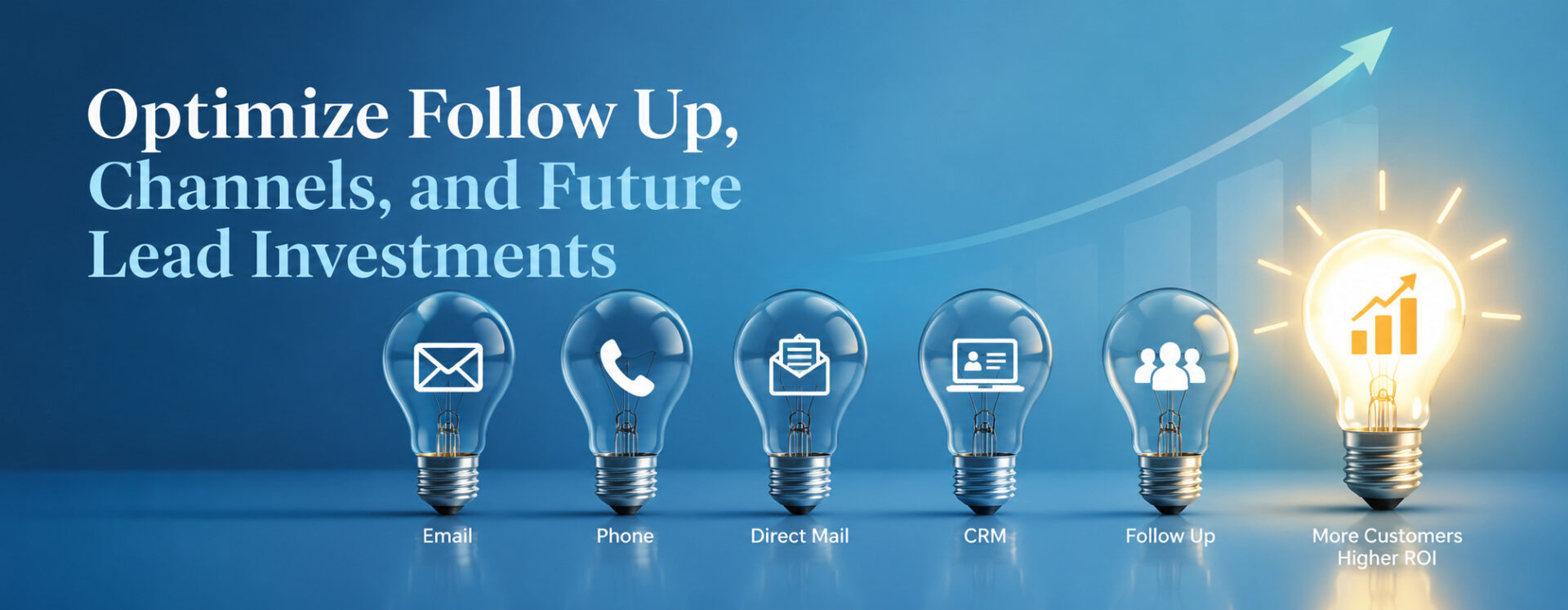
The lead list is only one part of the campaign. What happens after a prospect enters your system can have an enormous effect on ROI. A highly relevant prospect that receives no follow up may never become a customer, so your analysis should also consider how quickly your team responds, how many follow ups are completed, which channels are used, and how many prospects move into appointments and opportunities.
This becomes particularly important when working with fresh inquiries. Prompt follow up can help your sales team engage prospects while their interest is still active. Jared’s Leads offers LeadWave technology as part of its broader marketing solutions, supporting lead response, nurturing, automation, and CRM related workflows. Explore LeadWave
The channel you use should also match the audience and the purpose of the campaign. If your campaign is based on direct mail, postal information and geographic targeting are particularly important. If your campaign depends on outbound calling, accurate phone information and appropriate contact data become more important. If email is the primary channel, the quality and relevance of the email audience become critical. Jared’s Leads offers multiple list categories so businesses can select data according to their campaign requirements, including email, mailing, phone, business, consumer, specialty, and sales lists. Explore Jared’s Marketing Solutions
Once you have enough campaign data, use the results to decide whether you should continue investing in an audience, refine the targeting, expand a successful segment, or stop purchasing a particular type of data. If an audience consistently performs poorly across several properly executed campaigns, buying more of the same data simply because the records are inexpensive may not be a good investment. On the other hand, if a particular audience repeatedly produces qualified opportunities, customers, and profitable revenue, you have evidence that additional investment may be justified.
Jared’s Leads allows businesses to request a custom list count based on their audience requirements before purchasing. This gives you an opportunity to define the audience and understand what may be available before deciding how much data to purchase. Request a Custom List Quote from Jared’s Leads
The objective is not to buy the largest possible list. It is to identify the audiences and channels that create the strongest commercial outcomes, optimize the way those prospects are contacted and followed up with, and then scale the strategies that consistently produce profitable results.
Build a Simple ROI Dashboard
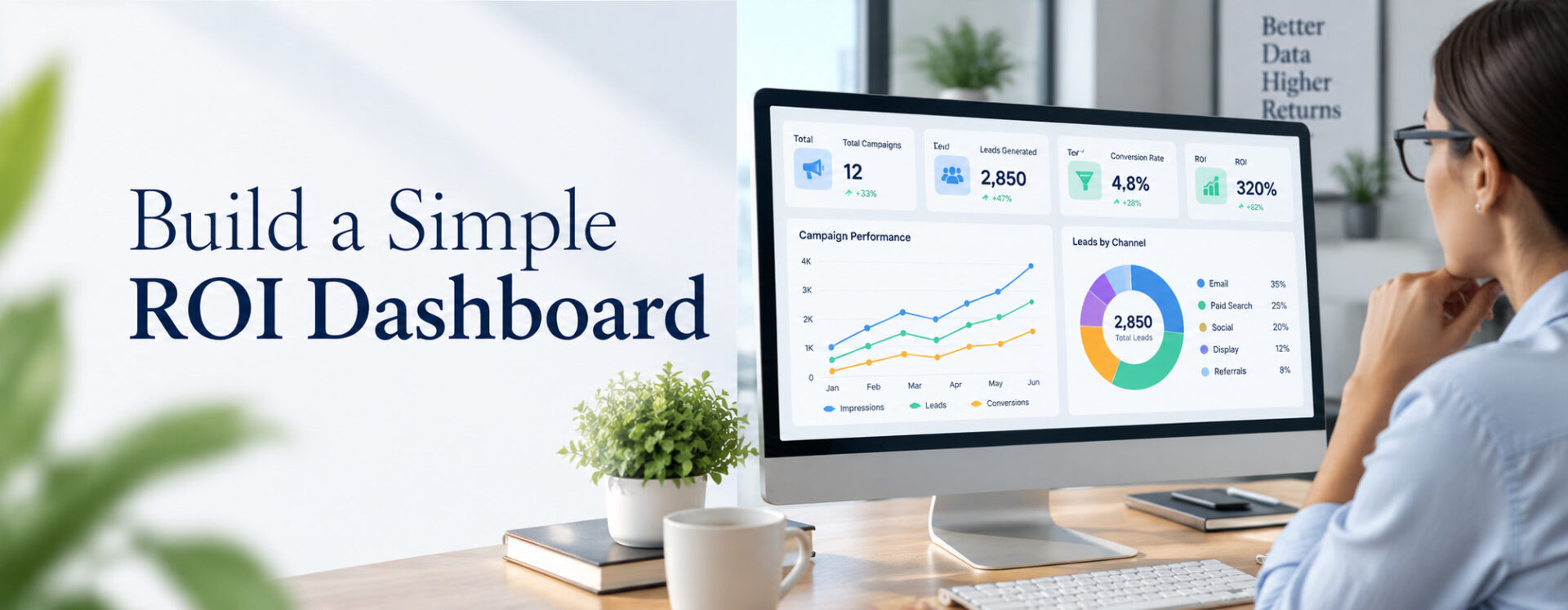
You do not need an elaborate analytics platform to measure the ROI of a purchased lead list. A spreadsheet or CRM report can capture most of the information you need.
At minimum, track the number of records purchased, list cost, total campaign cost, records successfully reached, responses, qualified leads, appointments, opportunities, customers, revenue, gross profit, cost per qualified lead, and customer acquisition cost.
You should also record the targeting criteria used for each campaign. Without this information, it becomes difficult to understand why one campaign performed better than another.
Over time, this dashboard can become a valuable decision making tool. Instead of asking whether you should purchase another list, you can ask which audience, channel, targeting combination, and follow up strategy has historically produced the strongest return.
That is a much more useful question because it moves the conversation from volume to performance.
When Is a Purchased Lead List Worth the Investment?

A purchased lead list is worth the investment when it contributes to profitable customer acquisition.
That does not mean every record needs to become a customer. No legitimate campaign should be judged on the assumption that every prospect will convert. Instead, the campaign needs to produce enough qualified opportunities, customers, revenue, and profit to justify the total investment.
The strongest campaigns usually have several factors working together. The audience is clearly defined. The data fits the campaign. The offer is relevant. The sales team follows up consistently. Results are measured throughout the funnel. The information gathered from one campaign is then used to improve the next.
Jared’s Leads provides businesses with audience data, campaign deployment options, data services, and follow up solutions designed to work together. Its current solutions page describes this as a connected approach covering audience data, campaign activation, data hygiene, and follow up and automation.
Learn More About Jared’s Leads Solutions
The important point is that a purchased lead list should not be treated as an isolated transaction. It is one component of a larger customer acquisition process.
FAQs About Measuring the ROI of a Purchased Lead List
Q.1. What is a good ROI for a purchased lead list?
There is no universal ROI percentage that works for every business. A good return depends on your profit margins, average customer value, customer lifetime value, sales cycle, and acquisition costs. A campaign producing a particular ROI may be excellent for one company and inadequate for another. Your own historical performance is usually the most useful benchmark.
Q.2. Should I measure ROI based only on the price of the lead list?
No. You should track the list cost separately, but your final ROI calculation should include the complete campaign investment. This can include sales labor, email deployment, direct mail, postage, advertising, software, creative work, appointment setting, and other expenses directly associated with customer acquisition.
Q.3. Is a larger lead list better for ROI?
Not necessarily. A larger list gives you more records, but it does not automatically give you more qualified opportunities. A smaller list with precise targeting can produce stronger conversion rates and lower acquisition costs. Jared’s Leads emphasizes audience targeting and allows businesses to define filters before requesting a list count.
Explore Targeted Lists from Jared’s Leads
Q.4. How long should I wait before measuring ROI?
The right measurement period depends on your sales cycle. A business selling a relatively simple consumer product may see meaningful results within days or weeks, while a B2B company with a complex sales process may need several months before opportunities become closed customers. Track early indicators such as reach, response, and qualification first, then continue measuring opportunities and revenue as the campaign matures.
Q.5. What should I do if my purchased list generates responses but very few customers?
Review the complete funnel before deciding that the list failed. Look at lead qualification, offer relevance, response speed, follow up frequency, appointment rates, sales conversations, proposal rates, and closing rates. If prospects are responding but not converting, the problem may exist further down the funnel. If the contacts themselves are poorly matched or difficult to reach, then targeting and data quality should be investigated.
Final Thoughts
The ROI of a purchased lead list should never be judged by the number of records delivered or the price paid per contact. The real measure is what those contacts contribute to the business after they enter the marketing and sales process.
Start by defining your audience and establishing clear benchmarks. Calculate the complete campaign cost rather than looking only at the price of the data. Track the journey from purchased contact to qualified prospect, opportunity, customer, and revenue. Measure cost per qualified lead and customer acquisition cost, then compare those numbers with customer value and profitability.
Most importantly, use the results to improve the next campaign.
Jared’s Leads provides businesses with targeted marketing lists, business and consumer data, mailing lists, email lists, phone lists, specialty audiences, and real time lead options built around specific campaign requirements.
The goal is not simply to buy more leads. It is to identify the right prospects, reach them with the right message, follow up effectively, measure the financial outcome, and use those results to make every future campaign more efficient and profitable.