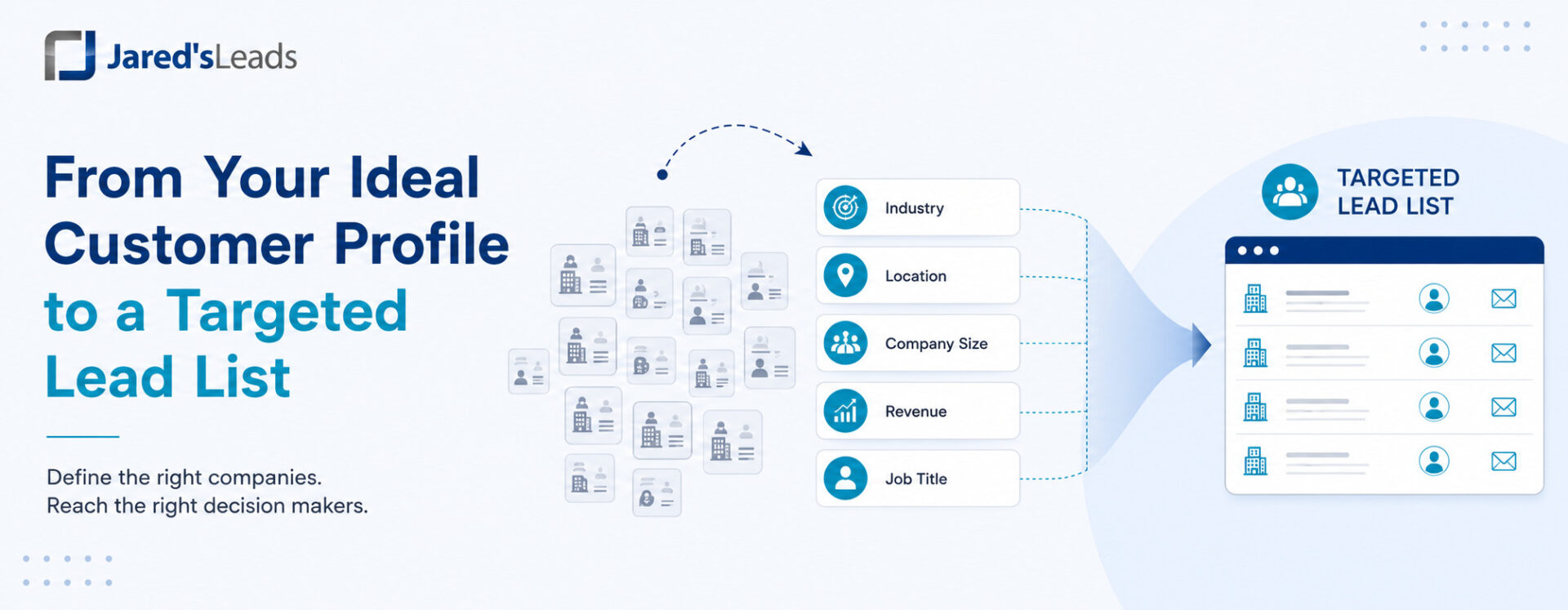
A targeted lead list should never begin with a database. It should begin with a clear understanding of the customer you want to reach. Before you compare list providers, request contact counts, or decide how many records you need, you should know what your best customer looks like and what makes that customer a good fit for your business. This shared definition also keeps sales, marketing, and data teams working toward the same audience rather than developing separate interpretations of a qualified prospect.
That is the purpose of an Ideal Customer Profile, or ICP. An ICP describes the type of company that is most likely to need your product or service, be able to purchase it, and become a valuable customer. It gives your sales and marketing teams a common definition of a qualified account and creates a practical foundation for audience targeting. When your ICP is clear, you can build a lead list around specific criteria instead of receiving a large collection of contacts that may have little connection to your sales strategy.
In our earlier guide, How to Choose the Right Lead List for Your Business, we explained why choosing a lead list requires more than looking at database size or price. The same principle applies here. Even accurate data will produce disappointing results when the audience itself is poorly defined. Your goal is to reach the right companies, the right people, and the right markets.
What Is an Ideal Customer Profile?
An Ideal Customer Profile is a detailed description of the type of company that represents the strongest potential fit for your offering. In a B2B campaign, an ICP normally focuses on the organization rather than one individual. It can include industry, location, employee count, annual revenue, business model, technology environment, and other characteristics that influence customer fit.
A useful ICP should be specific enough that another person could read it and understand which companies belong on the list and which should be excluded. For example, “small businesses in the United States” is too broad for most campaigns. A stronger profile might describe independent home improvement companies with 10 to 100 employees, operating in selected states, with owners or marketing leaders as the preferred contacts.
The purpose is not to create the most complicated profile possible. It is to identify the characteristics that have a meaningful connection with customer fit. Jared’s Leads supports B2B targeting around factors such as industry, SIC and NAICS classification, job title, geography, company size, and revenue, making these useful criteria when an ICP is converted into a custom lead list.
ICP and Buyer Persona: What Is the Difference?
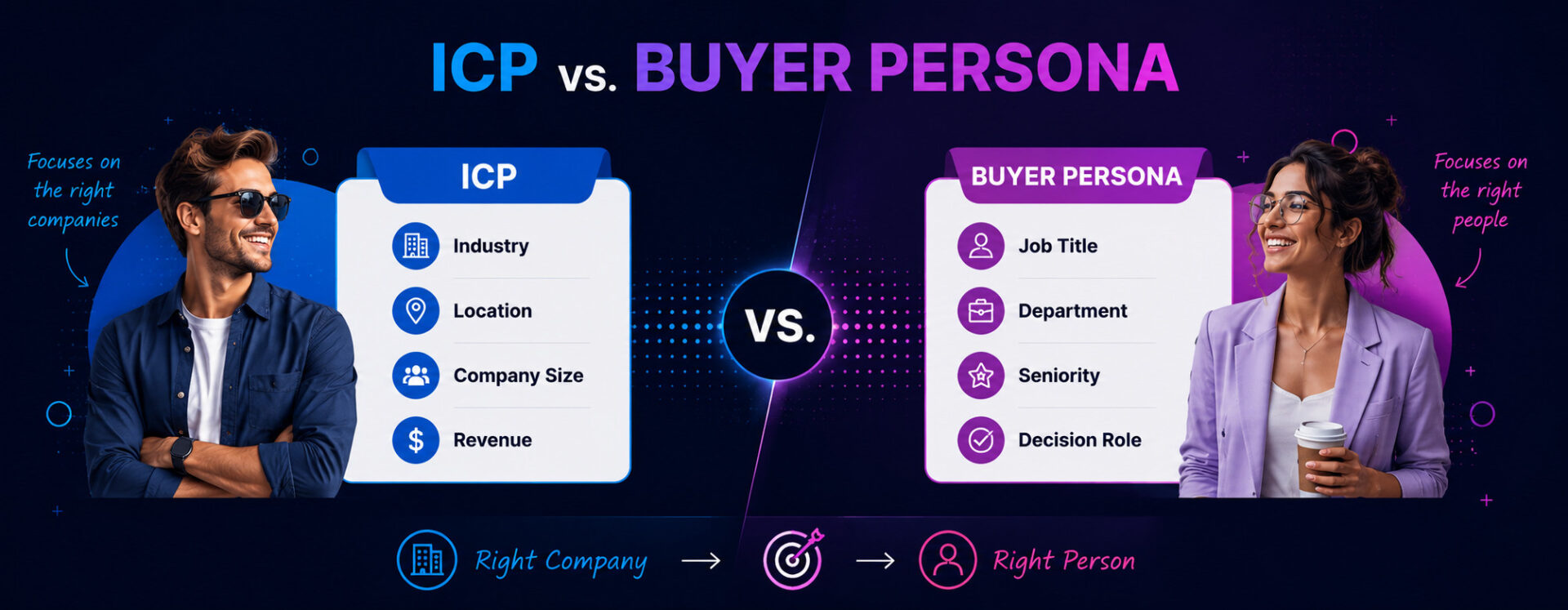
An ICP describes the right company. A buyer persona describes the right person within that company. Both are important when you are building a targeted lead list.
Imagine a company selling cybersecurity software to financial institutions. Its ICP might include banks and credit unions with 100 to 1,000 employees, operating in selected states and meeting a defined revenue range. The buyer persona could include a Chief Information Security Officer, Chief Technology Officer, IT Director, or another senior technology decision maker.
The company profile tells you where to look. The buyer persona tells you who to contact.
Job titles should not be used too narrowly because titles vary between organizations. One business may have a Marketing Director, another may use Head of Marketing, while a smaller company may have an owner managing the entire function. Define the function, seniority, and responsibility you need rather than relying on one exact title.
You should also decide whether your campaign needs one contact per company or several. Larger purchases often involve multiple stakeholders from sales, finance, operations, IT, procurement, or management. A strong list should reflect the way your customers actually make purchasing decisions.
Step 1: Define the Companies You Want to Reach
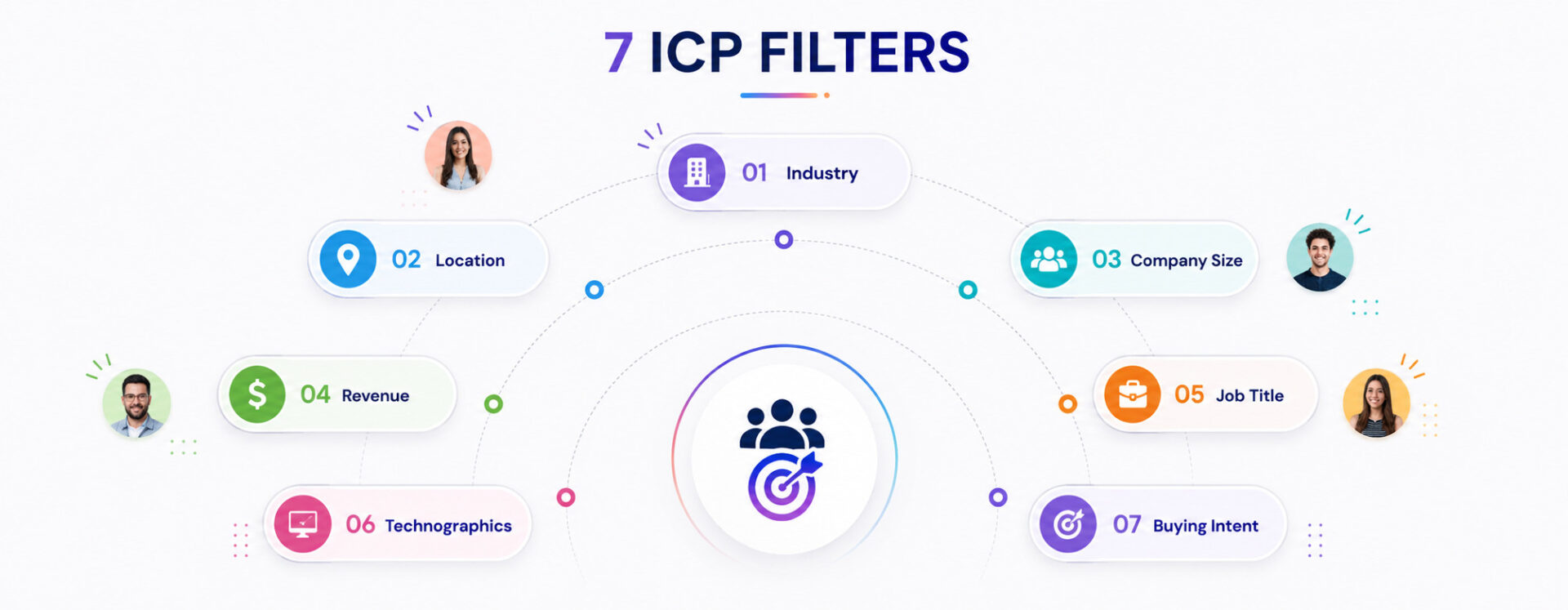
Start by describing the organizations that are most likely to become good customers. Industry is usually one of the first criteria, but it should not be the only one. If you sell services to restaurants, for example, decide whether you want independent restaurants, restaurant groups, cafes, caterers, or a particular combination.
You can make industry targeting more precise through established classifications such as SIC and NAICS. These systems can help reduce ambiguity when businesses describe themselves using different terminology.
Then consider the type of organization. Do you want privately owned companies, franchises, corporations, nonprofits, or another category? Think about the characteristics your strongest existing customers share. They may have several locations, an internal sales team, a particular technology, or a certain level of operational complexity.
Your existing customer base is one of the best places to develop an ICP. Look for patterns among your most profitable and successful accounts. Instead of guessing who might buy from you, use evidence from customers who already have.
Step 2: Identify the Right Decision Makers
Once you know which companies belong in your market, determine who you need to reach inside those organizations. A company may fit your ICP perfectly, but contacting people who have no influence over the purchase will still produce weak campaign results.
Define the roles that are most relevant to your product. For a financial service, these could include owners, CFOs, controllers, or finance directors. For an HR solution, they could include HR directors, people operations leaders, benefits managers, or business owners.
Create a primary contact group and, where appropriate, a secondary group. The primary group should contain people most likely to make or directly influence the purchase. The secondary group can include people who influence the decision or may introduce the solution internally.
Jared’s Leads offers B2B list targeting using job title and other company criteria. You can explore the B2B Email Lists service when you are ready to turn your contact requirements into a targeted audience.
Step 3: Define Geography and Market Coverage
Geography can dramatically change the usefulness of a lead list. A company serving the entire United States may need national coverage, while a regional business may need a list limited to particular states, cities, counties, or ZIP codes.
Start with the countries where you can realistically sell and support customers. Then determine whether you need national or regional coverage. If your business is expanding into a new territory, geography can become an important part of your growth strategy rather than simply a list filter.
For local service businesses, geographic precision can be especially important because the company may only be able to serve customers within a defined area. For sales teams, geographic targeting can also support territory assignment and more relevant outreach.
Jared’s Leads supports geographic targeting across its business and consumer data solutions. Defining your target locations before the list is built helps ensure that the final audience matches the markets you actually want to pursue.
Step 4: Add Company Size, Revenue, and Industry Criteria

Company size and revenue help separate businesses with similar industry classifications but very different needs and purchasing capabilities. A product designed for small businesses may not fit an enterprise organization, while an enterprise solution may not be commercially viable for a company with only a few employees.
Employee count can provide a useful indication of operational scale. Revenue can provide another qualification layer. Neither should be selected simply because a range sounds reasonable. Whenever possible, use your customer data to identify the ranges associated with your strongest accounts.
Industry should also be specific. Rather than targeting every business remotely connected to your market, identify the industries where your product has the clearest use case. SIC and NAICS codes can help make this targeting more consistent.
Jared’s Leads allows B2B audiences to be targeted around industry, SIC and NAICS, company size, revenue, geography, and job title. These filters can be combined to create a much more focused audience than a general business database.
For additional context, our guide What Makes a High Quality Lead List explains why accurate, relevant, and current records matter when evaluating lead data.
Step 5: Identify the Data and Buying Signals That Matter
Your ICP should identify the basic information your sales team needs to qualify and contact prospects. Depending on the campaign, that may include business name, website, industry, location, employee count, revenue, job title, business email, phone number, mailing address, or technology information.
Some businesses can also benefit from signals that indicate a possible need or change. Hiring activity, expansion, a new location, leadership changes, technology adoption, or other business events may help sales teams prioritise accounts that already fit the ICP.
It is important to separate customer fit from buying timing. A company can be a perfect fit for your product without being ready to buy today. The ICP answers who you should target. Additional signals can help you decide which qualified prospects deserve attention first.
Only request data that your team will actually use. More fields do not automatically create a better lead list. Useful information is information that helps you qualify, segment, personalise, prioritise, or contact prospects.
Step 6: Define Who You Do Not Want on the List
A strong ICP should explain who belongs on the list and who should be excluded. Exclusions can prevent irrelevant records from taking up space in your campaign and help your team focus on genuine prospects.
Possible exclusions include existing customers, competitors, companies outside your service area, businesses below your minimum size, irrelevant industries, and job functions that have no role in the purchasing process.
Existing customers deserve special attention. If the campaign is designed to acquire new customers, you should avoid paying for records that already exist in your customer database. Your CRM can also help identify prospects that your sales team has already contacted.
Exclusions should be treated as part of the targeting strategy rather than as an afterthought. They create clear boundaries around your ICP and help maintain the quality of the final audience.
Step 7: Turn Your ICP Into Lead List Filters
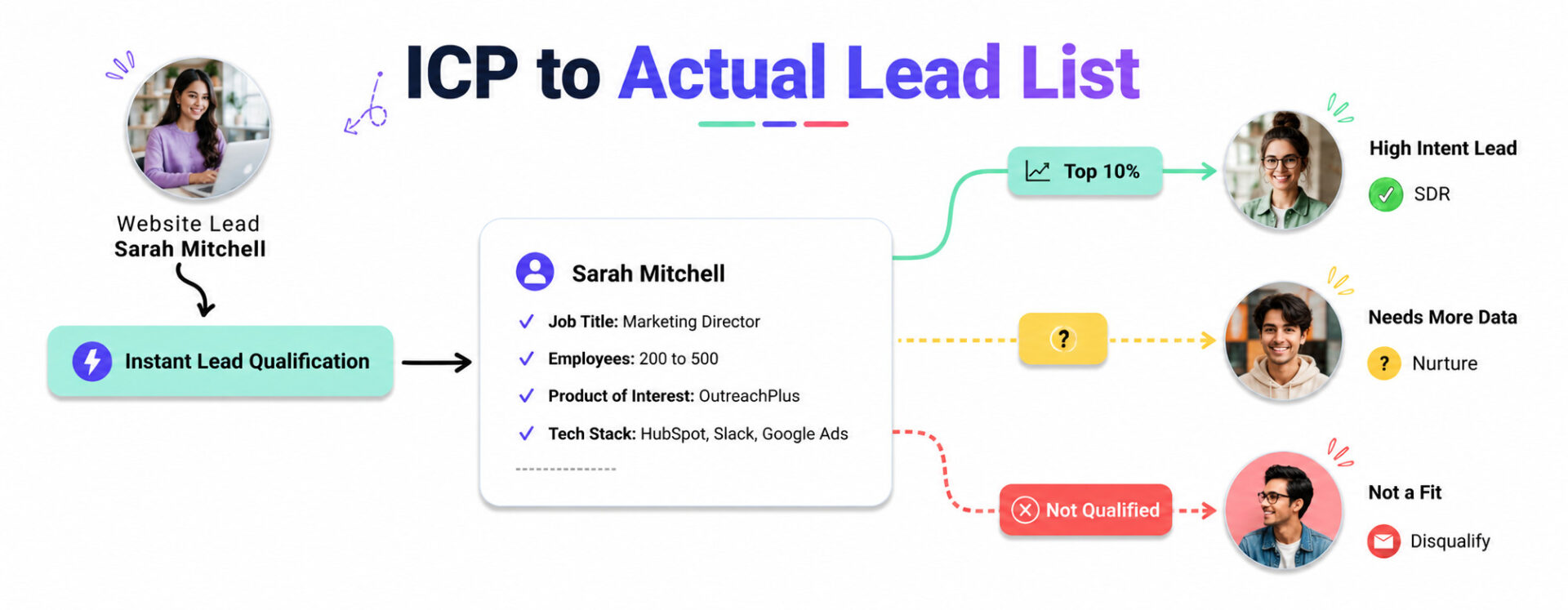
The final step is to convert your ICP into a clear data specification. Instead of asking for “accounting leads,” you might request US accounting firms with 20 to 200 employees, revenue between $5 million and $50 million, locations in selected states, and owners, partners, CFOs, or finance leaders as preferred contacts.
You can then specify the fields you need and the records you want excluded. The more clearly these requirements are documented, the easier it is for a provider to understand what qualifies as a useful record.
Jared’s Leads describes its custom B2B process around this type of targeting. Customers can define their ICP and apply filters such as industry, title, geography, company size, revenue, SIC, or NAICS before moving forward with a custom list.
It is also useful to review the estimated audience size before finalising the criteria. If the audience is much larger than expected, your targeting may be too broad. If it is extremely small, you may need to relax one or two secondary criteria.
Your ICP should also evolve. Campaign results, sales feedback, conversion rates, and customer value can reveal which characteristics matter most. A strong ICP is not a document you create once and forget. It becomes a practical framework that improves as your business learns more about its best customers.
A Practical ICP Example
Consider a company that provides digital marketing services to home improvement businesses. Instead of requesting every home improvement company in the country, it could target residential contractors with 10 to 100 employees, established revenue, locations in selected states, and owners, founders, presidents, or marketing leaders as preferred contacts.
The company could exclude existing customers, competitors, businesses outside its service area, and companies below its minimum size requirement. It could then request verified business contact information along with the firmographic data needed for segmentation and sales qualification.
The resulting audience may be smaller than a general industry database, but it is much more closely aligned with the company’s sales strategy. The sales team can also create different messages for different segments instead of treating every prospect as identical. That is the real purpose of an ICP. It helps concentrate your marketing effort around prospects that have a realistic reason and ability to become customers.
Common ICP Mistakes to Avoid
The first mistake is making the profile too broad. Terms such as “small businesses” or “healthcare companies” can cover organizations with completely different needs and budgets. A broad definition makes messaging and targeting less precise.
The second mistake is building the ICP entirely from assumptions. Study your existing customers and identify common characteristics among accounts that generate strong revenue, retain longer, or convert consistently.
Another mistake is adding too many filters. Excessive restrictions can make a list unnecessarily small. Start with the criteria that have the strongest connection to customer fit and add more only when they provide real value.
Finally, do not confuse list size with campaign quality. The earlier guide, How to Choose the Right Lead List for Your Business, explains why businesses should evaluate relevance, accuracy, freshness, targeting, and provider quality rather than focusing only on the number of records.
How Jared’s Leads Can Help Build a List Around Your ICP
Once your ICP is defined, the next challenge is turning those criteria into actual business records. This is where working with a targeted data provider can simplify the process. Instead of starting with a broad database and trying to identify the right prospects yourself, you can define the audience first and have the data built around those requirements.
Jared’s Leads provides targeted business and consumer data that can be filtered according to campaign requirements. For B2B campaigns, available criteria include factors such as industry, SIC and NAICS classification, job title, geography, company size, and revenue. (jaredsleads.com)
The benefit of this approach is that the conversation begins with your audience rather than with a fixed list of records. You can explain the companies you want to reach, the people you want to contact, the markets you want to cover, and the businesses you want excluded.
That gives you a much clearer starting point for building a campaign.
Before purchasing any lead list, it is also worth understanding the questions you should ask about the data, the targeting process, verification, and delivery. Our earlier article, Questions to Ask Before Buying a Business Mailing List, can help businesses evaluate a provider before moving forward.
The objective should always be to create a list that reflects your actual sales strategy. The more clearly you can define your ideal customer, the easier it becomes to communicate your requirements and evaluate whether the resulting audience is appropriate.
Frequently Asked Questions
Q.1. What is an Ideal Customer Profile?
An Ideal Customer Profile describes the type of company that is most likely to need your product or service, have the ability to purchase it, and become a valuable customer. It can include industry, location, company size, revenue, business model, technology, and other relevant characteristics.
Q.2. What is the difference between an ICP and a buyer persona?
An ICP describes the organization you want to target, while a buyer persona describes the person you want to reach within that organization. A successful B2B lead list often uses both so that the right companies and relevant decision makers are included.
Q.3. What information should an ICP include?
A useful ICP can include industry, SIC or NAICS classification, geography, employee count, revenue, business type, relevant technologies, target job functions, seniority, required contact fields, and exclusion criteria. The exact information depends on your product and sales process.
Q.4. How specific should my ICP be?
Your ICP should be specific enough to identify a meaningful group of companies without making the audience unnecessarily small. Start with the characteristics that clearly distinguish your best customers and refine the profile as campaign results provide more evidence.
Q.5. Can an ICP be used to create a custom lead list?
Yes. An ICP can be converted into practical filters for a custom lead list. Industry, location, company size, revenue, SIC or NAICS, job title, and exclusions can be combined to define the audience that a data provider should build.
Final Takeaway
A targeted lead list starts with knowing exactly who you want to reach. Your ICP provides that definition by bringing together the right companies, decision makers, markets, firmographic characteristics, data requirements, and exclusions.
The objective is not to collect the largest possible number of contacts. It is to build an audience with a strong connection to your actual customer profile and sales strategy. When your targeting is precise, your sales and marketing teams have a stronger foundation for creating relevant campaigns and prioritising valuable prospects.
If you already know the type of customer you want to reach, Jared’s Leads can help turn that profile into a targeted business lead list built around your requirements. Explore the B2B Email Lists service or request a custom audience based on your Ideal Customer Profile.